

290
A. Palazzolo et al.
N
Me
Me
O
N
N
N N
N
iPr
iPr
iPr
iPr
Fe
N
N
N
N
Crabtree's catalyst
(1 mol%)
N
Me
Me
O
N
Me
Me
O
[64%]
[70%]
[70%]
(1 mol%)
4 atm D 2
23 C, DCM
4 atm D 2
45 C, THF
Deuterium labeling position
[X] Isotopic enrichment
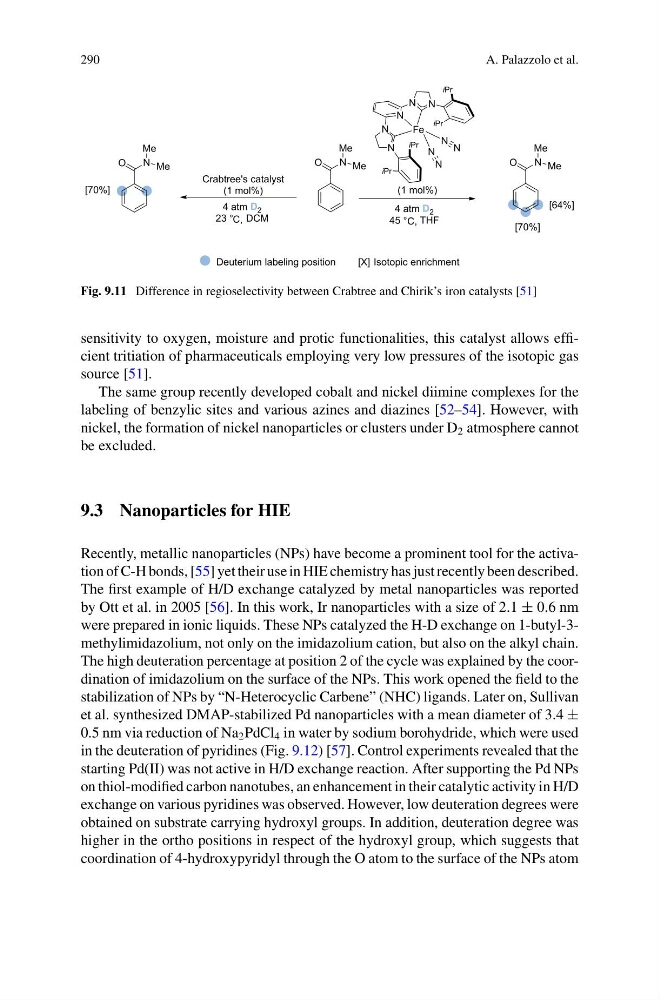
Fig. 9.11 Difference in regioselectivity between Crabtree and Chirik’s iron catalysts [51]
sensitivity to oxygen, moisture and protic functionalities, this catalyst allows efficient tritiation of pharmaceuticals employing very low pressures of the isotopic gas
source [51].
The same group recently developed cobalt and nickel diimine complexes for the
labeling of benzylic sites and various azines and diazines [52–54]. However, with
nickel, the formation of nickel nanoparticles or clusters under D 2 atmosphere cannot
be excluded.
9.3 Nanoparticles for HIE
Recently, metallic nanoparticles (NPs) have become a prominent tool for the activation of C-H bonds, [55] yet their use in HIE chemistry has just recently been described.
The first example of H/D exchange catalyzed by metal nanoparticles was reported
by Ott et al. in 2005 [56]. In this work, Ir nanoparticles with a size of 2.1 ± 0.6 nm
were prepared in ionic liquids. These NPs catalyzed the H-D exchange on 1-butyl-3methylimidazolium, not only on the imidazolium cation, but also on the alkyl chain.
The high deuteration percentage at position 2 of the cycle was explained by the coordination of imidazolium on the surface of the NPs. This work opened the field to the
stabilization of NPs by “N-Heterocyclic Carbene” (NHC) ligands. Later on, Sullivan
et al. synthesized DMAP-stabilized Pd nanoparticles with a mean diameter of 3.4 ±
0.5 nm via reduction of Na 2 PdCl 4 in water by sodium borohydride, which were used
in the deuteration of pyridines (Fig. 9.12) [57]. Control experiments revealed that the
starting Pd(II) was not active in H/D exchange reaction. After supporting the Pd NPs
on thiol-modified carbon nanotubes, an enhancement in their catalytic activity in H/D
exchange on various pyridines was observed. However, low deuteration degrees were
obtained on substrate carrying hydroxyl groups. In addition, deuteration degree was
higher in the ortho positions in respect of the hydroxyl group, which suggests that
coordination of 4-hydroxypyridyl through the O atom to the surface of the NPs atom
A. Palazzolo et al.
N
Me
Me
O
N
N
N N
N
iPr
iPr
iPr
iPr
Fe
N
N
N
N
Crabtree's catalyst
(1 mol%)
N
Me
Me
O
N
Me
Me
O
[64%]
[70%]
[70%]
(1 mol%)
4 atm D 2
23 C, DCM
4 atm D 2
45 C, THF
Deuterium labeling position
[X] Isotopic enrichment
Fig. 9.11 Difference in regioselectivity between Crabtree and Chirik’s iron catalysts [51]
sensitivity to oxygen, moisture and protic functionalities, this catalyst allows efficient tritiation of pharmaceuticals employing very low pressures of the isotopic gas
source [51].
The same group recently developed cobalt and nickel diimine complexes for the
labeling of benzylic sites and various azines and diazines [52–54]. However, with
nickel, the formation of nickel nanoparticles or clusters under D 2 atmosphere cannot
be excluded.
9.3 Nanoparticles for HIE
Recently, metallic nanoparticles (NPs) have become a prominent tool for the activation of C-H bonds, [55] yet their use in HIE chemistry has just recently been described.
The first example of H/D exchange catalyzed by metal nanoparticles was reported
by Ott et al. in 2005 [56]. In this work, Ir nanoparticles with a size of 2.1 ± 0.6 nm
were prepared in ionic liquids. These NPs catalyzed the H-D exchange on 1-butyl-3methylimidazolium, not only on the imidazolium cation, but also on the alkyl chain.
The high deuteration percentage at position 2 of the cycle was explained by the coordination of imidazolium on the surface of the NPs. This work opened the field to the
stabilization of NPs by “N-Heterocyclic Carbene” (NHC) ligands. Later on, Sullivan
et al. synthesized DMAP-stabilized Pd nanoparticles with a mean diameter of 3.4 ±
0.5 nm via reduction of Na 2 PdCl 4 in water by sodium borohydride, which were used
in the deuteration of pyridines (Fig. 9.12) [57]. Control experiments revealed that the
starting Pd(II) was not active in H/D exchange reaction. After supporting the Pd NPs
on thiol-modified carbon nanotubes, an enhancement in their catalytic activity in H/D
exchange on various pyridines was observed. However, low deuteration degrees were
obtained on substrate carrying hydroxyl groups. In addition, deuteration degree was
higher in the ortho positions in respect of the hydroxyl group, which suggests that
coordination of 4-hydroxypyridyl through the O atom to the surface of the NPs atom