

8 Earth-Abundant d-Block Metal Nanocatalysis for Coupling …
259
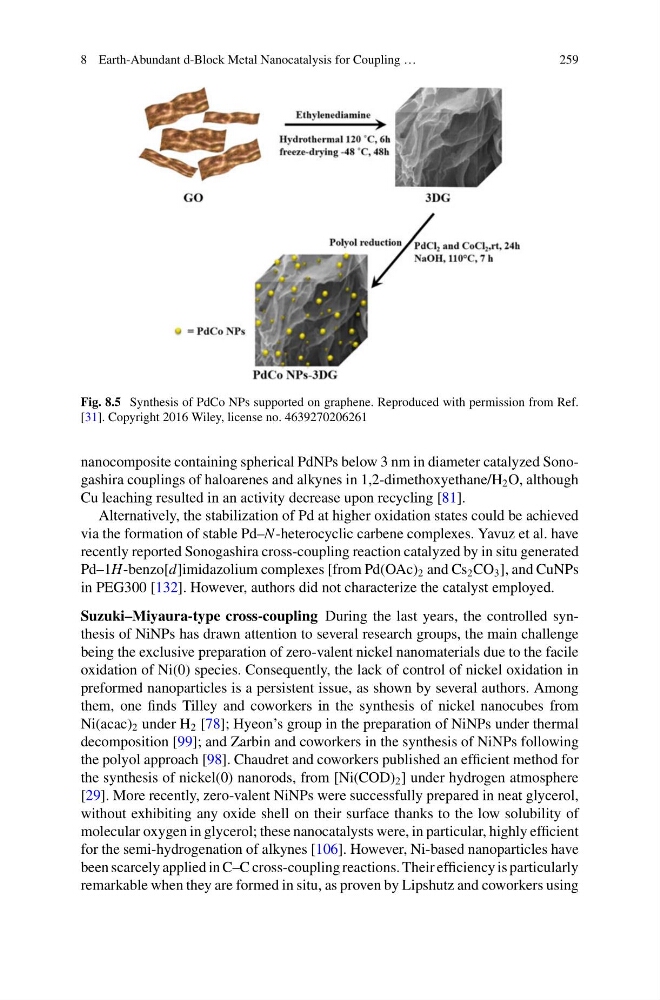
Fig. 8.5 Synthesis of PdCo NPs supported on graphene. Reproduced with permission from Ref.
[31]. Copyright 2016 Wiley, license no. 4639270206261
nanocomposite containing spherical PdNPs below 3 nm in diameter catalyzed Sonogashira couplings of haloarenes and alkynes in 1,2-dimethoxyethane/H 2 O, although
Cu leaching resulted in an activity decrease upon recycling [81].
Alternatively, the stabilization of Pd at higher oxidation states could be achieved
via the formation of stable Pd–N-heterocyclic carbene complexes. Yavuz et al. have
recently reported Sonogashira cross-coupling reaction catalyzed by in situ generated
Pd–1H-benzo[d]imidazolium complexes [from Pd(OAc) 2 and Cs 2 CO 3 ], and CuNPs
in PEG300 [132]. However, authors did not characterize the catalyst employed.
Suzuki–Miyaura-type cross-coupling During the last years, the controlled synthesis of NiNPs has drawn attention to several research groups, the main challenge
being the exclusive preparation of zero-valent nickel nanomaterials due to the facile
oxidation of Ni(0) species. Consequently, the lack of control of nickel oxidation in
preformed nanoparticles is a persistent issue, as shown by several authors. Among
them, one finds Tilley and coworkers in the synthesis of nickel nanocubes from
Ni(acac) 2 under H 2 [78]; Hyeon’s group in the preparation of NiNPs under thermal
decomposition [99]; and Zarbin and coworkers in the synthesis of NiNPs following
the polyol approach [98]. Chaudret and coworkers published an efficient method for
the synthesis of nickel(0) nanorods, from [Ni(COD) 2 ] under hydrogen atmosphere
[29]. More recently, zero-valent NiNPs were successfully prepared in neat glycerol,
without exhibiting any oxide shell on their surface thanks to the low solubility of
molecular oxygen in glycerol; these nanocatalysts were, in particular, highly efficient
for the semi-hydrogenation of alkynes [106]. However, Ni-based nanoparticles have
been scarcely applied in C–C cross-coupling reactions. Their efficiency is particularly
remarkable when they are formed in situ, as proven by Lipshutz and coworkers using
259
Fig. 8.5 Synthesis of PdCo NPs supported on graphene. Reproduced with permission from Ref.
[31]. Copyright 2016 Wiley, license no. 4639270206261
nanocomposite containing spherical PdNPs below 3 nm in diameter catalyzed Sonogashira couplings of haloarenes and alkynes in 1,2-dimethoxyethane/H 2 O, although
Cu leaching resulted in an activity decrease upon recycling [81].
Alternatively, the stabilization of Pd at higher oxidation states could be achieved
via the formation of stable Pd–N-heterocyclic carbene complexes. Yavuz et al. have
recently reported Sonogashira cross-coupling reaction catalyzed by in situ generated
Pd–1H-benzo[d]imidazolium complexes [from Pd(OAc) 2 and Cs 2 CO 3 ], and CuNPs
in PEG300 [132]. However, authors did not characterize the catalyst employed.
Suzuki–Miyaura-type cross-coupling During the last years, the controlled synthesis of NiNPs has drawn attention to several research groups, the main challenge
being the exclusive preparation of zero-valent nickel nanomaterials due to the facile
oxidation of Ni(0) species. Consequently, the lack of control of nickel oxidation in
preformed nanoparticles is a persistent issue, as shown by several authors. Among
them, one finds Tilley and coworkers in the synthesis of nickel nanocubes from
Ni(acac) 2 under H 2 [78]; Hyeon’s group in the preparation of NiNPs under thermal
decomposition [99]; and Zarbin and coworkers in the synthesis of NiNPs following
the polyol approach [98]. Chaudret and coworkers published an efficient method for
the synthesis of nickel(0) nanorods, from [Ni(COD) 2 ] under hydrogen atmosphere
[29]. More recently, zero-valent NiNPs were successfully prepared in neat glycerol,
without exhibiting any oxide shell on their surface thanks to the low solubility of
molecular oxygen in glycerol; these nanocatalysts were, in particular, highly efficient
for the semi-hydrogenation of alkynes [106]. However, Ni-based nanoparticles have
been scarcely applied in C–C cross-coupling reactions. Their efficiency is particularly
remarkable when they are formed in situ, as proven by Lipshutz and coworkers using