

240
A. Dhakshinamoorthy and H. Garcia
N
N
Me
Me
N
N
OHC
CHO
N
N
HO
O
O
OH
N
N
Cl
O
O
Cl
N
H
O
N
N
O
SeO 2
Dioxane,
HNO 3
N
H
O
N
N
O
PdAc 2 , Ce(acac) 3
NaBH 4 , THF
SOCl 2
Fe-MIL-101-NH 2
Et 3 N/DCM,
Fe-MIL-101-NH 2 _Neo
( = Pd, Pd-Ce NPs)
Pd-Ce/Fe-MIL-101-NH 2 _Neo
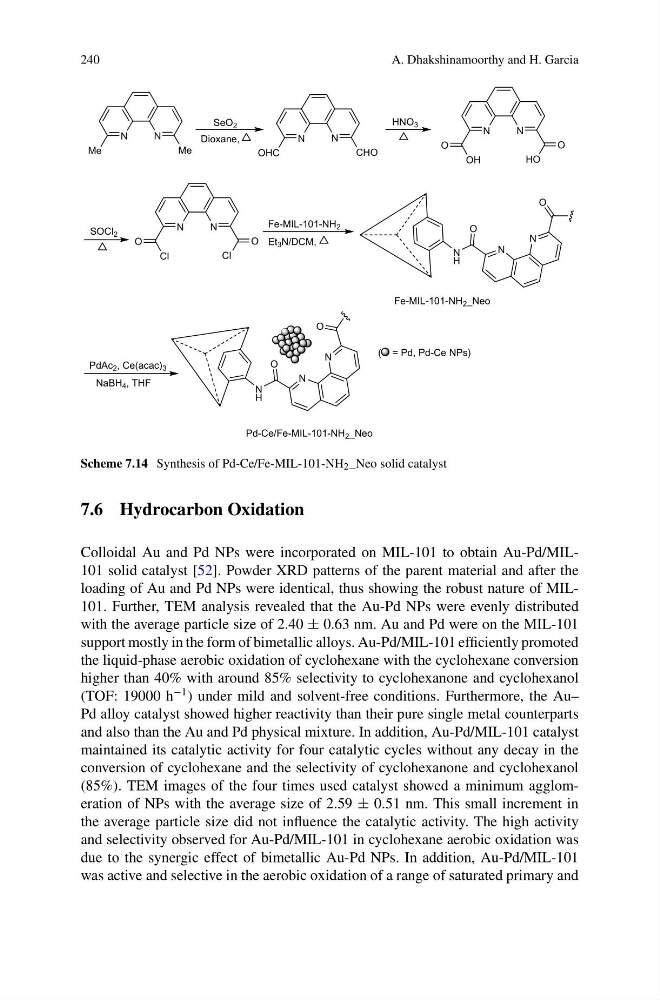
Scheme 7.14 Synthesis of Pd-Ce/Fe-MIL-101-NH 2 _Neo solid catalyst
7.6 Hydrocarbon Oxidation
Colloidal Au and Pd NPs were incorporated on MIL-101 to obtain Au-Pd/MIL101 solid catalyst [52]. Powder XRD patterns of the parent material and after the
loading of Au and Pd NPs were identical, thus showing the robust nature of MIL101. Further, TEM analysis revealed that the Au-Pd NPs were evenly distributed
with the average particle size of 2.40 ± 0.63 nm. Au and Pd were on the MIL-101
support mostly in the form of bimetallic alloys. Au-Pd/MIL-101 efficiently promoted
the liquid-phase aerobic oxidation of cyclohexane with the cyclohexane conversion
higher than 40% with around 85% selectivity to cyclohexanone and cyclohexanol
(TOF: 19000 h
−1 ) under mild and solvent-free conditions. Furthermore, the Au–
Pd alloy catalyst showed higher reactivity than their pure single metal counterparts
and also than the Au and Pd physical mixture. In addition, Au-Pd/MIL-101 catalyst
maintained its catalytic activity for four catalytic cycles without any decay in the
conversion of cyclohexane and the selectivity of cyclohexanone and cyclohexanol
(85%). TEM images of the four times used catalyst showed a minimum agglomeration of NPs with the average size of 2.59 ± 0.51 nm. This small increment in
the average particle size did not influence the catalytic activity. The high activity
and selectivity observed for Au-Pd/MIL-101 in cyclohexane aerobic oxidation was
due to the synergic effect of bimetallic Au-Pd NPs. In addition, Au-Pd/MIL-101
was active and selective in the aerobic oxidation of a range of saturated primary and
A. Dhakshinamoorthy and H. Garcia
N
N
Me
Me
N
N
OHC
CHO
N
N
HO
O
O
OH
N
N
Cl
O
O
Cl
N
H
O
N
N
O
SeO 2
Dioxane,
HNO 3
N
H
O
N
N
O
PdAc 2 , Ce(acac) 3
NaBH 4 , THF
SOCl 2
Fe-MIL-101-NH 2
Et 3 N/DCM,
Fe-MIL-101-NH 2 _Neo
( = Pd, Pd-Ce NPs)
Pd-Ce/Fe-MIL-101-NH 2 _Neo
Scheme 7.14 Synthesis of Pd-Ce/Fe-MIL-101-NH 2 _Neo solid catalyst
7.6 Hydrocarbon Oxidation
Colloidal Au and Pd NPs were incorporated on MIL-101 to obtain Au-Pd/MIL101 solid catalyst [52]. Powder XRD patterns of the parent material and after the
loading of Au and Pd NPs were identical, thus showing the robust nature of MIL101. Further, TEM analysis revealed that the Au-Pd NPs were evenly distributed
with the average particle size of 2.40 ± 0.63 nm. Au and Pd were on the MIL-101
support mostly in the form of bimetallic alloys. Au-Pd/MIL-101 efficiently promoted
the liquid-phase aerobic oxidation of cyclohexane with the cyclohexane conversion
higher than 40% with around 85% selectivity to cyclohexanone and cyclohexanol
(TOF: 19000 h
−1 ) under mild and solvent-free conditions. Furthermore, the Au–
Pd alloy catalyst showed higher reactivity than their pure single metal counterparts
and also than the Au and Pd physical mixture. In addition, Au-Pd/MIL-101 catalyst
maintained its catalytic activity for four catalytic cycles without any decay in the
conversion of cyclohexane and the selectivity of cyclohexanone and cyclohexanol
(85%). TEM images of the four times used catalyst showed a minimum agglomeration of NPs with the average size of 2.59 ± 0.51 nm. This small increment in
the average particle size did not influence the catalytic activity. The high activity
and selectivity observed for Au-Pd/MIL-101 in cyclohexane aerobic oxidation was
due to the synergic effect of bimetallic Au-Pd NPs. In addition, Au-Pd/MIL-101
was active and selective in the aerobic oxidation of a range of saturated primary and