

5 Covalent Assemblies of Metal Nanoparticles—Strategies …
171
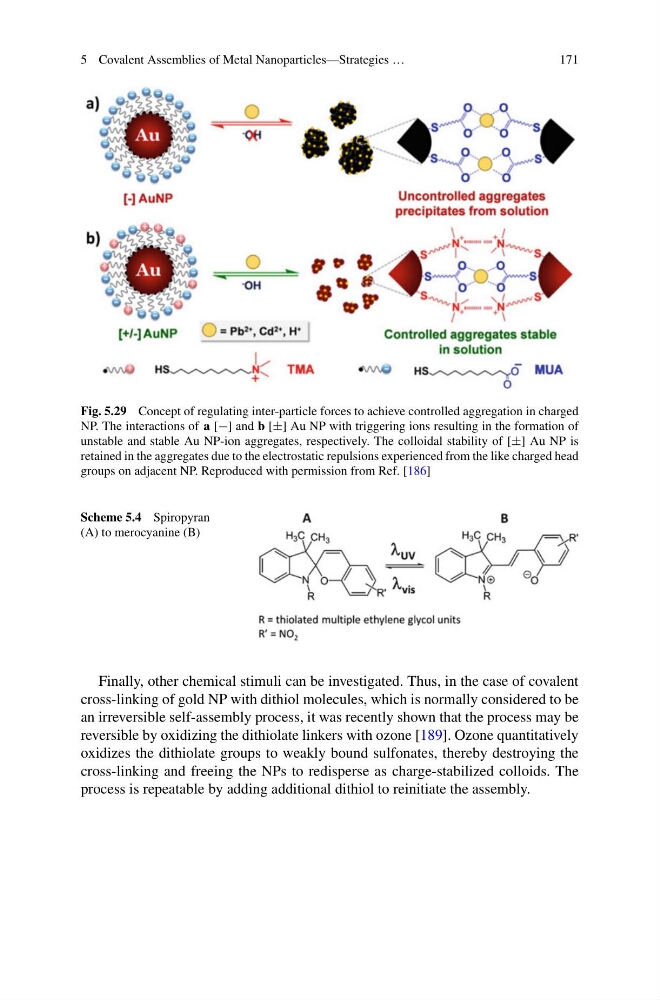
Fig. 5.29 Concept of regulating inter-particle forces to achieve controlled aggregation in charged
NP. The interactions of a [−] and b [±] Au NP with triggering ions resulting in the formation of
unstable and stable Au NP-ion aggregates, respectively. The colloidal stability of [±] Au NP is
retained in the aggregates due to the electrostatic repulsions experienced from the like charged head
groups on adjacent NP. Reproduced with permission from Ref. [186]
Scheme 5.4 Spiropyran
(A) to merocyanine (B)
Finally, other chemical stimuli can be investigated. Thus, in the case of covalent
cross-linking of gold NP with dithiol molecules, which is normally considered to be
an irreversible self-assembly process, it was recently shown that the process may be
reversible by oxidizing the dithiolate linkers with ozone [189]. Ozone quantitatively
oxidizes the dithiolate groups to weakly bound sulfonates, thereby destroying the
cross-linking and freeing the NPs to redisperse as charge-stabilized colloids. The
process is repeatable by adding additional dithiol to reinitiate the assembly.
171
Fig. 5.29 Concept of regulating inter-particle forces to achieve controlled aggregation in charged
NP. The interactions of a [−] and b [±] Au NP with triggering ions resulting in the formation of
unstable and stable Au NP-ion aggregates, respectively. The colloidal stability of [±] Au NP is
retained in the aggregates due to the electrostatic repulsions experienced from the like charged head
groups on adjacent NP. Reproduced with permission from Ref. [186]
Scheme 5.4 Spiropyran
(A) to merocyanine (B)
Finally, other chemical stimuli can be investigated. Thus, in the case of covalent
cross-linking of gold NP with dithiol molecules, which is normally considered to be
an irreversible self-assembly process, it was recently shown that the process may be
reversible by oxidizing the dithiolate linkers with ozone [189]. Ozone quantitatively
oxidizes the dithiolate groups to weakly bound sulfonates, thereby destroying the
cross-linking and freeing the NPs to redisperse as charge-stabilized colloids. The
process is repeatable by adding additional dithiol to reinitiate the assembly.