

314
A brief comment on the mechanical properties of silicones should be made
before closing this section. As stated earlier, most linear siloxane polymers are oils
and are not present as physical solids without additional crosslinking. However,
with some exceptions, the mechanical properties of virgin silicones are considered
largely poor, with a ‘tofu-like’ quality due to the low cohesive forces of silicone
(Song et al. 2017). For this reason, most commercially available silicones are not
virgin materials, but typically exist as composites with silica toughening
agents (Ansorge et al. 2012). It is the additional silica particles which help impart
many of the elastomeric and tensile properties associated with silicone materials.
13.6 Recent Advances in Siloxane Chemistry
Although a vast majority of siloxane chemistry still uses the same reactions that
were developed a century ago, in recent years, new siloxane chemistries have
emerged along with unique ways to incorporate organic reactions not traditionally
associated with this class of polymer. One of the more recent advances in siloxane
chemistry that has generated great interest is the Piers-Rubinsztajn reaction
(Brook 2018).
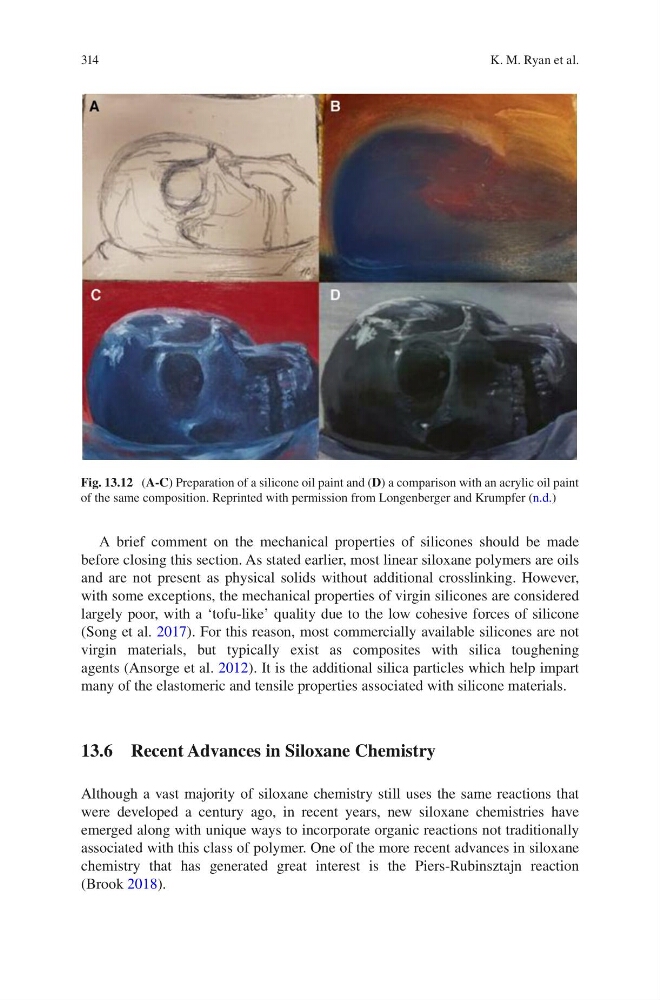
Fig. 13.12 (A-C) Preparation of a silicone oil paint and (D) a comparison with an acrylic oil paint
of the same composition. Reprinted with permission from Longenberger and Krumpfer (n.d.)
K. M. Ryan et al.