

312
crosslinking methods is high temperature vulcanization (HTV) via radical-initiated
crosslinking, typically with the use of peroxides, such as benzoylperoxide (Buining
et al. 1997). High temperatures are required for the formation of the radical species,
which then, in turn, can extract a hydrogen from a silicone methyl group. With the
methyl radical now present, this can react with any adjacent methyl radicals to produce carbon-carbon bonds, thus linking the siloxane chains. The incorporation of
vinyl units, which are more reactive to radicals, into the siloxane structure reduces
the temperature necessary for these reactions (Dunham et al. 1957).
Generally speaking, HTV curing of siloxanes is less common than other methods, but it is still useful in the preparation of silicone elastomers. In addition, the
inclusion of radiation- or UV-induced radical initiators can reduce the temperatures,
even to room temperature, necessary to produce this crosslinking (Okamoto et al.
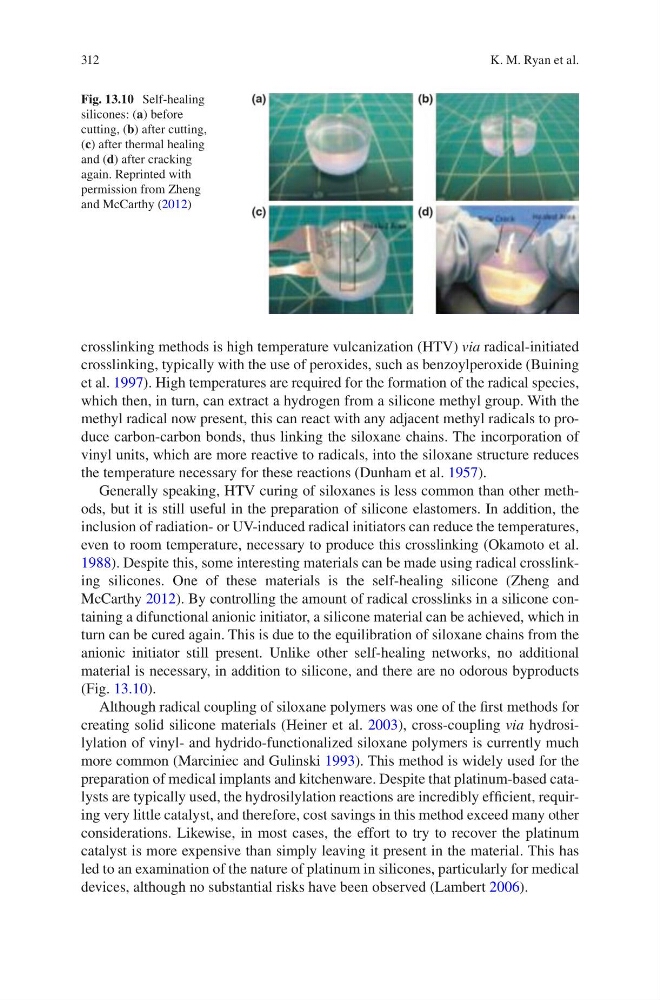
1988). Despite this, some interesting materials can be made using radical crosslinking silicones. One of these materials is the self-healing silicone (Zheng and
McCarthy 2012). By controlling the amount of radical crosslinks in a silicone containing a difunctional anionic initiator, a silicone material can be achieved, which in
turn can be cured again. This is due to the equilibration of siloxane chains from the
anionic initiator still present. Unlike other self-healing networks, no additional
material is necessary, in addition to silicone, and there are no odorous byproducts
(Fig. 13.10).
Although radical coupling of siloxane polymers was one of the first methods for
creating solid silicone materials (Heiner et al. 2003), cross-coupling via hydrosilylation of vinyl- and hydrido-functionalized siloxane polymers is currently much
more common (Marciniec and Gulinski 1993). This method is widely used for the
preparation of medical implants and kitchenware. Despite that platinum-based catalysts are typically used, the hydrosilylation reactions are incredibly efficient, requiring very little catalyst, and therefore, cost savings in this method exceed many other
considerations. Likewise, in most cases, the effort to try to recover the platinum
catalyst is more expensive than simply leaving it present in the material. This has
led to an examination of the nature of platinum in silicones, particularly for medical
devices, although no substantial risks have been observed (Lambert 2006).
Fig. 13.10 Self-healing
silicones: (a) before
cutting, (b) after cutting,
(c) after thermal healing
and (d) after cracking
again. Reprinted with
permission from Zheng
and McCarthy (2012)
K. M. Ryan et al.
crosslinking methods is high temperature vulcanization (HTV) via radical-initiated
crosslinking, typically with the use of peroxides, such as benzoylperoxide (Buining
et al. 1997). High temperatures are required for the formation of the radical species,
which then, in turn, can extract a hydrogen from a silicone methyl group. With the
methyl radical now present, this can react with any adjacent methyl radicals to produce carbon-carbon bonds, thus linking the siloxane chains. The incorporation of
vinyl units, which are more reactive to radicals, into the siloxane structure reduces
the temperature necessary for these reactions (Dunham et al. 1957).
Generally speaking, HTV curing of siloxanes is less common than other methods, but it is still useful in the preparation of silicone elastomers. In addition, the
inclusion of radiation- or UV-induced radical initiators can reduce the temperatures,
even to room temperature, necessary to produce this crosslinking (Okamoto et al.
1988). Despite this, some interesting materials can be made using radical crosslinking silicones. One of these materials is the self-healing silicone (Zheng and
McCarthy 2012). By controlling the amount of radical crosslinks in a silicone containing a difunctional anionic initiator, a silicone material can be achieved, which in
turn can be cured again. This is due to the equilibration of siloxane chains from the
anionic initiator still present. Unlike other self-healing networks, no additional
material is necessary, in addition to silicone, and there are no odorous byproducts
(Fig. 13.10).
Although radical coupling of siloxane polymers was one of the first methods for
creating solid silicone materials (Heiner et al. 2003), cross-coupling via hydrosilylation of vinyl- and hydrido-functionalized siloxane polymers is currently much
more common (Marciniec and Gulinski 1993). This method is widely used for the
preparation of medical implants and kitchenware. Despite that platinum-based catalysts are typically used, the hydrosilylation reactions are incredibly efficient, requiring very little catalyst, and therefore, cost savings in this method exceed many other
considerations. Likewise, in most cases, the effort to try to recover the platinum
catalyst is more expensive than simply leaving it present in the material. This has
led to an examination of the nature of platinum in silicones, particularly for medical
devices, although no substantial risks have been observed (Lambert 2006).
Fig. 13.10 Self-healing
silicones: (a) before
cutting, (b) after cutting,
(c) after thermal healing
and (d) after cracking
again. Reprinted with
permission from Zheng
and McCarthy (2012)
K. M. Ryan et al.