

13
PLGA is biocompatible and biodegradable, and is composed of PLA and
poly(glycolic acid) (PGA). PLGA is approved by the FDA and the European
Medicines Agency (EMA) as a material for drug carriers, tissue engineering and
surgical equipment with excellent controlled release performance (Sharma et al.
2016). PLGA is degraded to lactic acid and glycolic acid by hydrolysis of the ester
bonds, and the compounds obtained are then metabolized to carbon dioxide and
water. The degradation rate of PLGA is controlled by the PLA/PGA ratio, Mw,
crystal and pH value, e.g. a PLA content slows down the degradation. Therefore, by
increasing the proportion of PLA, the degradation rate of PLGA can be controlled
to achieve sustained release. In addition, surface modification and compliance with
polymers can increase the hydrophilicity and PLGA targeting. For such reasons, the
amphiphilic PLGA polymer can potentially be used as a functional carrier for biomedical applications.
2.4.1 Design of PLGA-Based Systems for Delivering
Micromolecular Drugs
Micromolecular drugs have some limitations such as poor solubility, high toxicity
and low bioavailability. This has motivated many research groups studying PLGAbased delivery systems. In oral administration, drugs with low solubility and slow
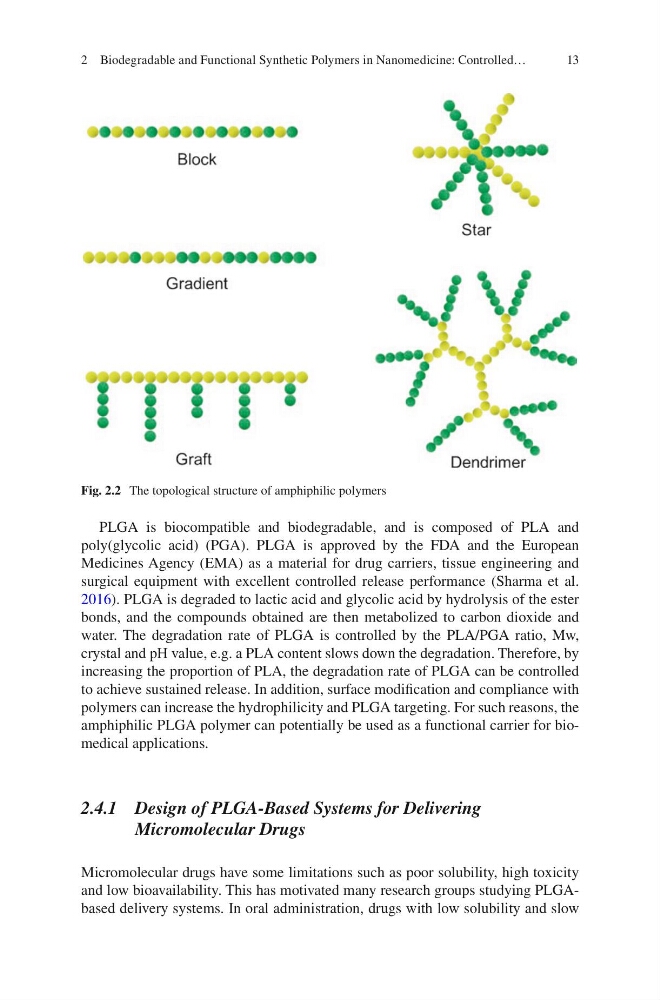
Fig. 2.2 The topological structure of amphiphilic polymers
2 Biodegradable and Functional Synthetic Polymers in Nanomedicine: Controlled…
PLGA is biocompatible and biodegradable, and is composed of PLA and
poly(glycolic acid) (PGA). PLGA is approved by the FDA and the European
Medicines Agency (EMA) as a material for drug carriers, tissue engineering and
surgical equipment with excellent controlled release performance (Sharma et al.
2016). PLGA is degraded to lactic acid and glycolic acid by hydrolysis of the ester
bonds, and the compounds obtained are then metabolized to carbon dioxide and
water. The degradation rate of PLGA is controlled by the PLA/PGA ratio, Mw,
crystal and pH value, e.g. a PLA content slows down the degradation. Therefore, by
increasing the proportion of PLA, the degradation rate of PLGA can be controlled
to achieve sustained release. In addition, surface modification and compliance with
polymers can increase the hydrophilicity and PLGA targeting. For such reasons, the
amphiphilic PLGA polymer can potentially be used as a functional carrier for biomedical applications.
2.4.1 Design of PLGA-Based Systems for Delivering
Micromolecular Drugs
Micromolecular drugs have some limitations such as poor solubility, high toxicity
and low bioavailability. This has motivated many research groups studying PLGAbased delivery systems. In oral administration, drugs with low solubility and slow
Fig. 2.2 The topological structure of amphiphilic polymers
2 Biodegradable and Functional Synthetic Polymers in Nanomedicine: Controlled…