

the bottom of the valley of f(x, y) as well. Notice that for both f(x, y) and f
0 (x
0 , y
0
), (a,
b) and (Àb, a) are the lowest point, respectively.
Meanwhile, we have
R
À1
¼
0 1
À1 0
, R
À1 r
ð Þ ¼ e 1 e 2
ð
Þ
0 1
À1 0
x
y
¼ e 1 e 2
ð
Þ
y
Àx
:
Then we have
f R
À1 r
ð Þ
Â
à ¼ y
ð Þ À a
½
2 þ Àx
ð Þ À b
½
2 ¼ x þ b
ð
Þ
2 þ y À a
ð
Þ
2 ¼ Rf r
ð Þ: ð19:17Þ
Thus, (19.12) certainly holds.
Example 19.2 Let f(r) and g(r) be functions described by
f r
ð Þ ¼ e
À2 xÀa
ð
Þ
2 þy
2 þz
2
½
þ e
À2 xþa
ð
Þ
2 þy
2 þz
2
½
a > 0
ð
Þ,
ð19:18Þ
g r
ð Þ ¼ e
À2 xÀa
ð
Þ
2 þy
2 þz
2
½
À e
À2 xþa
ð
Þ
2 þy
2 þz
2
½
a > 0
ð
Þ:
ð19:19Þ
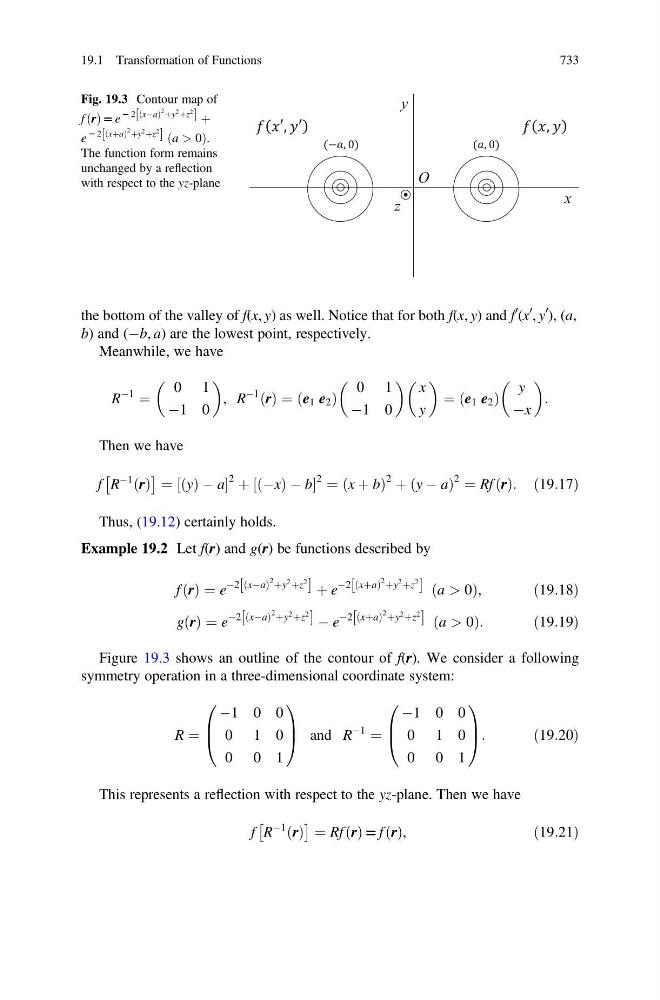
Figure 19.3 shows an outline of the contour of f(r). We consider a following
symmetry operation in a three-dimensional coordinate system:
R ¼
À1 0 0
0 1 0
0 0 1
0
B
@
1
C
A and R
À1
¼
À1 0 0
0 1 0
0 0 1
0
B
@
1
C
A:
ð19:20Þ
This represents a reflection with respect to the yz-plane. Then we have
f R
À1 r
ð Þ
Â
à ¼ Rf r
ð Þ = f r
ð Þ,
ð19:21Þ
y
x
( , 0)
(− , 0)
,
′, ′
z
O
Fig. 19.3 Contour map of
f r
ð Þ = e
2 2 xÀa
ð
Þ
2 þy
2 þz
2
½
þ
e
2 2 xþa
ð
Þ
2 þy
2 þz
2
½
a > 0
ð
Þ.
The function form remains
unchanged by a reflection
with respect to the yz-plane
19.1 Transformation of Functions
733