

extent to which these ecosystems may be restored. For example, fires that historically
swept across the lowland shrubland and riparian scrub communities no longer
operate in an agricultural or urban matrix. Instead, remnants of riparian scrub have
become colonised by vertebrate-dispersed species that are more typically present in
fire-resistant sites (Meek et al. 2013). Such a community may be a more realistic
target for long-term ecological restoration in lowland riparian ecosystems in a highly
modified landscape. An additional challenge to restoration in lowland river systems
is the altered flood regimes, mainly controlled by releases from upstream impoundments, that cause havoc with restoration plantings (J. van Biljon, pers. comm.
August 2018). For many sites, restoration to anything resembling historical community structure and composition is unfeasible (Meek et al. 2013).
23.5.2 Implementation: Spontaneous Regeneration
Selecting the most appropriate alien control method to expedite spontaneous regeneration is important. A key consideration is the need to optimise recruitment by
native soil-stored propagules and colonisation by wind or vertebrate-dispersed
propagules that represent components of the historic ecosystem most suited to the
local conditions. Although the most appropriate control method may be more
expensive than standard methods, it may still be more cost-effective by eliminating
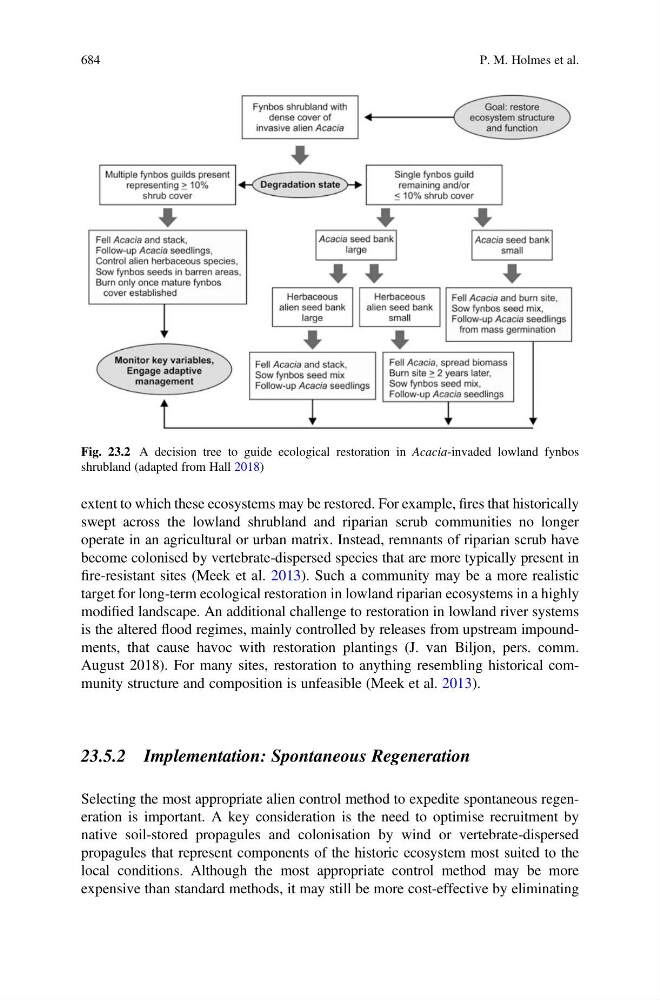
Fig. 23.2 A decision tree to guide ecological restoration in Acacia-invaded lowland fynbos
shrubland (adapted from Hall 2018)
684
P. M. Holmes et al.