

the chronosequence despite similar
edaphic conditions. The forb resprouter
growth form is difficult to restore from
seed and current methods of active restoration for this vegetation type are
inadequate.
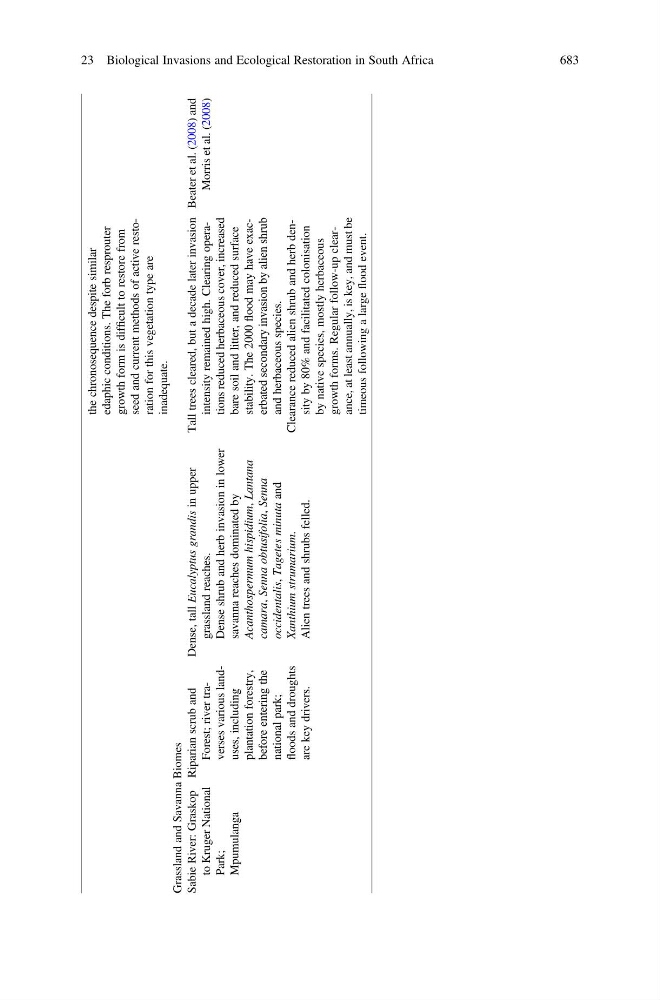
Grassland and Savanna Biomes
Sabie River: Graskop
to Kruger National
Park;
Mpumulanga
Riparian scrub and
Forest; river traverses various landuses, including
plantation forestry,
before entering the
national park;
floods and droughts
are key drivers.
Dense, tall Eucalyptus grandis
in upper
grassland reaches.
Dense shrub and herb invasion in lower
savanna reaches dominated by
Acanthospermum hispidium, Lantana
camara, Senna obtusifolia, Senna
occidentalis, Tagetes minuta
and
Xanthium strumarium.
Alien trees and shrubs felled.
Tall trees cleared, but a decade later invasion
intensity remained high. Clearing operations reduced herbaceous cover, increased
bare soil and litter, and reduced surface
stability. The 2000
flood may have exacerbated secondary invasion by alien shrub
and herbaceous species.
Clearance reduced alien shrub and herb density by 80% and facilitated colonisation
by native species, mostly herbaceous
growth forms. Regular follow-up clearance, at least annually, is key, and must be
timeous following a large
flood event.
Beater et al. (2008) and
Morris et al. (2008)
23 Biological Invasions and Ecological Restoration in South Africa
683