

research-staff complement of nearly 40 people, excluding post-graduate students and
support staff). The role of the CBC has been exemplary in demonstrating that,
besides the obviously beneficial consequences of rigorous research in enhancing
an understanding of invasions, there are considerable opportunities for cooperation
between research organisations and the wider community. This includes an impressive record of educational and outreach activities at schools, and with the wider
public, and opportunities for innovation. For example, the CBC’s ‘People with
Disabilities’ program provides full-time employment to a team of disabled people
who manage large and complex mass-rearing facilities, a globally unique initiative in
biological control (Martin et al. 2018).
2.3 The South African Forestry Research Institute
(1936–1990)
In 1936, the Department of Forestry initiated a research program at Jonkershoek,
near Stellenbosch in the Western Cape, to investigate the effects of afforestation with
alien pine trees (Pinus radiata, Monterey Pine) on the hydrology of water catchment
areas in the region. These studies, initially led by Prof. Christiaan L. Wicht
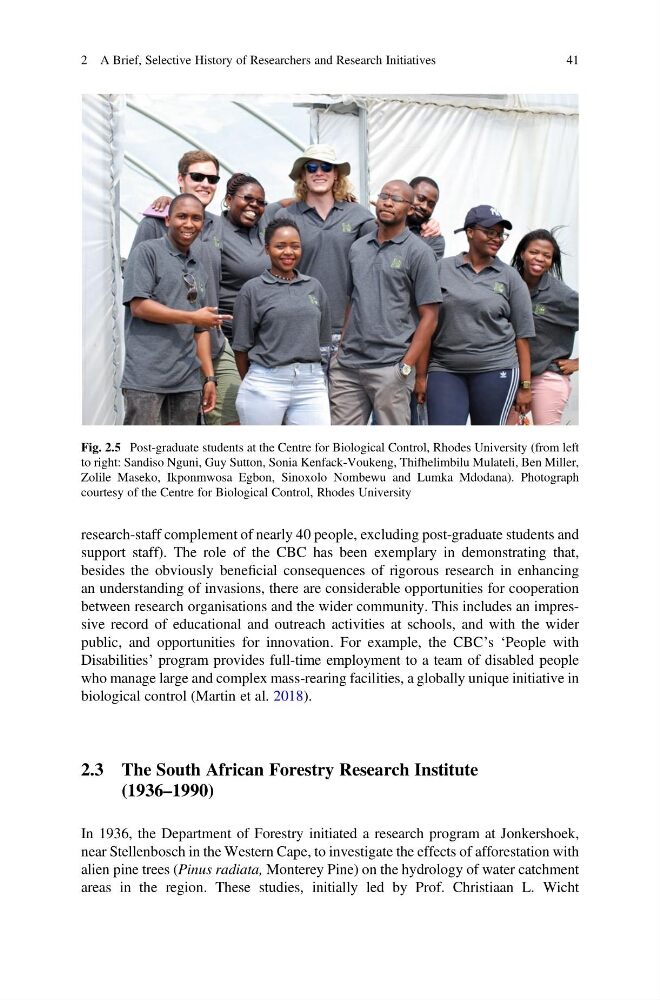
Fig. 2.5 Post-graduate students at the Centre for Biological Control, Rhodes University (from left
to right: Sandiso Nguni, Guy Sutton, Sonia Kenfack-Voukeng, Thifhelimbilu Mulateli, Ben Miller,
Zolile Maseko, Ikponmwosa Egbon, Sinoxolo Nombewu and Lumka Mdodana). Photograph
courtesy of the Centre for Biological Control, Rhodes University
2 A Brief, Selective History of Researchers and Research Initiatives
41
support staff). The role of the CBC has been exemplary in demonstrating that,
besides the obviously beneficial consequences of rigorous research in enhancing
an understanding of invasions, there are considerable opportunities for cooperation
between research organisations and the wider community. This includes an impressive record of educational and outreach activities at schools, and with the wider
public, and opportunities for innovation. For example, the CBC’s ‘People with
Disabilities’ program provides full-time employment to a team of disabled people
who manage large and complex mass-rearing facilities, a globally unique initiative in
biological control (Martin et al. 2018).
2.3 The South African Forestry Research Institute
(1936–1990)
In 1936, the Department of Forestry initiated a research program at Jonkershoek,
near Stellenbosch in the Western Cape, to investigate the effects of afforestation with
alien pine trees (Pinus radiata, Monterey Pine) on the hydrology of water catchment
areas in the region. These studies, initially led by Prof. Christiaan L. Wicht
Fig. 2.5 Post-graduate students at the Centre for Biological Control, Rhodes University (from left
to right: Sandiso Nguni, Guy Sutton, Sonia Kenfack-Voukeng, Thifhelimbilu Mulateli, Ben Miller,
Zolile Maseko, Ikponmwosa Egbon, Sinoxolo Nombewu and Lumka Mdodana). Photograph
courtesy of the Centre for Biological Control, Rhodes University
2 A Brief, Selective History of Researchers and Research Initiatives
41