

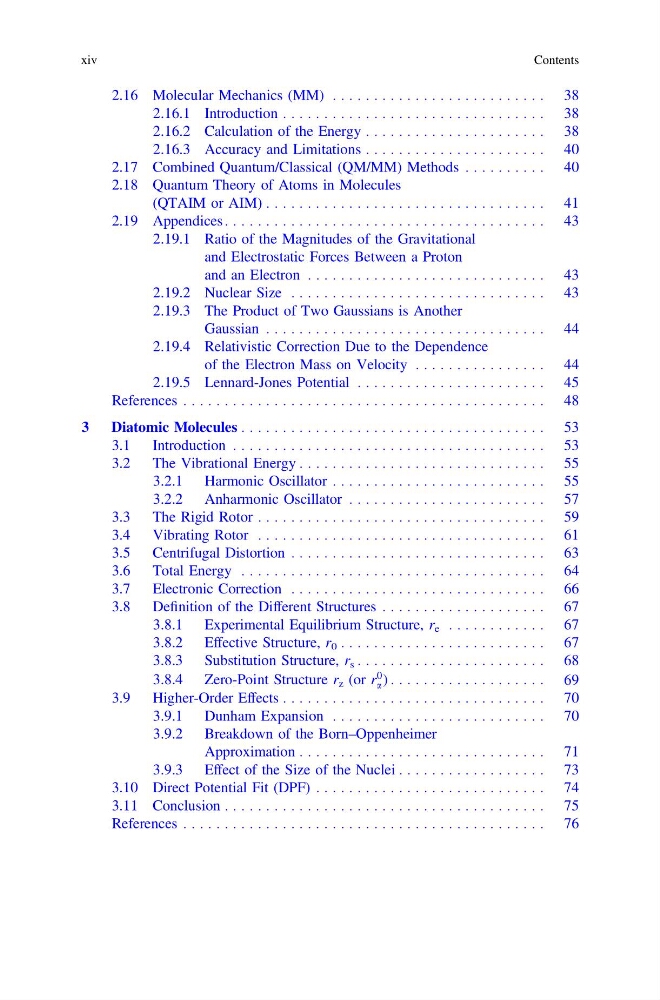
2.16 Molecular Mechanics (MM) . . . . . . . . . . . . . . . . . . . . . . . . . . 38
2.16.1 Introduction . . . . . . . . . . . . . . . . . . . . . . . . . . . . . . . . 38
2.16.2 Calculation of the Energy . . . . . . . . . . . . . . . . . . . . . . 38
2.16.3 Accuracy and Limitations . . . . . . . . . . . . . . . . . . . . . . 40
2.17 Combined Quantum/Classical (QM/MM) Methods . . . . . . . . . . 40
2.18 Quantum Theory of Atoms in Molecules
(QTAIM or AIM) . . . . . . . . . . . . . . . . . . . . . . . . . . . . . . . . . . 41
2.19 Appendices . . . . . . . . . . . . . . . . . . . . . . . . . . . . . . . . . . . . . . . 43
2.19.1 Ratio of the Magnitudes of the Gravitational
and Electrostatic Forces Between a Proton
and an Electron . . . . . . . . . . . . . . . . . . . . . . . . . . . . . 43
2.19.2 Nuclear Size . . . . . . . . . . . . . . . . . . . . . . . . . . . . . . . 43
2.19.3 The Product of Two Gaussians is Another
Gaussian . . . . . . . . . . . . . . . . . . . . . . . . . . . . . . . . . . 44
2.19.4 Relativistic Correction Due to the Dependence
of the Electron Mass on Velocity . . . . . . . . . . . . . . . . 44
2.19.5 Lennard-Jones Potential . . . . . . . . . . . . . . . . . . . . . . . 45
References . . . . . . . . . . . . . . . . . . . . . . . . . . . . . . . . . . . . . . . . . . . . 48
3 Diatomic Molecules . . . . . . . . . . . . . . . . . . . . . . . . . . . . . . . . . . . . . 53
3.1 Introduction . . . . . . . . . . . . . . . . . . . . . . . . . . . . . . . . . . . . . . 53
3.2 The Vibrational Energy . . . . . . . . . . . . . . . . . . . . . . . . . . . . . . 55
3.2.1 Harmonic Oscillator . . . . . . . . . . . . . . . . . . . . . . . . . . 55
3.2.2 Anharmonic Oscillator . . . . . . . . . . . . . . . . . . . . . . . . 57
3.3 The Rigid Rotor . . . . . . . . . . . . . . . . . . . . . . . . . . . . . . . . . . . 59
3.4 Vibrating Rotor . . . . . . . . . . . . . . . . . . . . . . . . . . . . . . . . . . . 61
3.5 Centrifugal Distortion . . . . . . . . . . . . . . . . . . . . . . . . . . . . . . . 63
3.6 Total Energy . . . . . . . . . . . . . . . . . . . . . . . . . . . . . . . . . . . . . 64
3.7 Electronic Correction . . . . . . . . . . . . . . . . . . . . . . . . . . . . . . . 66
3.8 Definition of the Different Structures . . . . . . . . . . . . . . . . . . . . 67
3.8.1 Experimental Equilibrium Structure, r e . . . . . . . . . . . . 67
3.8.2 Effective Structure, r 0 . . . . . . . . . . . . . . . . . . . . . . . . . 67
3.8.3 Substitution Structure, r s . . . . . . . . . . . . . . . . . . . . . . . 68
3.8.4 Zero-Point Structure r z (or r
0
a ) . . . . . . . . . . . . . . . . . . . 69
3.9 Higher-Order Effects . . . . . . . . . . . . . . . . . . . . . . . . . . . . . . . . 70
3.9.1 Dunham Expansion . . . . . . . . . . . . . . . . . . . . . . . . . . 70
3.9.2 Breakdown of the Born–Oppenheimer
Approximation . . . . . . . . . . . . . . . . . . . . . . . . . . . . . . 71
3.9.3 Effect of the Size of the Nuclei . . . . . . . . . . . . . . . . . . 73
3.10 Direct Potential Fit (DPF) . . . . . . . . . . . . . . . . . . . . . . . . . . . . 74
3.11 Conclusion . . . . . . . . . . . . . . . . . . . . . . . . . . . . . . . . . . . . . . . 75
References . . . . . . . . . . . . . . . . . . . . . . . . . . . . . . . . . . . . . . . . . . . . 76
xiv
Contents
2.16.1 Introduction . . . . . . . . . . . . . . . . . . . . . . . . . . . . . . . . 38
2.16.2 Calculation of the Energy . . . . . . . . . . . . . . . . . . . . . . 38
2.16.3 Accuracy and Limitations . . . . . . . . . . . . . . . . . . . . . . 40
2.17 Combined Quantum/Classical (QM/MM) Methods . . . . . . . . . . 40
2.18 Quantum Theory of Atoms in Molecules
(QTAIM or AIM) . . . . . . . . . . . . . . . . . . . . . . . . . . . . . . . . . . 41
2.19 Appendices . . . . . . . . . . . . . . . . . . . . . . . . . . . . . . . . . . . . . . . 43
2.19.1 Ratio of the Magnitudes of the Gravitational
and Electrostatic Forces Between a Proton
and an Electron . . . . . . . . . . . . . . . . . . . . . . . . . . . . . 43
2.19.2 Nuclear Size . . . . . . . . . . . . . . . . . . . . . . . . . . . . . . . 43
2.19.3 The Product of Two Gaussians is Another
Gaussian . . . . . . . . . . . . . . . . . . . . . . . . . . . . . . . . . . 44
2.19.4 Relativistic Correction Due to the Dependence
of the Electron Mass on Velocity . . . . . . . . . . . . . . . . 44
2.19.5 Lennard-Jones Potential . . . . . . . . . . . . . . . . . . . . . . . 45
References . . . . . . . . . . . . . . . . . . . . . . . . . . . . . . . . . . . . . . . . . . . . 48
3 Diatomic Molecules . . . . . . . . . . . . . . . . . . . . . . . . . . . . . . . . . . . . . 53
3.1 Introduction . . . . . . . . . . . . . . . . . . . . . . . . . . . . . . . . . . . . . . 53
3.2 The Vibrational Energy . . . . . . . . . . . . . . . . . . . . . . . . . . . . . . 55
3.2.1 Harmonic Oscillator . . . . . . . . . . . . . . . . . . . . . . . . . . 55
3.2.2 Anharmonic Oscillator . . . . . . . . . . . . . . . . . . . . . . . . 57
3.3 The Rigid Rotor . . . . . . . . . . . . . . . . . . . . . . . . . . . . . . . . . . . 59
3.4 Vibrating Rotor . . . . . . . . . . . . . . . . . . . . . . . . . . . . . . . . . . . 61
3.5 Centrifugal Distortion . . . . . . . . . . . . . . . . . . . . . . . . . . . . . . . 63
3.6 Total Energy . . . . . . . . . . . . . . . . . . . . . . . . . . . . . . . . . . . . . 64
3.7 Electronic Correction . . . . . . . . . . . . . . . . . . . . . . . . . . . . . . . 66
3.8 Definition of the Different Structures . . . . . . . . . . . . . . . . . . . . 67
3.8.1 Experimental Equilibrium Structure, r e . . . . . . . . . . . . 67
3.8.2 Effective Structure, r 0 . . . . . . . . . . . . . . . . . . . . . . . . . 67
3.8.3 Substitution Structure, r s . . . . . . . . . . . . . . . . . . . . . . . 68
3.8.4 Zero-Point Structure r z (or r
0
a ) . . . . . . . . . . . . . . . . . . . 69
3.9 Higher-Order Effects . . . . . . . . . . . . . . . . . . . . . . . . . . . . . . . . 70
3.9.1 Dunham Expansion . . . . . . . . . . . . . . . . . . . . . . . . . . 70
3.9.2 Breakdown of the Born–Oppenheimer
Approximation . . . . . . . . . . . . . . . . . . . . . . . . . . . . . . 71
3.9.3 Effect of the Size of the Nuclei . . . . . . . . . . . . . . . . . . 73
3.10 Direct Potential Fit (DPF) . . . . . . . . . . . . . . . . . . . . . . . . . . . . 74
3.11 Conclusion . . . . . . . . . . . . . . . . . . . . . . . . . . . . . . . . . . . . . . . 75
References . . . . . . . . . . . . . . . . . . . . . . . . . . . . . . . . . . . . . . . . . . . . 76
xiv
Contents