

fragment 49 (Fig. 11) was identified [134]. This fragment exhibited the low micromolar IC 50 values against type I PRMTs, PRMT1 (12 μM), PRMT3 (19 μM),
CARM1 (1 μM), PRMT6 (0.3 μM) and PRMT8 (2.1 μM), and was not active against
PRMT5 and PRMT7. In the same study, compound 53 (Fig. 11), a chlorine analogue
of the previously described CMPD-1, was also found to be equally active against
CARM1 (60 nM) and PRMT6 (70 nM), while IC 50 values against PRMT1, PRMT3
and PRMT8 ranged from 1.7 to 4.1 μM. Further optimization of fragment 49 led to
compound MS049 (51) [135], a dual inhibitor of CARM1 and PRMT6 with activities
similar to compound 53, CARM1; IC 5 34 nM, PRMT6; IC 50 43 nM, PRMT8; and
IC 50 1.6 μM, while no activity was detected against PRMT1, PRMT3, PRMT5 and
PRMT7. Cellular activity of MS049 was detected in HEK293T human embryonic
kidney cells where the compound exhibited an IC 50 value of 0.97 μM for the PRMT6mediated methylation of H3R2 and 1.4 μM for the methylation of Med12 by
CARM1 [135].
Additional SAR studies, starting from fragment 49, revealed that substitutions on
the aromatic ring were generally well tolerated [136]. This led to the identification of
the structurally similar but more specific CARM1 inhibitor compound 54 (Fig. 11)
with an IC 50 of 94 nM and 23-fold selectivity over PRMT6 (2.2 μM). However, no
cellular assays were reported with this compound. A more complex analogue of
MS049 is TP-064 (52, Fig. 11) discovered in a collaboration between Takeda
Pharmaceutical and the Structural Genomics Consortium (SGC) [137]. TP-064 has
an IC 50 of <10 nM, a 100-fold selectivity over other histone methyltransferases and
potent cellular activity with an IC 50 of 43 nM for CARM1/Med12-Rme2a and
growth inhibition observed in multiple myeloma cell lines. A similar hit-to-lead
approach was undertaken by the group of Shapira and Vedadi focusing on the
alanine-amide moiety as a guanidine mimic [138]. This SAR study yielded compound SGC2085 (44) with an IC 50 of 50 nM against CARM1 and 100-fold selectivity over PRMT6 (5.2 μM). However, the compound did not show any appreciable
cellular activity, presumably due to poor cell permeability.
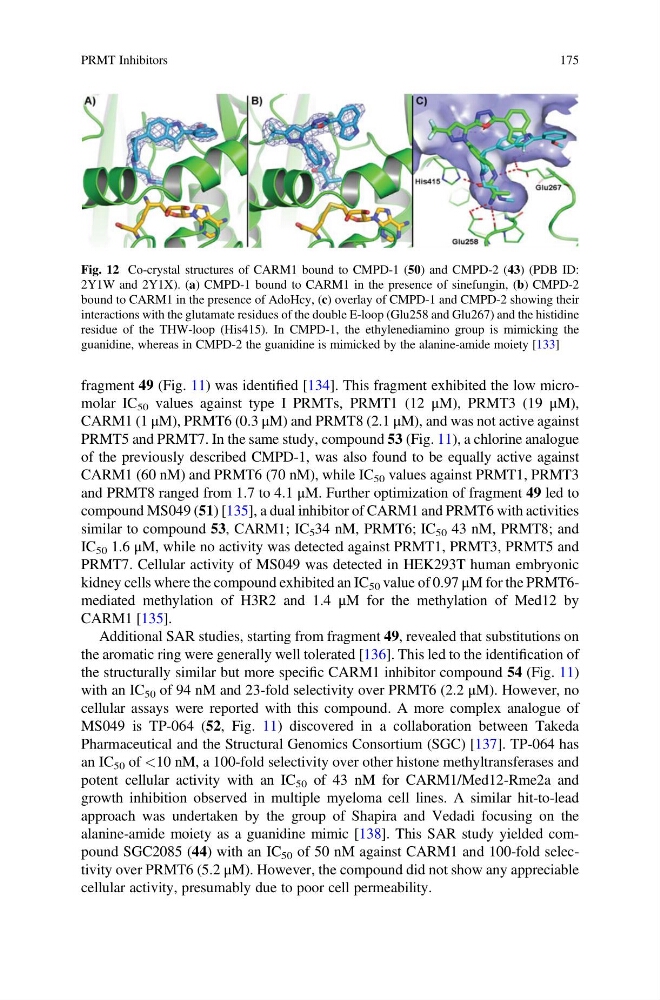
Fig. 12 Co-crystal structures of CARM1 bound to CMPD-1 (50) and CMPD-2 (43) (PDB ID:
2Y1W and 2Y1X). (a) CMPD-1 bound to CARM1 in the presence of sinefungin, (b) CMPD-2
bound to CARM1 in the presence of AdoHcy, (c) overlay of CMPD-1 and CMPD-2 showing their
interactions with the glutamate residues of the double E-loop (Glu258 and Glu267) and the histidine
residue of the THW-loop (His415). In CMPD-1, the ethylenediamino group is mimicking the
guanidine, whereas in CMPD-2 the guanidine is mimicked by the alanine-amide moiety [133]
PRMT Inhibitors
175
CARM1 (1 μM), PRMT6 (0.3 μM) and PRMT8 (2.1 μM), and was not active against
PRMT5 and PRMT7. In the same study, compound 53 (Fig. 11), a chlorine analogue
of the previously described CMPD-1, was also found to be equally active against
CARM1 (60 nM) and PRMT6 (70 nM), while IC 50 values against PRMT1, PRMT3
and PRMT8 ranged from 1.7 to 4.1 μM. Further optimization of fragment 49 led to
compound MS049 (51) [135], a dual inhibitor of CARM1 and PRMT6 with activities
similar to compound 53, CARM1; IC 5 34 nM, PRMT6; IC 50 43 nM, PRMT8; and
IC 50 1.6 μM, while no activity was detected against PRMT1, PRMT3, PRMT5 and
PRMT7. Cellular activity of MS049 was detected in HEK293T human embryonic
kidney cells where the compound exhibited an IC 50 value of 0.97 μM for the PRMT6mediated methylation of H3R2 and 1.4 μM for the methylation of Med12 by
CARM1 [135].
Additional SAR studies, starting from fragment 49, revealed that substitutions on
the aromatic ring were generally well tolerated [136]. This led to the identification of
the structurally similar but more specific CARM1 inhibitor compound 54 (Fig. 11)
with an IC 50 of 94 nM and 23-fold selectivity over PRMT6 (2.2 μM). However, no
cellular assays were reported with this compound. A more complex analogue of
MS049 is TP-064 (52, Fig. 11) discovered in a collaboration between Takeda
Pharmaceutical and the Structural Genomics Consortium (SGC) [137]. TP-064 has
an IC 50 of <10 nM, a 100-fold selectivity over other histone methyltransferases and
potent cellular activity with an IC 50 of 43 nM for CARM1/Med12-Rme2a and
growth inhibition observed in multiple myeloma cell lines. A similar hit-to-lead
approach was undertaken by the group of Shapira and Vedadi focusing on the
alanine-amide moiety as a guanidine mimic [138]. This SAR study yielded compound SGC2085 (44) with an IC 50 of 50 nM against CARM1 and 100-fold selectivity over PRMT6 (5.2 μM). However, the compound did not show any appreciable
cellular activity, presumably due to poor cell permeability.
Fig. 12 Co-crystal structures of CARM1 bound to CMPD-1 (50) and CMPD-2 (43) (PDB ID:
2Y1W and 2Y1X). (a) CMPD-1 bound to CARM1 in the presence of sinefungin, (b) CMPD-2
bound to CARM1 in the presence of AdoHcy, (c) overlay of CMPD-1 and CMPD-2 showing their
interactions with the glutamate residues of the double E-loop (Glu258 and Glu267) and the histidine
residue of the THW-loop (His415). In CMPD-1, the ethylenediamino group is mimicking the
guanidine, whereas in CMPD-2 the guanidine is mimicked by the alanine-amide moiety [133]
PRMT Inhibitors
175