

194
The connections between the most important factors related to trade in food are
illustrated in a model developed by the International Food Policy Research Institute
(IFPRI) known as the International Model for Policy Analysis of Agricultural
commodities and Trade or “IMPACT.” We look at IMPACT here to both gain insight
into food trade and to introduce some basic elements of modeling, a topic that will
be addressed in depth in Chap. 15.
IMPACT was developed in the 1990 “to address a lack of long-term vision and
consensus among policymakers and researchers about the actions necessary to feed
the world in the future, reduce poverty, and protect the natural resource base.
Over time, this economic model has been expanded and improved, and IMPACT
Table 7.1 Top importers and exporters of food by economic value 2016
Top importers of food
Top exporters of food
1
European Union
39.1%
European Union
41.1%
2
USA
10.1%
USA
11.0%
3
China
8.2%
Brazil
5.7%
4
Japan
4.2%
China
4.2%
5
Canada
2.7%
Canada
2.4%
6
Mexico
2.0%
Argentina
2.8%
7
China
1.9%
Australia
2.5%
8
India
1.9%
Indonesia
2.4%
9
Republic of Korea
1.9%
Mexico
2.3%
10
Russian Federation
1.9%
India
2.2%
Other
26.1%
Other
23.4%
Source: Food and Agriculture Organization of the United Nations, The State of Agricultural
Commodity Markets (2018)
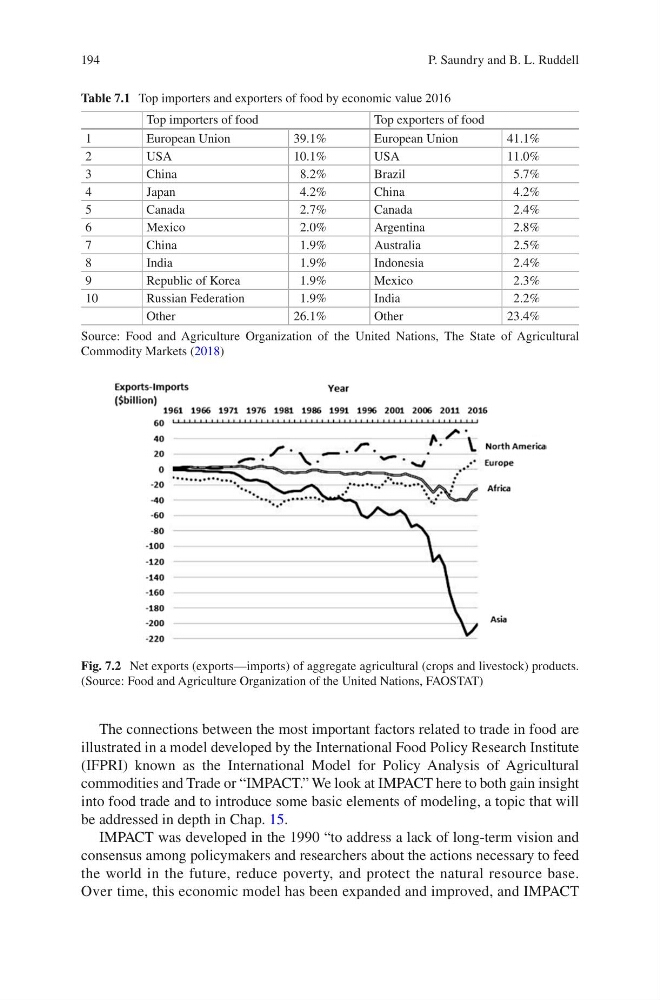
Fig. 7.2 Net exports (exports—imports) of aggregate agricultural (crops and livestock) products.
(Source: Food and Agriculture Organization of the United Nations, FAOSTAT)
P. Saundry and B. L. Ruddell
The connections between the most important factors related to trade in food are
illustrated in a model developed by the International Food Policy Research Institute
(IFPRI) known as the International Model for Policy Analysis of Agricultural
commodities and Trade or “IMPACT.” We look at IMPACT here to both gain insight
into food trade and to introduce some basic elements of modeling, a topic that will
be addressed in depth in Chap. 15.
IMPACT was developed in the 1990 “to address a lack of long-term vision and
consensus among policymakers and researchers about the actions necessary to feed
the world in the future, reduce poverty, and protect the natural resource base.
Over time, this economic model has been expanded and improved, and IMPACT
Table 7.1 Top importers and exporters of food by economic value 2016
Top importers of food
Top exporters of food
1
European Union
39.1%
European Union
41.1%
2
USA
10.1%
USA
11.0%
3
China
8.2%
Brazil
5.7%
4
Japan
4.2%
China
4.2%
5
Canada
2.7%
Canada
2.4%
6
Mexico
2.0%
Argentina
2.8%
7
China
1.9%
Australia
2.5%
8
India
1.9%
Indonesia
2.4%
9
Republic of Korea
1.9%
Mexico
2.3%
10
Russian Federation
1.9%
India
2.2%
Other
26.1%
Other
23.4%
Source: Food and Agriculture Organization of the United Nations, The State of Agricultural
Commodity Markets (2018)
Fig. 7.2 Net exports (exports—imports) of aggregate agricultural (crops and livestock) products.
(Source: Food and Agriculture Organization of the United Nations, FAOSTAT)
P. Saundry and B. L. Ruddell