

81
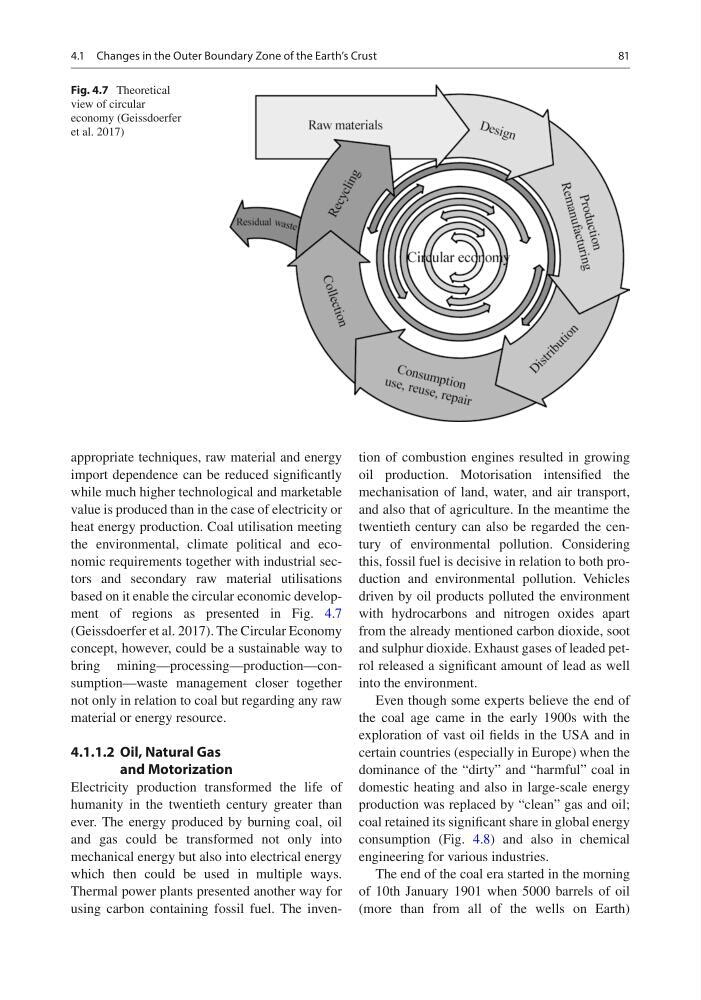
Fig. 4.7 Theoretical
view of circular
economy (Geissdoerfer
et al. 2017)
appropriate techniques, raw material and energy
import dependence can be reduced significantly
while much higher technological and marketable
value is produced than in the case of electricity or
heat energy production. Coal utilisation meeting
the environmental, climate political and economic requirements together with industrial sectors and secondary raw material utilisations
based on it enable the circular economic development of regions as presented in Fig. 4.7
(Geissdoerfer et al. 2017). The Circular Economy
concept, however, could be a sustainable way to
bring mining—processing—production—consumption—waste management closer together
not only in relation to coal but regarding any raw
material or energy resource.
4.1.1.2 Oil, Natural Gas
and Motorization
Electricity production transformed the life of
humanity in the twentieth century greater than
ever. The energy produced by burning coal, oil
and gas could be transformed not only into
mechanical energy but also into electrical energy
which then could be used in multiple ways.
Thermal power plants presented another way for
using carbon containing fossil fuel. The invention of combustion engines resulted in growing
oil production. Motorisation intensified the
mechanisation of land, water, and air transport,
and also that of agriculture. In the meantime the
twentieth century can also be regarded the century of environmental pollution. Considering
this, fossil fuel is decisive in relation to both production and environmental pollution. Vehicles
driven by oil products polluted the environment
with hydrocarbons and nitrogen oxides apart
from the already mentioned carbon dioxide, soot
and sulphur dioxide. Exhaust gases of leaded petrol released a significant amount of lead as well
into the environment.
Even though some experts believe the end of
the coal age came in the early 1900s with the
exploration of vast oil fields in the USA and in
certain countries (especially in Europe) when the
dominance of the “dirty” and “harmful” coal in
domestic heating and also in large-scale energy
production was replaced by “clean” gas and oil;
coal retained its significant share in global energy
consumption (Fig. 4.8) and also in chemical
engineering for various industries.
The end of the coal era started in the morning
of 10th January 1901 when 5000 barrels of oil
(more than from all of the wells on Earth)
4.1 Changes in the Outer Boundary Zone of the Earth’s Crust
Fig. 4.7 Theoretical
view of circular
economy (Geissdoerfer
et al. 2017)
appropriate techniques, raw material and energy
import dependence can be reduced significantly
while much higher technological and marketable
value is produced than in the case of electricity or
heat energy production. Coal utilisation meeting
the environmental, climate political and economic requirements together with industrial sectors and secondary raw material utilisations
based on it enable the circular economic development of regions as presented in Fig. 4.7
(Geissdoerfer et al. 2017). The Circular Economy
concept, however, could be a sustainable way to
bring mining—processing—production—consumption—waste management closer together
not only in relation to coal but regarding any raw
material or energy resource.
4.1.1.2 Oil, Natural Gas
and Motorization
Electricity production transformed the life of
humanity in the twentieth century greater than
ever. The energy produced by burning coal, oil
and gas could be transformed not only into
mechanical energy but also into electrical energy
which then could be used in multiple ways.
Thermal power plants presented another way for
using carbon containing fossil fuel. The invention of combustion engines resulted in growing
oil production. Motorisation intensified the
mechanisation of land, water, and air transport,
and also that of agriculture. In the meantime the
twentieth century can also be regarded the century of environmental pollution. Considering
this, fossil fuel is decisive in relation to both production and environmental pollution. Vehicles
driven by oil products polluted the environment
with hydrocarbons and nitrogen oxides apart
from the already mentioned carbon dioxide, soot
and sulphur dioxide. Exhaust gases of leaded petrol released a significant amount of lead as well
into the environment.
Even though some experts believe the end of
the coal age came in the early 1900s with the
exploration of vast oil fields in the USA and in
certain countries (especially in Europe) when the
dominance of the “dirty” and “harmful” coal in
domestic heating and also in large-scale energy
production was replaced by “clean” gas and oil;
coal retained its significant share in global energy
consumption (Fig. 4.8) and also in chemical
engineering for various industries.
The end of the coal era started in the morning
of 10th January 1901 when 5000 barrels of oil
(more than from all of the wells on Earth)
4.1 Changes in the Outer Boundary Zone of the Earth’s Crust