

188
cant GHG is methane (16%) produced in greatest
quantity by rice lands, cattle breeding and the gas
industry. Other GHGs contribute to this warming
effect only slightly. The relatively large uncertainty of the data (right margin of the figure) is
the result of uncertainties in the estimation of
partial data.
Besides greenhouse gases, certain components of the atmosphere contribute to the decrease
of near surface temperatures reducing in this way
the estimated degree and rate of global warming.
Aerosols among them were mentioned before the
sources of which are mostly natural: major emitters are wind induced soil erosion, marine salt
grains released into the atmosphere to the effect
of the rolling sea (salt content of marine water
droplets) and volcanic activities. Although wind
erosion is considered a natural source, the frequency, method and time of cultivation and the
soil cover of the cultivated plant, i.e. human
activities fundamentally determine the quantity
of soil particle getting into the atmosphere from
agricultural lands.
Water vapour in the atmosphere has to be
mentioned separately among the factors influencing global climate. Assessing its effects is made
difficult by the fact that it acts in the form of ice
crystals in higher altitudes and in cold periods.
The role of clouds is double: due to their albedo
they reduce the amount of heat reaching the surface while they trap long wave radiation emitted
by the surface effectively, i.e. hold back heat near
the surface. Numerous human activities influence
the amount of atmospheric water vapour like
deforestation, irrigation, reservoir construction,
land use, producing artificial surfaces. To greatest
degree, however, global temperature rise
increases the water vapour content of the atmosphere that acts like a positive feedback. Quantity
estimation of water vapour and the effects of
clouds on global surface temperatures, however,
is still much debated among climatologists.
4.5.2 Expected Trends
and Consequences of Climate
Change
Climate models presented in Sect. 2.6.2 predict
as a result of the above described diverse effects
warming global climate until the end of the
twenty-first century. (Models for more distant
future are currently less reliable.) The change is
tendency-like, therefore, temporary temperature
falls will occur just like several happened over
the last one and a half century since the start of
meteorological measurements but the trend of
increase is clear: global mean surface temperature increased almost 1 °C over this time period
(Fig. 4.82). We must not forget, however, that the
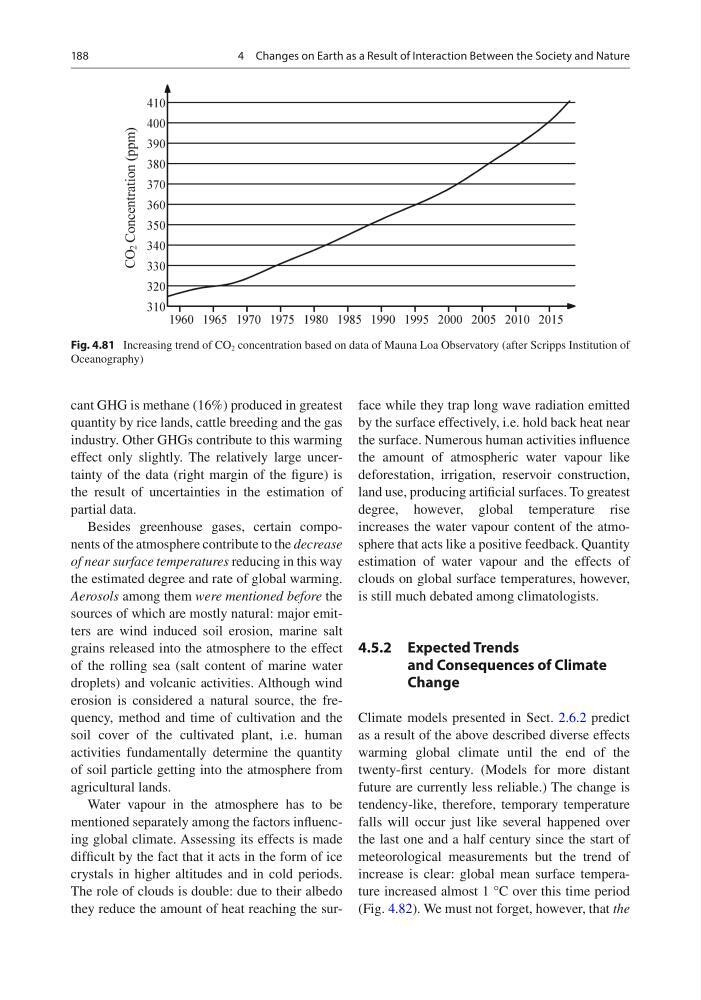
Fig. 4.81 Increasing trend of CO 2 concentration based on data of Mauna Loa Observatory (after Scripps Institution of
Oceanography)
4 Changes on Earth as a Result of Interaction Between the Society and Nature
cant GHG is methane (16%) produced in greatest
quantity by rice lands, cattle breeding and the gas
industry. Other GHGs contribute to this warming
effect only slightly. The relatively large uncertainty of the data (right margin of the figure) is
the result of uncertainties in the estimation of
partial data.
Besides greenhouse gases, certain components of the atmosphere contribute to the decrease
of near surface temperatures reducing in this way
the estimated degree and rate of global warming.
Aerosols among them were mentioned before the
sources of which are mostly natural: major emitters are wind induced soil erosion, marine salt
grains released into the atmosphere to the effect
of the rolling sea (salt content of marine water
droplets) and volcanic activities. Although wind
erosion is considered a natural source, the frequency, method and time of cultivation and the
soil cover of the cultivated plant, i.e. human
activities fundamentally determine the quantity
of soil particle getting into the atmosphere from
agricultural lands.
Water vapour in the atmosphere has to be
mentioned separately among the factors influencing global climate. Assessing its effects is made
difficult by the fact that it acts in the form of ice
crystals in higher altitudes and in cold periods.
The role of clouds is double: due to their albedo
they reduce the amount of heat reaching the surface while they trap long wave radiation emitted
by the surface effectively, i.e. hold back heat near
the surface. Numerous human activities influence
the amount of atmospheric water vapour like
deforestation, irrigation, reservoir construction,
land use, producing artificial surfaces. To greatest
degree, however, global temperature rise
increases the water vapour content of the atmosphere that acts like a positive feedback. Quantity
estimation of water vapour and the effects of
clouds on global surface temperatures, however,
is still much debated among climatologists.
4.5.2 Expected Trends
and Consequences of Climate
Change
Climate models presented in Sect. 2.6.2 predict
as a result of the above described diverse effects
warming global climate until the end of the
twenty-first century. (Models for more distant
future are currently less reliable.) The change is
tendency-like, therefore, temporary temperature
falls will occur just like several happened over
the last one and a half century since the start of
meteorological measurements but the trend of
increase is clear: global mean surface temperature increased almost 1 °C over this time period
(Fig. 4.82). We must not forget, however, that the
Fig. 4.81 Increasing trend of CO 2 concentration based on data of Mauna Loa Observatory (after Scripps Institution of
Oceanography)
4 Changes on Earth as a Result of Interaction Between the Society and Nature