

163
Although methane released from swamps is
not much more than that emitted by rice fields,
the area of swamps and thus methane emission
could be significantly increased by the melting
(as a result of global warming) of permafrost
(permanently frozen soil). According to presumptions, the greatest methane reservoir of the
Earth is methane hydrate present in high amount
in deep sea conditions. This instable compound
may react with sudden collapse to rising temperatures releasing an enormous amount (however,
not even approximately calculated yet) of methane into the atmosphere. This process could be
also induced by submarine volcanism posing a
significant environmental threat.
Although carbon exchange between the world
ocean and the atmosphere is smaller than that
between the continents and the atmosphere but
not the least important. The amount of carbon
input to the sea is 92.2 Gt (70 + 22.2 Gt in
Fig. 4.60) while the mass of carbon returning to
the atmosphere is 90.6 Gt/year (70.6 + 20 Gt).
The reason for the difference is not cleared yet,
nevertheless the phenomenon slows down the
increase of atmospheric carbon content. Carbon
dioxide entering the water reduces the pH of seawater the biological effects of which is discussed
in Sect. 4.4. Sabine et al. (2004) found that 23%
of the global oceanic anthropogenic CO 2 is stored
in the North Atlantic while this territory is only
15% of the area of the world ocean. In contrast,
the Southern Ocean takes only 9% of carbon
dioxide but 60% of the anthropogenic CO 2 is
stored in the seas of the entire southern hemisphere. Marine biota takes 50 Gt carbon annually
and releases 39 Gt carbon into surface ocean, and
11 Gt into the intermediate and deep ocean via its
metabolism. Carbon exchange between the intermediate and deep ocean is also significant resulting in an excess for the latter one including the
11 Gt carbon from the metabolism of marine
biota. The intermediate and deep ocean is the second largest carbon reservoir next to the carbonate
rocks of the crust. Only a small fraction of carbon
is deposited into the sediments on the ocean floor
at a very small rate (0.2 Gt/year). These sediments will eventually take part in geological processes of the crust as sedimentary rocks in a very
long time even in geological terms as well.
Finally, it has to be noted that in the Earth’s
crust carbonate rocks store an almost unbelievable
amount of carbon but this carbon hardly takes
part in the carbon cycle.
4.4.2 Biosphere Modified
by Humanity
In the global Earth model presented in Sect. 2.6.6
the biosphere modified by humanity is a separate
element of the system. Homo species lived a
hunting-collecting lifestyle without making any
major impact on the global Earth system until it
became the sole Homo species on Earth. Homo
sapiens started to cultivate land in certain regions
(most famous is the “Fertile Crescent”) at the
start of the Holocene, around 10,000 years ago
growing various plants. For this the original vegetation had to be eliminated in the given area, the
soil had to be loosened and the seeds of the plants
promising best crop yield had to be planted.
Humanity selected corn with large seeds and then
leguminous plants to grow. Systematic selection
resulted in the evolution of new plant types with
the help of spontaneous mutation.
Simultaneous with plant growing certain wild
animals were domesticated as well. Around
9000 years ago humans ate domesticated sheep
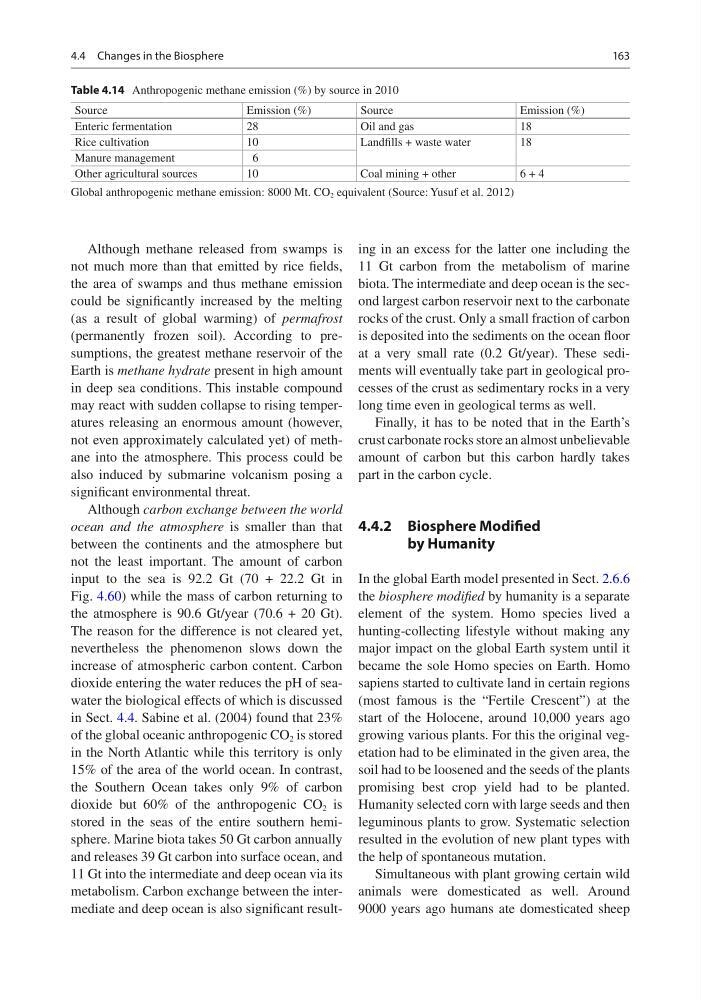
Table 4.14 Anthropogenic methane emission (%) by source in 2010
Source
Emission (%)
Source
Emission (%)
Enteric fermentation
28
Oil and gas
18
Rice cultivation
10
Landfills + waste water
18
Manure management
6
Other agricultural sources
10
Coal mining + other
6 + 4
Global anthropogenic methane emission: 8000 Mt. CO 2 equivalent (Source: Yusuf et al. 2012)
4.4 Changes in the Biosphere
Although methane released from swamps is
not much more than that emitted by rice fields,
the area of swamps and thus methane emission
could be significantly increased by the melting
(as a result of global warming) of permafrost
(permanently frozen soil). According to presumptions, the greatest methane reservoir of the
Earth is methane hydrate present in high amount
in deep sea conditions. This instable compound
may react with sudden collapse to rising temperatures releasing an enormous amount (however,
not even approximately calculated yet) of methane into the atmosphere. This process could be
also induced by submarine volcanism posing a
significant environmental threat.
Although carbon exchange between the world
ocean and the atmosphere is smaller than that
between the continents and the atmosphere but
not the least important. The amount of carbon
input to the sea is 92.2 Gt (70 + 22.2 Gt in
Fig. 4.60) while the mass of carbon returning to
the atmosphere is 90.6 Gt/year (70.6 + 20 Gt).
The reason for the difference is not cleared yet,
nevertheless the phenomenon slows down the
increase of atmospheric carbon content. Carbon
dioxide entering the water reduces the pH of seawater the biological effects of which is discussed
in Sect. 4.4. Sabine et al. (2004) found that 23%
of the global oceanic anthropogenic CO 2 is stored
in the North Atlantic while this territory is only
15% of the area of the world ocean. In contrast,
the Southern Ocean takes only 9% of carbon
dioxide but 60% of the anthropogenic CO 2 is
stored in the seas of the entire southern hemisphere. Marine biota takes 50 Gt carbon annually
and releases 39 Gt carbon into surface ocean, and
11 Gt into the intermediate and deep ocean via its
metabolism. Carbon exchange between the intermediate and deep ocean is also significant resulting in an excess for the latter one including the
11 Gt carbon from the metabolism of marine
biota. The intermediate and deep ocean is the second largest carbon reservoir next to the carbonate
rocks of the crust. Only a small fraction of carbon
is deposited into the sediments on the ocean floor
at a very small rate (0.2 Gt/year). These sediments will eventually take part in geological processes of the crust as sedimentary rocks in a very
long time even in geological terms as well.
Finally, it has to be noted that in the Earth’s
crust carbonate rocks store an almost unbelievable
amount of carbon but this carbon hardly takes
part in the carbon cycle.
4.4.2 Biosphere Modified
by Humanity
In the global Earth model presented in Sect. 2.6.6
the biosphere modified by humanity is a separate
element of the system. Homo species lived a
hunting-collecting lifestyle without making any
major impact on the global Earth system until it
became the sole Homo species on Earth. Homo
sapiens started to cultivate land in certain regions
(most famous is the “Fertile Crescent”) at the
start of the Holocene, around 10,000 years ago
growing various plants. For this the original vegetation had to be eliminated in the given area, the
soil had to be loosened and the seeds of the plants
promising best crop yield had to be planted.
Humanity selected corn with large seeds and then
leguminous plants to grow. Systematic selection
resulted in the evolution of new plant types with
the help of spontaneous mutation.
Simultaneous with plant growing certain wild
animals were domesticated as well. Around
9000 years ago humans ate domesticated sheep
Table 4.14 Anthropogenic methane emission (%) by source in 2010
Source
Emission (%)
Source
Emission (%)
Enteric fermentation
28
Oil and gas
18
Rice cultivation
10
Landfills + waste water
18
Manure management
6
Other agricultural sources
10
Coal mining + other
6 + 4
Global anthropogenic methane emission: 8000 Mt. CO 2 equivalent (Source: Yusuf et al. 2012)
4.4 Changes in the Biosphere