

140
plastics found in oceans is determined by the
large fragments.
Why floating-hovering plastic particles are
dangerous and why can be the pollution of the
ocean with plastics regarded a global environmental problem? The answer is the following.
• Threat to marine life. Swallowing large waste
fragments fish and marine mammal may die.
Sticking in drifting nets, fishing lines any larger
marine animal could die. This phenomenon is
called “ghost fishing” (Wurpel et al. 2011).
• Toxic material absorbed on the surface of
micro-fragments can be accumulated via the
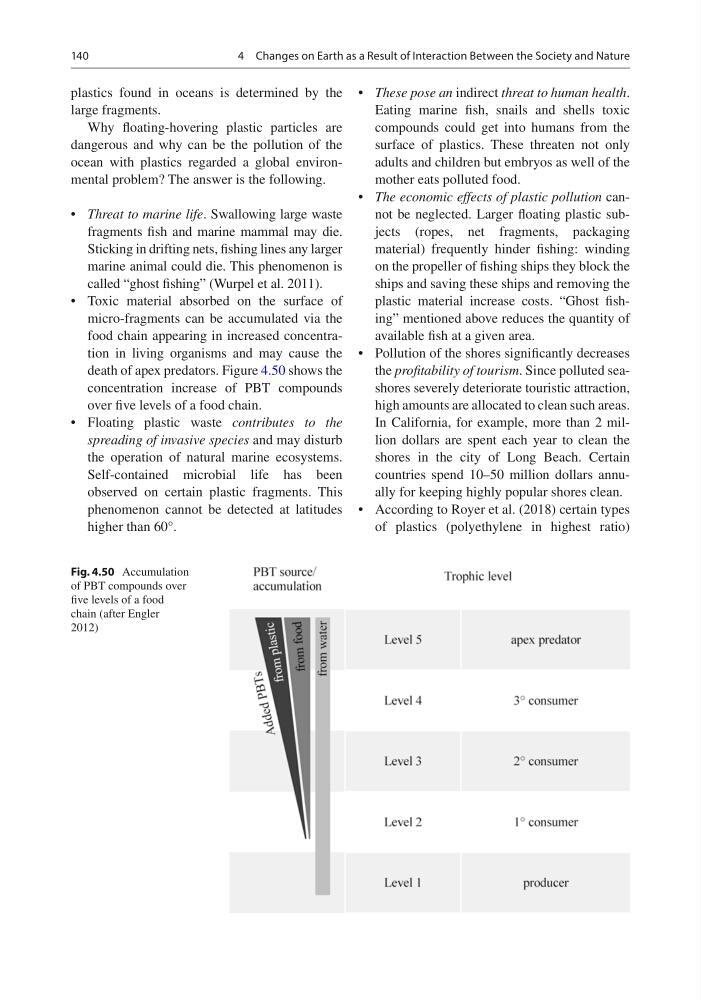
food chain appearing in increased concentration in living organisms and may cause the
death of apex predators. Figure 4.50 shows the
concentration increase of PBT compounds
over five levels of a food chain.
• Floating plastic waste contributes to the
spreading of invasive species and may disturb
the operation of natural marine ecosystems.
Self-contained microbial life has been
observed on certain plastic fragments. This
phenomenon cannot be detected at latitudes
higher than 60°.
• These pose an indirect threat to human health.
Eating marine fish, snails and shells toxic
compounds could get into humans from the
surface of plastics. These threaten not only
adults and children but embryos as well of the
mother eats polluted food.
• The economic effects of plastic pollution cannot be neglected. Larger floating plastic subjects (ropes, net fragments, packaging
material) frequently hinder fishing: winding
on the propeller of fishing ships they block the
ships and saving these ships and removing the
plastic material increase costs. “Ghost fishing” mentioned above reduces the quantity of
available fish at a given area.
• Pollution of the shores significantly decreases
the profitability of tourism. Since polluted seashores severely deteriorate touristic attraction,
high amounts are allocated to clean such areas.
In California, for example, more than 2 million dollars are spent each year to clean the
shores in the city of Long Beach. Certain
countries spend 10–50 million dollars annually for keeping highly popular shores clean.
• According to Royer et al. (2018) certain types
of plastics (polyethylene in highest ratio)
Fig. 4.50 Accumulation
of PBT compounds over
five levels of a food
chain (after Engler
2012)
4 Changes on Earth as a Result of Interaction Between the Society and Nature
plastics found in oceans is determined by the
large fragments.
Why floating-hovering plastic particles are
dangerous and why can be the pollution of the
ocean with plastics regarded a global environmental problem? The answer is the following.
• Threat to marine life. Swallowing large waste
fragments fish and marine mammal may die.
Sticking in drifting nets, fishing lines any larger
marine animal could die. This phenomenon is
called “ghost fishing” (Wurpel et al. 2011).
• Toxic material absorbed on the surface of
micro-fragments can be accumulated via the
food chain appearing in increased concentration in living organisms and may cause the
death of apex predators. Figure 4.50 shows the
concentration increase of PBT compounds
over five levels of a food chain.
• Floating plastic waste contributes to the
spreading of invasive species and may disturb
the operation of natural marine ecosystems.
Self-contained microbial life has been
observed on certain plastic fragments. This
phenomenon cannot be detected at latitudes
higher than 60°.
• These pose an indirect threat to human health.
Eating marine fish, snails and shells toxic
compounds could get into humans from the
surface of plastics. These threaten not only
adults and children but embryos as well of the
mother eats polluted food.
• The economic effects of plastic pollution cannot be neglected. Larger floating plastic subjects (ropes, net fragments, packaging
material) frequently hinder fishing: winding
on the propeller of fishing ships they block the
ships and saving these ships and removing the
plastic material increase costs. “Ghost fishing” mentioned above reduces the quantity of
available fish at a given area.
• Pollution of the shores significantly decreases
the profitability of tourism. Since polluted seashores severely deteriorate touristic attraction,
high amounts are allocated to clean such areas.
In California, for example, more than 2 million dollars are spent each year to clean the
shores in the city of Long Beach. Certain
countries spend 10–50 million dollars annually for keeping highly popular shores clean.
• According to Royer et al. (2018) certain types
of plastics (polyethylene in highest ratio)
Fig. 4.50 Accumulation
of PBT compounds over
five levels of a food
chain (after Engler
2012)
4 Changes on Earth as a Result of Interaction Between the Society and Nature