

102
the circulatory system operates and has a metabolism. Let us see what the difference is between a
real natural (near-natural) living system and the
running of an urban system.
Figure 4.27 illustrates the difference between
the material flow of a near-natural and an urban
ecosystem. Natural or near-natural ecosystems
are self-sustaining systems the basis of which is
the circulation of elements. In such a system
practically there is no waste because nature reutilise everything. Urban ecosystems are sustained
by energy produced by humans, water and raw
material exploited from nature and end products
transported into the ecosystem. If these inputs are
missing, urban ecosystems stop working within a
short period of time. In a city waste produced by
human activities can be recycled into the system
to sustain its working in a very small ratio like
green waste produced by tending parks, out of
which compost is produced that can be reused for
the nutrient supply of the parks. This, however, in
its own is not enough to sustain the park so it is
not completely the same as a near-natural
ecosystem.
The main difference between the operation of
an urban ecosystem and natural processes is that
the majority of waste and pollutant materials are
not returned into the urban flow thus it will not
become a cycle: wastes are produced continuously and only a fraction of them are reused currently even in developed countries as well. Gases
polluting the atmosphere are mixed at once in air
causing either local or even global pollution
depending on the lifespan of the gases. The environmental effects of urban sewage depend on the
efficiency of sewage treatment.
A given settlement is connected to other settlements via road and railway networks. (Air traffic
networks connect only major settlements and differ from the above two in their environmental
effects as well. Water transport also has different
characteristics.) Other networks like electricity,
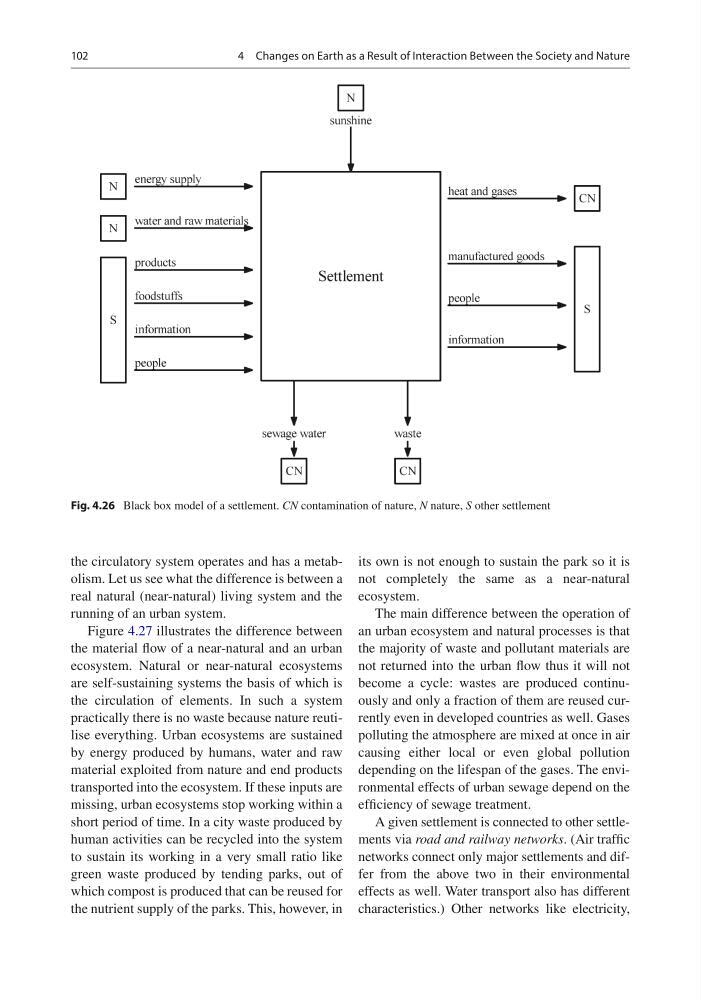
Fig. 4.26 Black box model of a settlement. CN contamination of nature, N nature, S other settlement
4 Changes on Earth as a Result of Interaction Between the Society and Nature
the circulatory system operates and has a metabolism. Let us see what the difference is between a
real natural (near-natural) living system and the
running of an urban system.
Figure 4.27 illustrates the difference between
the material flow of a near-natural and an urban
ecosystem. Natural or near-natural ecosystems
are self-sustaining systems the basis of which is
the circulation of elements. In such a system
practically there is no waste because nature reutilise everything. Urban ecosystems are sustained
by energy produced by humans, water and raw
material exploited from nature and end products
transported into the ecosystem. If these inputs are
missing, urban ecosystems stop working within a
short period of time. In a city waste produced by
human activities can be recycled into the system
to sustain its working in a very small ratio like
green waste produced by tending parks, out of
which compost is produced that can be reused for
the nutrient supply of the parks. This, however, in
its own is not enough to sustain the park so it is
not completely the same as a near-natural
ecosystem.
The main difference between the operation of
an urban ecosystem and natural processes is that
the majority of waste and pollutant materials are
not returned into the urban flow thus it will not
become a cycle: wastes are produced continuously and only a fraction of them are reused currently even in developed countries as well. Gases
polluting the atmosphere are mixed at once in air
causing either local or even global pollution
depending on the lifespan of the gases. The environmental effects of urban sewage depend on the
efficiency of sewage treatment.
A given settlement is connected to other settlements via road and railway networks. (Air traffic
networks connect only major settlements and differ from the above two in their environmental
effects as well. Water transport also has different
characteristics.) Other networks like electricity,
Fig. 4.26 Black box model of a settlement. CN contamination of nature, N nature, S other settlement
4 Changes on Earth as a Result of Interaction Between the Society and Nature