

82
Modern Food Microbiology
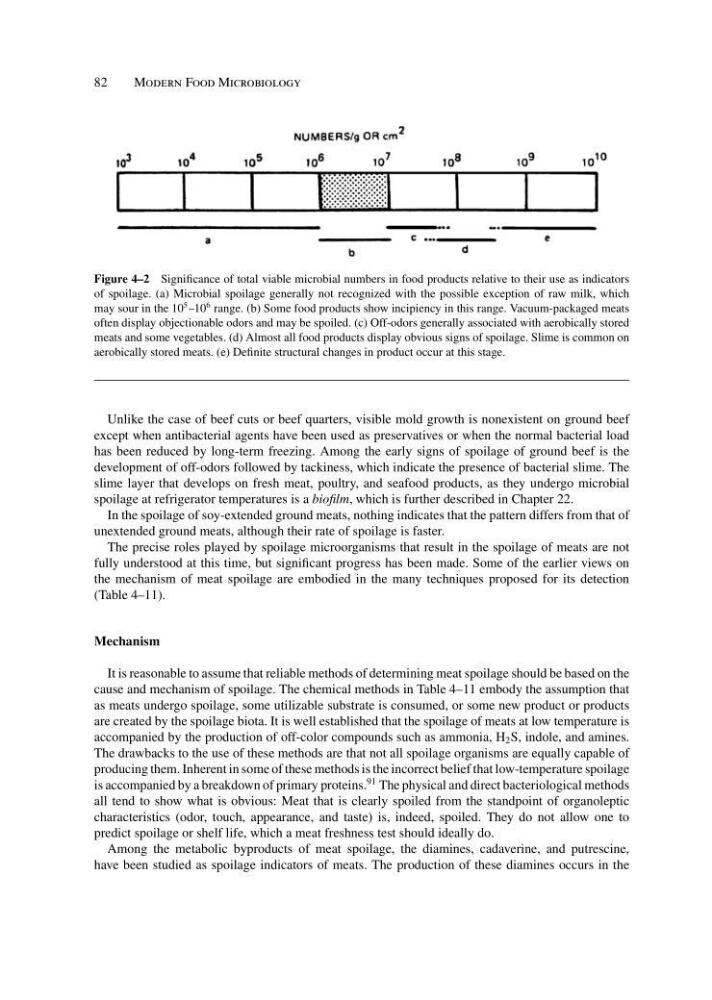
Figure 4–2 Significance of total viable microbial numbers in food products relative to their use as indicators
of spoilage. (a) Microbial spoilage generally not recognized with the possible exception of raw milk, which
may sour in the 10
5 –10
6 range. (b) Some food products show incipiency in this range. Vacuum-packaged meats
often display objectionable odors and may be spoiled. (c) Off-odors generally associated with aerobically stored
meats and some vegetables. (d) Almost all food products display obvious signs of spoilage. Slime is common on
aerobically stored meats. (e) Definite structural changes in product occur at this stage.
Unlike the case of beef cuts or beef quarters, visible mold growth is nonexistent on ground beef
except when antibacterial agents have been used as preservatives or when the normal bacterial load
has been reduced by long-term freezing. Among the early signs of spoilage of ground beef is the
development of off-odors followed by tackiness, which indicate the presence of bacterial slime. The
slime layer that develops on fresh meat, poultry, and seafood products, as they undergo microbial
spoilage at refrigerator temperatures is a biofilm, which is further described in Chapter 22.
In the spoilage of soy-extended ground meats, nothing indicates that the pattern differs from that of
unextended ground meats, although their rate of spoilage is faster.
The precise roles played by spoilage microorganisms that result in the spoilage of meats are not
fully understood at this time, but significant progress has been made. Some of the earlier views on
the mechanism of meat spoilage are embodied in the many techniques proposed for its detection
(Table 4–11).
Mechanism
It is reasonable to assume that reliable methods of determining meat spoilage should be based on the
cause and mechanism of spoilage. The chemical methods in Table 4–11 embody the assumption that
as meats undergo spoilage, some utilizable substrate is consumed, or some new product or products
are created by the spoilage biota. It is well established that the spoilage of meats at low temperature is
accompanied by the production of off-color compounds such as ammonia, H 2 S, indole, and amines.
The drawbacks to the use of these methods are that not all spoilage organisms are equally capable of
producing them. Inherent in some of these methods is the incorrect belief that low-temperature spoilage
is accompanied by a breakdown of primary proteins.
91 The physical and direct bacteriological methods
all tend to show what is obvious: Meat that is clearly spoiled from the standpoint of organoleptic
characteristics (odor, touch, appearance, and taste) is, indeed, spoiled. They do not allow one to
predict spoilage or shelf life, which a meat freshness test should ideally do.
Among the metabolic byproducts of meat spoilage, the diamines, cadaverine, and putrescine,
have been studied as spoilage indicators of meats. The production of these diamines occurs in the
Modern Food Microbiology
Figure 4–2 Significance of total viable microbial numbers in food products relative to their use as indicators
of spoilage. (a) Microbial spoilage generally not recognized with the possible exception of raw milk, which
may sour in the 10
5 –10
6 range. (b) Some food products show incipiency in this range. Vacuum-packaged meats
often display objectionable odors and may be spoiled. (c) Off-odors generally associated with aerobically stored
meats and some vegetables. (d) Almost all food products display obvious signs of spoilage. Slime is common on
aerobically stored meats. (e) Definite structural changes in product occur at this stage.
Unlike the case of beef cuts or beef quarters, visible mold growth is nonexistent on ground beef
except when antibacterial agents have been used as preservatives or when the normal bacterial load
has been reduced by long-term freezing. Among the early signs of spoilage of ground beef is the
development of off-odors followed by tackiness, which indicate the presence of bacterial slime. The
slime layer that develops on fresh meat, poultry, and seafood products, as they undergo microbial
spoilage at refrigerator temperatures is a biofilm, which is further described in Chapter 22.
In the spoilage of soy-extended ground meats, nothing indicates that the pattern differs from that of
unextended ground meats, although their rate of spoilage is faster.
The precise roles played by spoilage microorganisms that result in the spoilage of meats are not
fully understood at this time, but significant progress has been made. Some of the earlier views on
the mechanism of meat spoilage are embodied in the many techniques proposed for its detection
(Table 4–11).
Mechanism
It is reasonable to assume that reliable methods of determining meat spoilage should be based on the
cause and mechanism of spoilage. The chemical methods in Table 4–11 embody the assumption that
as meats undergo spoilage, some utilizable substrate is consumed, or some new product or products
are created by the spoilage biota. It is well established that the spoilage of meats at low temperature is
accompanied by the production of off-color compounds such as ammonia, H 2 S, indole, and amines.
The drawbacks to the use of these methods are that not all spoilage organisms are equally capable of
producing them. Inherent in some of these methods is the incorrect belief that low-temperature spoilage
is accompanied by a breakdown of primary proteins.
91 The physical and direct bacteriological methods
all tend to show what is obvious: Meat that is clearly spoiled from the standpoint of organoleptic
characteristics (odor, touch, appearance, and taste) is, indeed, spoiled. They do not allow one to
predict spoilage or shelf life, which a meat freshness test should ideally do.
Among the metabolic byproducts of meat spoilage, the diamines, cadaverine, and putrescine,
have been studied as spoilage indicators of meats. The production of these diamines occurs in the