

714 Modern Food Microbiology
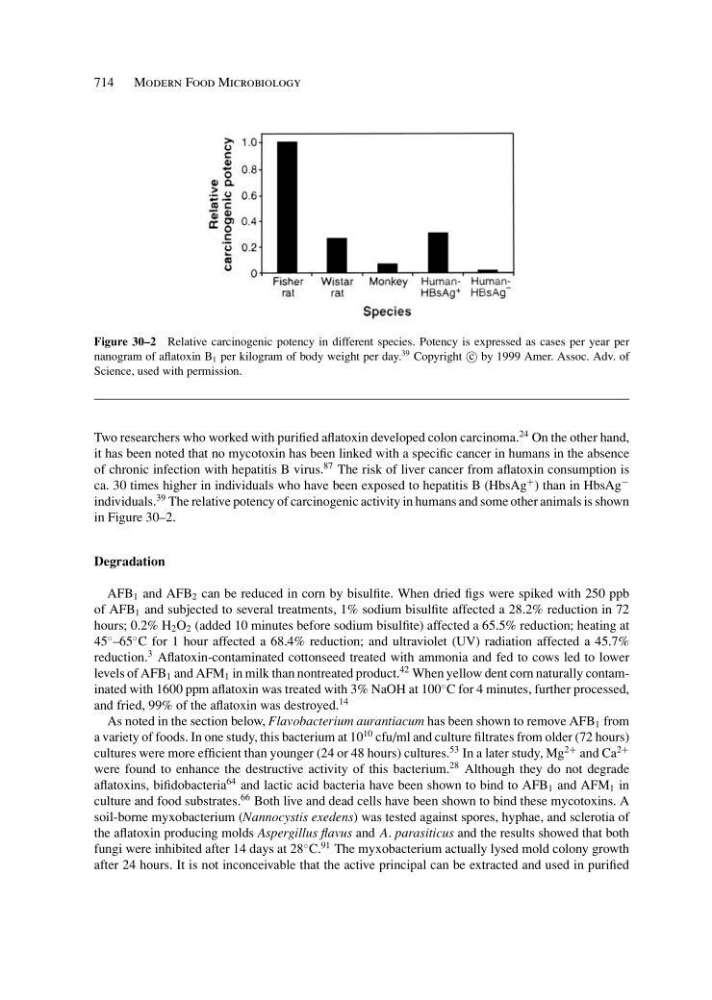
Figure 30–2 Relative carcinogenic potency in different species. Potency is expressed as cases per year per
nanogram of aflatoxin B 1 per kilogram of body weight per day.
39 Copyright c
by 1999 Amer. Assoc. Adv. of
Science, used with permission.
Two researchers who worked with purified aflatoxin developed colon carcinoma.
24 On the other hand,
it has been noted that no mycotoxin has been linked with a specific cancer in humans in the absence
of chronic infection with hepatitis B virus.
87 The risk of liver cancer from aflatoxin consumption is
ca. 30 times higher in individuals who have been exposed to hepatitis B (HbsAg
+ ) than in HbsAg
−
individuals.
39 The relative potency of carcinogenic activity in humans and some other animals is shown
in Figure 30–2.
Degradation
AFB 1 and AFB 2 can be reduced in corn by bisulfite. When dried figs were spiked with 250 ppb
of AFB 1 and subjected to several treatments, 1% sodium bisulfite affected a 28.2% reduction in 72
hours; 0.2% H 2 O 2 (added 10 minutes before sodium bisulfite) affected a 65.5% reduction; heating at
45
◦ –65
◦ C for 1 hour affected a 68.4% reduction; and ultraviolet (UV) radiation affected a 45.7%
reduction.
3 Aflatoxin-contaminated cottonseed treated with ammonia and fed to cows led to lower
levels of AFB 1 and AFM 1 in milk than nontreated product.
42 When yellow dent corn naturally contaminated with 1600 ppm aflatoxin was treated with 3% NaOH at 100
◦ C for 4 minutes, further processed,
and fried, 99% of the aflatoxin was destroyed.
14
As noted in the section below, Flavobacterium aurantiacum has been shown to remove AFB 1 from
a variety of foods. In one study, this bacterium at 10
10 cfu/ml and culture filtrates from older (72 hours)
cultures were more efficient than younger (24 or 48 hours) cultures.
53 In a later study, Mg
2+ and Ca
2+
were found to enhance the destructive activity of this bacterium.
28 Although they do not degrade
aflatoxins, bifidobacteria
64 and lactic acid bacteria have been shown to bind to AFB 1 and AFM 1 in
culture and food substrates.
66 Both live and dead cells have been shown to bind these mycotoxins. A
soil-borne myxobacterium (Nannocystis exedens) was tested against spores, hyphae, and sclerotia of
the aflatoxin producing molds Aspergillus flavus and A. parasiticus and the results showed that both
fungi were inhibited after 14 days at 28
◦ C.
91 The myxobacterium actually lysed mold colony growth
after 24 hours. It is not inconceivable that the active principal can be extracted and used in purified