

600 Modern Food Microbiology
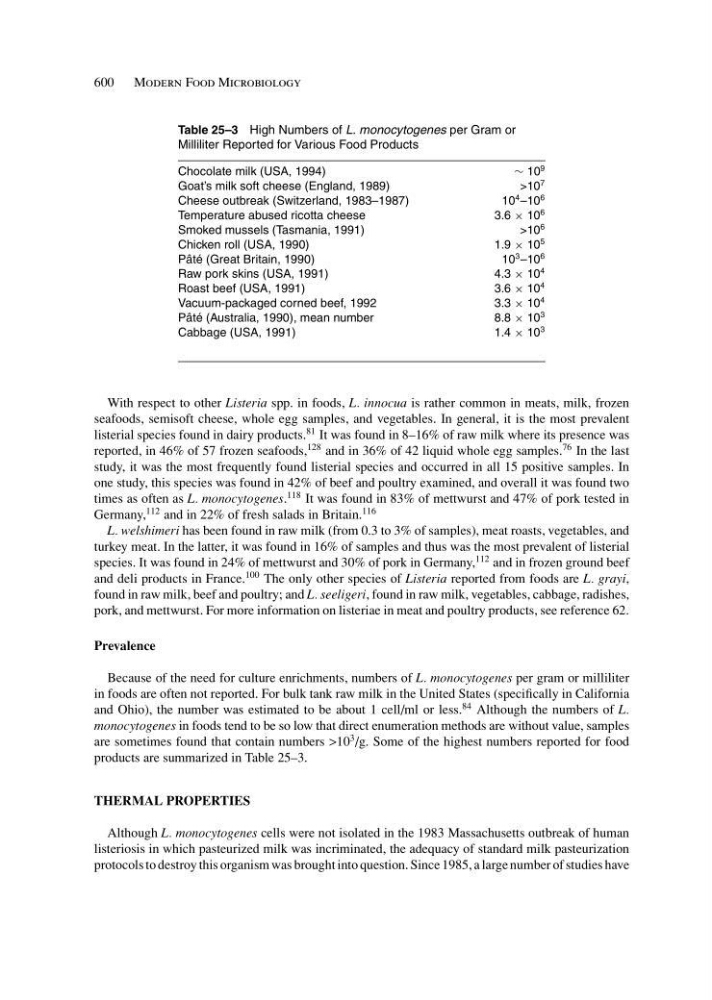
Table 25–3 High Numbers of L. monocytogenes per Gram or
Milliliter Reported for Various Food Products
Chocolate milk (USA, 1994)
∼ 10
9
Goat’s milk soft cheese (England, 1989)
>10
7
Cheese outbreak (Switzerland, 1983–1987)
10
4 –10
6
Temperature abused ricotta cheese
3.6 × 10
6
Smoked mussels (Tasmania, 1991)
>10
6
Chicken roll (USA, 1990)
1.9 × 10
5
Pˆ at ´
e (Great Britain, 1990)
10
3 –10
6
Raw pork skins (USA, 1991)
4.3 × 10
4
Roast beef (USA, 1991)
3.6 × 10
4
Vacuum-packaged corned beef, 1992
3.3 × 10
4
Pˆ at ´
e (Australia, 1990), mean number
8.8 × 10
3
Cabbage (USA, 1991)
1.4 × 10
3
With respect to other Listeria spp. in foods, L. innocua is rather common in meats, milk, frozen
seafoods, semisoft cheese, whole egg samples, and vegetables. In general, it is the most prevalent
listerial species found in dairy products.
81 It was found in 8–16% of raw milk where its presence was
reported, in 46% of 57 frozen seafoods,
128 and in 36% of 42 liquid whole egg samples.
76 In the last
study, it was the most frequently found listerial species and occurred in all 15 positive samples. In
one study, this species was found in 42% of beef and poultry examined, and overall it was found two
times as often as L. monocytogenes.
118 It was found in 83% of mettwurst and 47% of pork tested in
Germany,
112 and in 22% of fresh salads in Britain.
116
L. welshimeri has been found in raw milk (from 0.3 to 3% of samples), meat roasts, vegetables, and
turkey meat. In the latter, it was found in 16% of samples and thus was the most prevalent of listerial
species. It was found in 24% of mettwurst and 30% of pork in Germany,
112 and in frozen ground beef
and deli products in France.
100 The only other species of Listeria reported from foods are L. grayi,
found in raw milk, beef and poultry; and L. seeligeri, found in raw milk, vegetables, cabbage, radishes,
pork, and mettwurst. For more information on listeriae in meat and poultry products, see reference 62.
Prevalence
Because of the need for culture enrichments, numbers of L. monocytogenes per gram or milliliter
in foods are often not reported. For bulk tank raw milk in the United States (specifically in California
and Ohio), the number was estimated to be about 1 cell/ml or less.
84 Although the numbers of L.
monocytogenes in foods tend to be so low that direct enumeration methods are without value, samples
are sometimes found that contain numbers >10
3 /g. Some of the highest numbers reported for food
products are summarized in Table 25–3.
THERMAL PROPERTIES
Although L. monocytogenes cells were not isolated in the 1983 Massachusetts outbreak of human
listeriosis in which pasteurized milk was incriminated, the adequacy of standard milk pasteurization
protocols to destroy this organism was brought into question. Since 1985, a large number of studies have