

42
Modern Food Microbiology
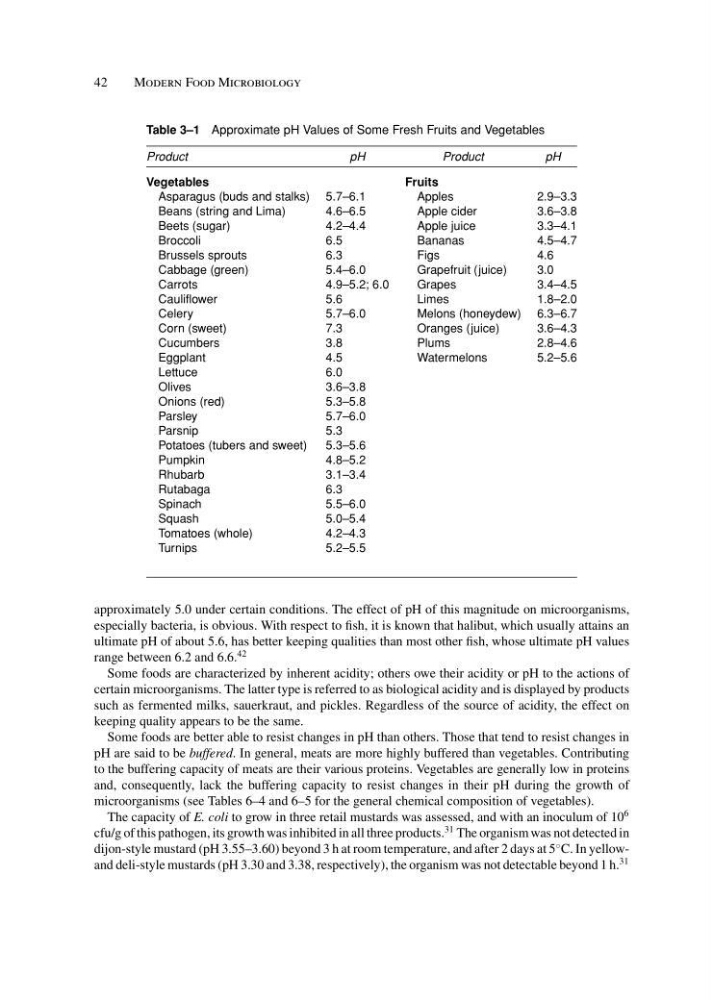
Table 3–1 Approximate pH Values of Some Fresh Fruits and Vegetables
Product
pH
Product
pH
Vegetables
Fruits
Asparagus (buds and stalks) 5.7–6.1
Apples
2.9–3.3
Beans (string and Lima)
4.6–6.5
Apple cider
3.6–3.8
Beets (sugar)
4.2–4.4
Apple juice
3.3–4.1
Broccoli
6.5
Bananas
4.5–4.7
Brussels sprouts
6.3
Figs
4.6
Cabbage (green)
5.4–6.0
Grapefruit (juice)
3.0
Carrots
4.9–5.2; 6.0
Grapes
3.4–4.5
Cauliflower
5.6
Limes
1.8–2.0
Celery
5.7–6.0
Melons (honeydew) 6.3–6.7
Corn (sweet)
7.3
Oranges (juice)
3.6–4.3
Cucumbers
3.8
Plums
2.8–4.6
Eggplant
4.5
Watermelons
5.2–5.6
Lettuce
6.0
Olives
3.6–3.8
Onions (red)
5.3–5.8
Parsley
5.7–6.0
Parsnip
5.3
Potatoes (tubers and sweet)
5.3–5.6
Pumpkin
4.8–5.2
Rhubarb
3.1–3.4
Rutabaga
6.3
Spinach
5.5–6.0
Squash
5.0–5.4
Tomatoes (whole)
4.2–4.3
Turnips
5.2–5.5
approximately 5.0 under certain conditions. The effect of pH of this magnitude on microorganisms,
especially bacteria, is obvious. With respect to fish, it is known that halibut, which usually attains an
ultimate pH of about 5.6, has better keeping qualities than most other fish, whose ultimate pH values
range between 6.2 and 6.6.
42
Some foods are characterized by inherent acidity; others owe their acidity or pH to the actions of
certain microorganisms. The latter type is referred to as biological acidity and is displayed by products
such as fermented milks, sauerkraut, and pickles. Regardless of the source of acidity, the effect on
keeping quality appears to be the same.
Some foods are better able to resist changes in pH than others. Those that tend to resist changes in
pH are said to be buffered. In general, meats are more highly buffered than vegetables. Contributing
to the buffering capacity of meats are their various proteins. Vegetables are generally low in proteins
and, consequently, lack the buffering capacity to resist changes in their pH during the growth of
microorganisms (see Tables 6–4 and 6–5 for the general chemical composition of vegetables).
The capacity of E. coli to grow in three retail mustards was assessed, and with an inoculum of 10
6
cfu/g of this pathogen, its growth was inhibited in all three products.
31 The organism was not detected in
dijon-style mustard (pH 3.55–3.60) beyond 3 h at room temperature, and after 2 days at 5
◦ C. In yellowand deli-style mustards (pH 3.30 and 3.38, respectively), the organism was not detectable beyond 1 h.
31
Modern Food Microbiology
Table 3–1 Approximate pH Values of Some Fresh Fruits and Vegetables
Product
pH
Product
pH
Vegetables
Fruits
Asparagus (buds and stalks) 5.7–6.1
Apples
2.9–3.3
Beans (string and Lima)
4.6–6.5
Apple cider
3.6–3.8
Beets (sugar)
4.2–4.4
Apple juice
3.3–4.1
Broccoli
6.5
Bananas
4.5–4.7
Brussels sprouts
6.3
Figs
4.6
Cabbage (green)
5.4–6.0
Grapefruit (juice)
3.0
Carrots
4.9–5.2; 6.0
Grapes
3.4–4.5
Cauliflower
5.6
Limes
1.8–2.0
Celery
5.7–6.0
Melons (honeydew) 6.3–6.7
Corn (sweet)
7.3
Oranges (juice)
3.6–4.3
Cucumbers
3.8
Plums
2.8–4.6
Eggplant
4.5
Watermelons
5.2–5.6
Lettuce
6.0
Olives
3.6–3.8
Onions (red)
5.3–5.8
Parsley
5.7–6.0
Parsnip
5.3
Potatoes (tubers and sweet)
5.3–5.6
Pumpkin
4.8–5.2
Rhubarb
3.1–3.4
Rutabaga
6.3
Spinach
5.5–6.0
Squash
5.0–5.4
Tomatoes (whole)
4.2–4.3
Turnips
5.2–5.5
approximately 5.0 under certain conditions. The effect of pH of this magnitude on microorganisms,
especially bacteria, is obvious. With respect to fish, it is known that halibut, which usually attains an
ultimate pH of about 5.6, has better keeping qualities than most other fish, whose ultimate pH values
range between 6.2 and 6.6.
42
Some foods are characterized by inherent acidity; others owe their acidity or pH to the actions of
certain microorganisms. The latter type is referred to as biological acidity and is displayed by products
such as fermented milks, sauerkraut, and pickles. Regardless of the source of acidity, the effect on
keeping quality appears to be the same.
Some foods are better able to resist changes in pH than others. Those that tend to resist changes in
pH are said to be buffered. In general, meats are more highly buffered than vegetables. Contributing
to the buffering capacity of meats are their various proteins. Vegetables are generally low in proteins
and, consequently, lack the buffering capacity to resist changes in their pH during the growth of
microorganisms (see Tables 6–4 and 6–5 for the general chemical composition of vegetables).
The capacity of E. coli to grow in three retail mustards was assessed, and with an inoculum of 10
6
cfu/g of this pathogen, its growth was inhibited in all three products.
31 The organism was not detected in
dijon-style mustard (pH 3.55–3.60) beyond 3 h at room temperature, and after 2 days at 5
◦ C. In yellowand deli-style mustards (pH 3.30 and 3.38, respectively), the organism was not detectable beyond 1 h.
31