

Intrinsic and Extrinsic Parameters of Foods That Affect Microbial Growth
41
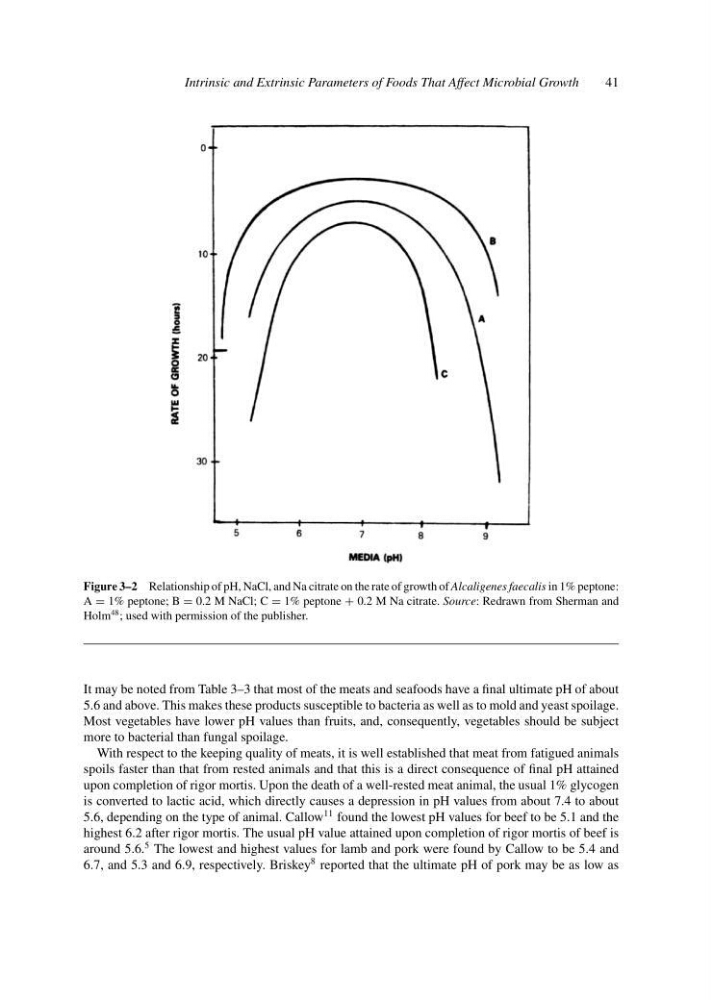
Figure 3–2 Relationship of pH, NaCl, and Na citrate on the rate of growth of Alcaligenes faecalis in 1% peptone:
A = 1% peptone; B = 0.2 M NaCl; C = 1% peptone + 0.2 M Na citrate. Source: Redrawn from Sherman and
Holm
48 ; used with permission of the publisher.
It may be noted from Table 3–3 that most of the meats and seafoods have a final ultimate pH of about
5.6 and above. This makes these products susceptible to bacteria as well as to mold and yeast spoilage.
Most vegetables have lower pH values than fruits, and, consequently, vegetables should be subject
more to bacterial than fungal spoilage.
With respect to the keeping quality of meats, it is well established that meat from fatigued animals
spoils faster than that from rested animals and that this is a direct consequence of final pH attained
upon completion of rigor mortis. Upon the death of a well-rested meat animal, the usual 1% glycogen
is converted to lactic acid, which directly causes a depression in pH values from about 7.4 to about
5.6, depending on the type of animal. Callow
11 found the lowest pH values for beef to be 5.1 and the
highest 6.2 after rigor mortis. The usual pH value attained upon completion of rigor mortis of beef is
around 5.6.
5 The lowest and highest values for lamb and pork were found by Callow to be 5.4 and
6.7, and 5.3 and 6.9, respectively. Briskey
8 reported that the ultimate pH of pork may be as low as
41
Figure 3–2 Relationship of pH, NaCl, and Na citrate on the rate of growth of Alcaligenes faecalis in 1% peptone:
A = 1% peptone; B = 0.2 M NaCl; C = 1% peptone + 0.2 M Na citrate. Source: Redrawn from Sherman and
Holm
48 ; used with permission of the publisher.
It may be noted from Table 3–3 that most of the meats and seafoods have a final ultimate pH of about
5.6 and above. This makes these products susceptible to bacteria as well as to mold and yeast spoilage.
Most vegetables have lower pH values than fruits, and, consequently, vegetables should be subject
more to bacterial than fungal spoilage.
With respect to the keeping quality of meats, it is well established that meat from fatigued animals
spoils faster than that from rested animals and that this is a direct consequence of final pH attained
upon completion of rigor mortis. Upon the death of a well-rested meat animal, the usual 1% glycogen
is converted to lactic acid, which directly causes a depression in pH values from about 7.4 to about
5.6, depending on the type of animal. Callow
11 found the lowest pH values for beef to be 5.1 and the
highest 6.2 after rigor mortis. The usual pH value attained upon completion of rigor mortis of beef is
around 5.6.
5 The lowest and highest values for lamb and pork were found by Callow to be 5.4 and
6.7, and 5.3 and 6.9, respectively. Briskey
8 reported that the ultimate pH of pork may be as low as