

560 Modern Food Microbiology
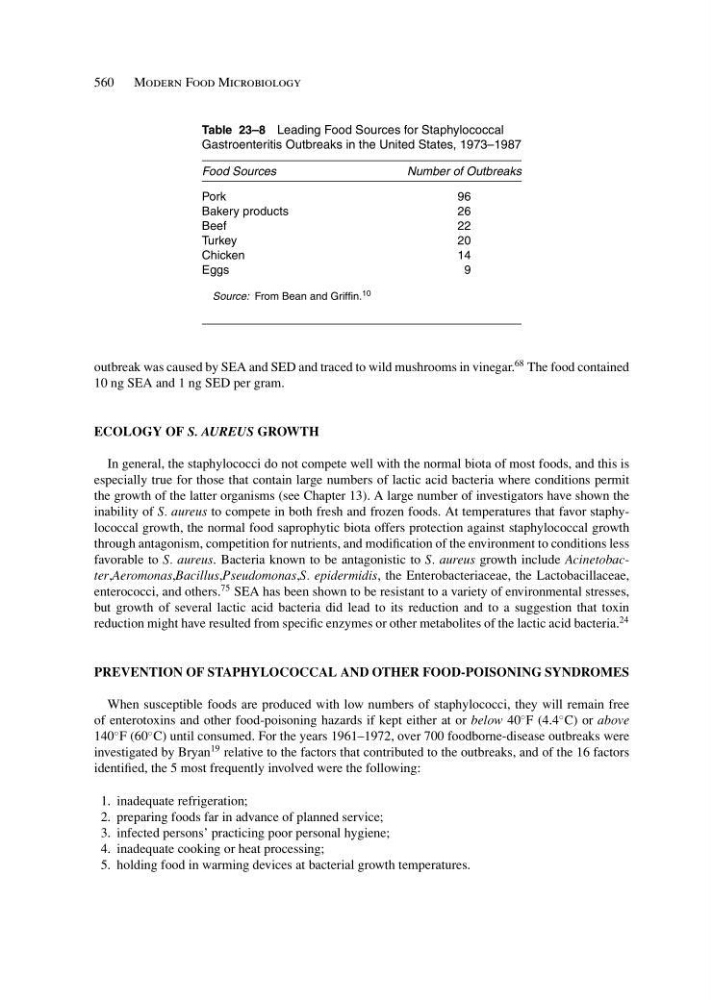
Table 23–8 Leading Food Sources for Staphylococcal
Gastroenteritis Outbreaks in the United States, 1973–1987
Food Sources
Number of Outbreaks
Pork
96
Bakery products
26
Beef
22
Turkey
20
Chicken
14
Eggs
9
Source: From Bean and Griffin. 10
outbreak was caused by SEA and SED and traced to wild mushrooms in vinegar.
68 The food contained
10 ng SEA and 1 ng SED per gram.
ECOLOGY OF S. AUREUS GROWTH
In general, the staphylococci do not compete well with the normal biota of most foods, and this is
especially true for those that contain large numbers of lactic acid bacteria where conditions permit
the growth of the latter organisms (see Chapter 13). A large number of investigators have shown the
inability of S. aureus to compete in both fresh and frozen foods. At temperatures that favor staphylococcal growth, the normal food saprophytic biota offers protection against staphylococcal growth
through antagonism, competition for nutrients, and modification of the environment to conditions less
favorable to S. aureus. Bacteria known to be antagonistic to S. aureus growth include Acinetobacter,Aeromonas,Bacillus,Pseudomonas,S. epidermidis, the Enterobacteriaceae, the Lactobacillaceae,
enterococci, and others.
75 SEA has been shown to be resistant to a variety of environmental stresses,
but growth of several lactic acid bacteria did lead to its reduction and to a suggestion that toxin
reduction might have resulted from specific enzymes or other metabolites of the lactic acid bacteria.
24
PREVENTION OF STAPHYLOCOCCAL AND OTHER FOOD-POISONING SYNDROMES
When susceptible foods are produced with low numbers of staphylococci, they will remain free
of enterotoxins and other food-poisoning hazards if kept either at or below 40
◦ F (4.4
◦ C) or above
140
◦ F (60
◦ C) until consumed. For the years 1961–1972, over 700 foodborne-disease outbreaks were
investigated by Bryan
19 relative to the factors that contributed to the outbreaks, and of the 16 factors
identified, the 5 most frequently involved were the following:
1. inadequate refrigeration;
2. preparing foods far in advance of planned service;
3. infected persons’ practicing poor personal hygiene;
4. inadequate cooking or heat processing;
5. holding food in warming devices at bacterial growth temperatures.