

550 Modern Food Microbiology
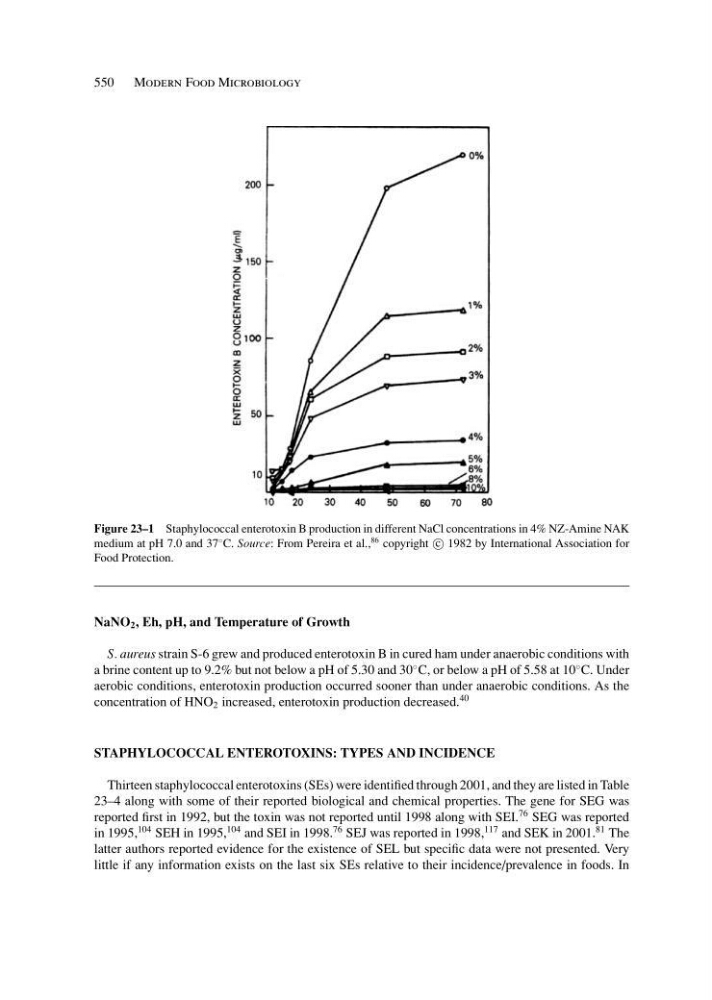
Figure 23–1 Staphylococcal enterotoxin B production in different NaCl concentrations in 4% NZ-Amine NAK
medium at pH 7.0 and 37
◦ C. Source: From Pereira et al.,
86 copyright c
1982 by International Association for
Food Protection.
NaNO 2 , Eh, pH, and Temperature of Growth
S. aureus strain S-6 grew and produced enterotoxin B in cured ham under anaerobic conditions with
a brine content up to 9.2% but not below a pH of 5.30 and 30
◦ C, or below a pH of 5.58 at 10
◦ C. Under
aerobic conditions, enterotoxin production occurred sooner than under anaerobic conditions. As the
concentration of HNO 2 increased, enterotoxin production decreased.
40
STAPHYLOCOCCAL ENTEROTOXINS: TYPES AND INCIDENCE
Thirteen staphylococcal enterotoxins (SEs) were identified through 2001, and they are listed in Table
23–4 along with some of their reported biological and chemical properties. The gene for SEG was
reported first in 1992, but the toxin was not reported until 1998 along with SEI.
76 SEG was reported
in 1995,
104 SEH in 1995,
104 and SEI in 1998.
76 SEJ was reported in 1998,
117 and SEK in 2001.
81 The
latter authors reported evidence for the existence of SEL but specific data were not presented. Very
little if any information exists on the last six SEs relative to their incidence/prevalence in foods. In