

526 Modern Food Microbiology
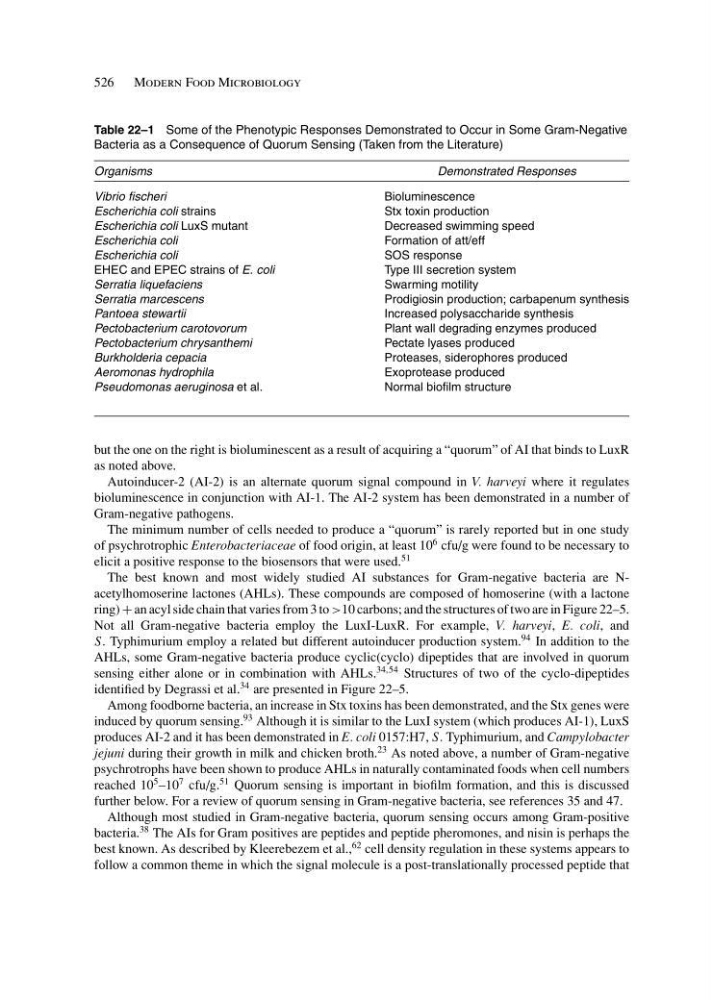
Table 22–1 Some of the Phenotypic Responses Demonstrated to Occur in Some Gram-Negative
Bacteria as a Consequence of Quorum Sensing (Taken from the Literature)
Organisms
Demonstrated Responses
Vibrio fischeri
Bioluminescence
Escherichia coli strains
Stx toxin production
Escherichia coli LuxS mutant
Decreased swimming speed
Escherichia coli
Formation of att/eff
Escherichia coli
SOS response
EHEC and EPEC strains of E. coli
Type III secretion system
Serratia liquefaciens
Swarming motility
Serratia marcescens
Prodigiosin production; carbapenum synthesis
Pantoea stewartii
Increased polysaccharide synthesis
Pectobacterium carotovorum
Plant wall degrading enzymes produced
Pectobacterium chrysanthemi
Pectate lyases produced
Burkholderia cepacia
Proteases, siderophores produced
Aeromonas hydrophila
Exoprotease produced
Pseudomonas aeruginosa et al.
Normal biofilm structure
but the one on the right is bioluminescent as a result of acquiring a “quorum” of AI that binds to LuxR
as noted above.
Autoinducer-2 (AI-2) is an alternate quorum signal compound in V. harveyi where it regulates
bioluminescence in conjunction with AI-1. The AI-2 system has been demonstrated in a number of
Gram-negative pathogens.
The minimum number of cells needed to produce a “quorum” is rarely reported but in one study
of psychrotrophic Enterobacteriaceae of food origin, at least 10
6 cfu/g were found to be necessary to
elicit a positive response to the biosensors that were used.
51
The best known and most widely studied AI substances for Gram-negative bacteria are Nacetylhomoserine lactones (AHLs). These compounds are composed of homoserine (with a lactone
ring) + an acyl side chain that varies from 3 to >10 carbons; and the structures of two are in Figure 22–5.
Not all Gram-negative bacteria employ the LuxI-LuxR. For example, V. harveyi, E. coli, and
S. Typhimurium employ a related but different autoinducer production system.
94 In addition to the
AHLs, some Gram-negative bacteria produce cyclic(cyclo) dipeptides that are involved in quorum
sensing either alone or in combination with AHLs.
34,54 Structures of two of the cyclo-dipeptides
identified by Degrassi et al.
34 are presented in Figure 22–5.
Among foodborne bacteria, an increase in Stx toxins has been demonstrated, and the Stx genes were
induced by quorum sensing.
93 Although it is similar to the LuxI system (which produces AI-1), LuxS
produces AI-2 and it has been demonstrated in E. coli 0157:H7, S. Typhimurium, and Campylobacter
jejuni during their growth in milk and chicken broth.
23 As noted above, a number of Gram-negative
psychrotrophs have been shown to produce AHLs in naturally contaminated foods when cell numbers
reached 10
5 –10
7 cfu/g.
51 Quorum sensing is important in biofilm formation, and this is discussed
further below. For a review of quorum sensing in Gram-negative bacteria, see references 35 and 47.
Although most studied in Gram-negative bacteria, quorum sensing occurs among Gram-positive
bacteria.
38 The AIs for Gram positives are peptides and peptide pheromones, and nisin is perhaps the
best known. As described by Kleerebezem et al.,
62 cell density regulation in these systems appears to
follow a common theme in which the signal molecule is a post-translationally processed peptide that
Table 22–1 Some of the Phenotypic Responses Demonstrated to Occur in Some Gram-Negative
Bacteria as a Consequence of Quorum Sensing (Taken from the Literature)
Organisms
Demonstrated Responses
Vibrio fischeri
Bioluminescence
Escherichia coli strains
Stx toxin production
Escherichia coli LuxS mutant
Decreased swimming speed
Escherichia coli
Formation of att/eff
Escherichia coli
SOS response
EHEC and EPEC strains of E. coli
Type III secretion system
Serratia liquefaciens
Swarming motility
Serratia marcescens
Prodigiosin production; carbapenum synthesis
Pantoea stewartii
Increased polysaccharide synthesis
Pectobacterium carotovorum
Plant wall degrading enzymes produced
Pectobacterium chrysanthemi
Pectate lyases produced
Burkholderia cepacia
Proteases, siderophores produced
Aeromonas hydrophila
Exoprotease produced
Pseudomonas aeruginosa et al.
Normal biofilm structure
but the one on the right is bioluminescent as a result of acquiring a “quorum” of AI that binds to LuxR
as noted above.
Autoinducer-2 (AI-2) is an alternate quorum signal compound in V. harveyi where it regulates
bioluminescence in conjunction with AI-1. The AI-2 system has been demonstrated in a number of
Gram-negative pathogens.
The minimum number of cells needed to produce a “quorum” is rarely reported but in one study
of psychrotrophic Enterobacteriaceae of food origin, at least 10
6 cfu/g were found to be necessary to
elicit a positive response to the biosensors that were used.
51
The best known and most widely studied AI substances for Gram-negative bacteria are Nacetylhomoserine lactones (AHLs). These compounds are composed of homoserine (with a lactone
ring) + an acyl side chain that varies from 3 to >10 carbons; and the structures of two are in Figure 22–5.
Not all Gram-negative bacteria employ the LuxI-LuxR. For example, V. harveyi, E. coli, and
S. Typhimurium employ a related but different autoinducer production system.
94 In addition to the
AHLs, some Gram-negative bacteria produce cyclic(cyclo) dipeptides that are involved in quorum
sensing either alone or in combination with AHLs.
34,54 Structures of two of the cyclo-dipeptides
identified by Degrassi et al.
34 are presented in Figure 22–5.
Among foodborne bacteria, an increase in Stx toxins has been demonstrated, and the Stx genes were
induced by quorum sensing.
93 Although it is similar to the LuxI system (which produces AI-1), LuxS
produces AI-2 and it has been demonstrated in E. coli 0157:H7, S. Typhimurium, and Campylobacter
jejuni during their growth in milk and chicken broth.
23 As noted above, a number of Gram-negative
psychrotrophs have been shown to produce AHLs in naturally contaminated foods when cell numbers
reached 10
5 –10
7 cfu/g.
51 Quorum sensing is important in biofilm formation, and this is discussed
further below. For a review of quorum sensing in Gram-negative bacteria, see references 35 and 47.
Although most studied in Gram-negative bacteria, quorum sensing occurs among Gram-positive
bacteria.
38 The AIs for Gram positives are peptides and peptide pheromones, and nisin is perhaps the
best known. As described by Kleerebezem et al.,
62 cell density regulation in these systems appears to
follow a common theme in which the signal molecule is a post-translationally processed peptide that