

Introduction to Foodborne Pathogens
521
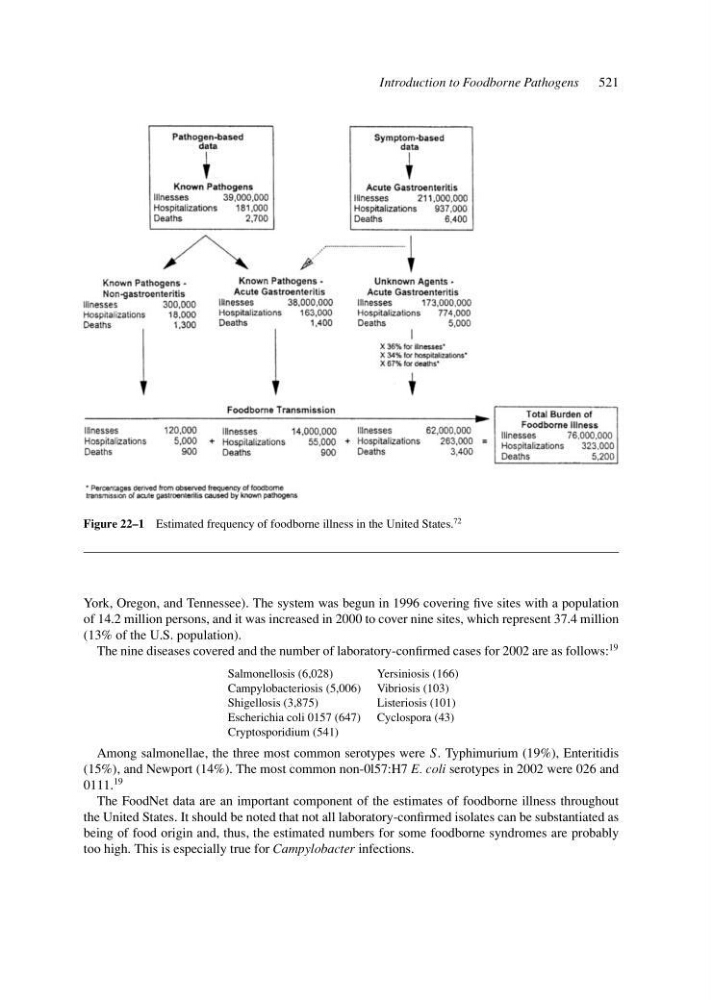
Figure 22–1 Estimated frequency of foodborne illness in the United States.
72
York, Oregon, and Tennessee). The system was begun in 1996 covering five sites with a population
of 14.2 million persons, and it was increased in 2000 to cover nine sites, which represent 37.4 million
(13% of the U.S. population).
The nine diseases covered and the number of laboratory-confirmed cases for 2002 are as follows:
19
Salmonellosis (6,028)
Yersiniosis (166)
Campylobacteriosis (5,006) Vibriosis (103)
Shigellosis (3,875)
Listeriosis (101)
Escherichia coli 0157 (647) Cyclospora (43)
Cryptosporidium (541)
Among salmonellae, the three most common serotypes were S. Typhimurium (19%), Enteritidis
(15%), and Newport (14%). The most common non-0l57:H7 E. coli serotypes in 2002 were 026 and
0111.
19
The FoodNet data are an important component of the estimates of foodborne illness throughout
the United States. It should be noted that not all laboratory-confirmed isolates can be substantiated as
being of food origin and, thus, the estimated numbers for some foodborne syndromes are probably
too high. This is especially true for Campylobacter infections.
521
Figure 22–1 Estimated frequency of foodborne illness in the United States.
72
York, Oregon, and Tennessee). The system was begun in 1996 covering five sites with a population
of 14.2 million persons, and it was increased in 2000 to cover nine sites, which represent 37.4 million
(13% of the U.S. population).
The nine diseases covered and the number of laboratory-confirmed cases for 2002 are as follows:
19
Salmonellosis (6,028)
Yersiniosis (166)
Campylobacteriosis (5,006) Vibriosis (103)
Shigellosis (3,875)
Listeriosis (101)
Escherichia coli 0157 (647) Cyclospora (43)
Cryptosporidium (541)
Among salmonellae, the three most common serotypes were S. Typhimurium (19%), Enteritidis
(15%), and Newport (14%). The most common non-0l57:H7 E. coli serotypes in 2002 were 026 and
0111.
19
The FoodNet data are an important component of the estimates of foodborne illness throughout
the United States. It should be noted that not all laboratory-confirmed isolates can be substantiated as
being of food origin and, thus, the estimated numbers for some foodborne syndromes are probably
too high. This is especially true for Campylobacter infections.