

522 Modern Food Microbiology
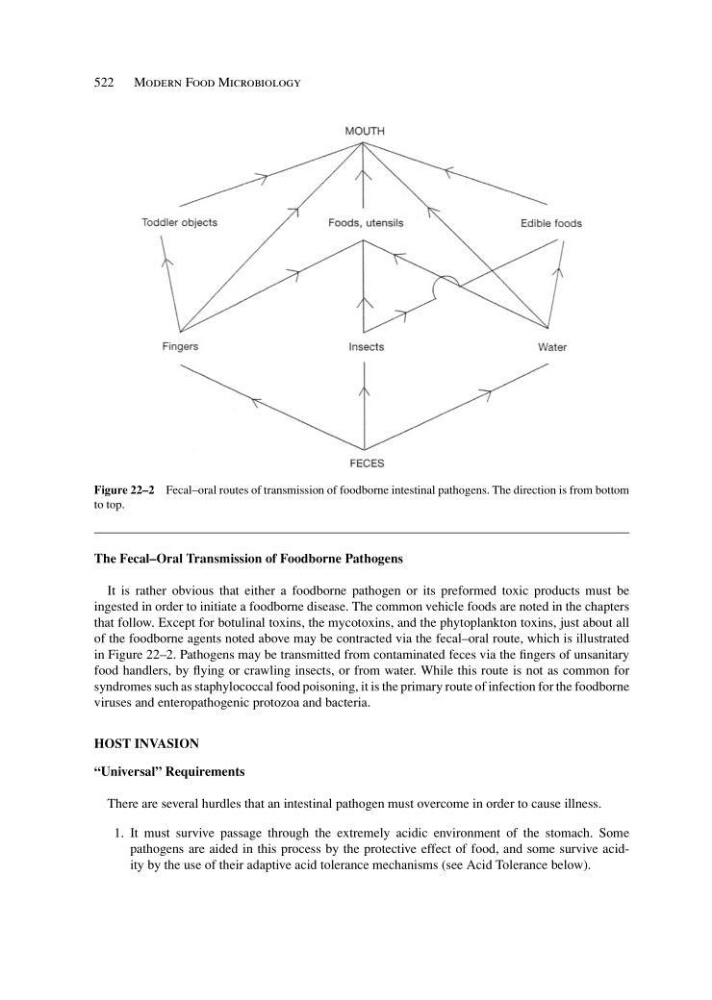
Figure 22–2 Fecal–oral routes of transmission of foodborne intestinal pathogens. The direction is from bottom
to top.
The Fecal–Oral Transmission of Foodborne Pathogens
It is rather obvious that either a foodborne pathogen or its preformed toxic products must be
ingested in order to initiate a foodborne disease. The common vehicle foods are noted in the chapters
that follow. Except for botulinal toxins, the mycotoxins, and the phytoplankton toxins, just about all
of the foodborne agents noted above may be contracted via the fecal–oral route, which is illustrated
in Figure 22–2. Pathogens may be transmitted from contaminated feces via the fingers of unsanitary
food handlers, by flying or crawling insects, or from water. While this route is not as common for
syndromes such as staphylococcal food poisoning, it is the primary route of infection for the foodborne
viruses and enteropathogenic protozoa and bacteria.
HOST INVASION
“Universal” Requirements
There are several hurdles that an intestinal pathogen must overcome in order to cause illness.
1. It must survive passage through the extremely acidic environment of the stomach. Some
pathogens are aided in this process by the protective effect of food, and some survive acidity by the use of their adaptive acid tolerance mechanisms (see Acid Tolerance below).
Figure 22–2 Fecal–oral routes of transmission of foodborne intestinal pathogens. The direction is from bottom
to top.
The Fecal–Oral Transmission of Foodborne Pathogens
It is rather obvious that either a foodborne pathogen or its preformed toxic products must be
ingested in order to initiate a foodborne disease. The common vehicle foods are noted in the chapters
that follow. Except for botulinal toxins, the mycotoxins, and the phytoplankton toxins, just about all
of the foodborne agents noted above may be contracted via the fecal–oral route, which is illustrated
in Figure 22–2. Pathogens may be transmitted from contaminated feces via the fingers of unsanitary
food handlers, by flying or crawling insects, or from water. While this route is not as common for
syndromes such as staphylococcal food poisoning, it is the primary route of infection for the foodborne
viruses and enteropathogenic protozoa and bacteria.
HOST INVASION
“Universal” Requirements
There are several hurdles that an intestinal pathogen must overcome in order to cause illness.
1. It must survive passage through the extremely acidic environment of the stomach. Some
pathogens are aided in this process by the protective effect of food, and some survive acidity by the use of their adaptive acid tolerance mechanisms (see Acid Tolerance below).