

520 Modern Food Microbiology
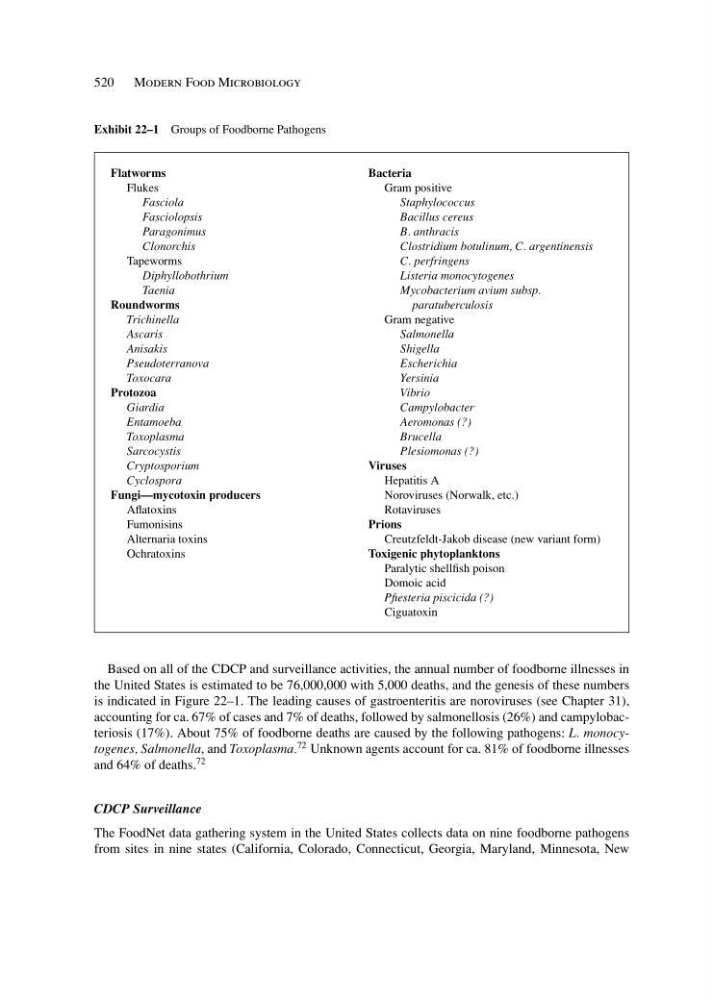
Exhibit 22–1 Groups of Foodborne Pathogens
Flatworms
Flukes
Fasciola
Fasciolopsis
Paragonimus
Clonorchis
Tapeworms
Diphyllobothrium
Taenia
Roundworms
Trichinella
Ascaris
Anisakis
Pseudoterranova
Toxocara
Protozoa
Giardia
Entamoeba
Toxoplasma
Sarcocystis
Cryptosporium
Cyclospora
Fungi—mycotoxin producers
Aflatoxins
Fumonisins
Alternaria toxins
Ochratoxins
Bacteria
Gram positive
Staphylococcus
Bacillus cereus
B. anthracis
Clostridium botulinum, C. argentinensis
C. perfringens
Listeria monocytogenes
Mycobacterium avium subsp.
paratuberculosis
Gram negative
Salmonella
Shigella
Escherichia
Yersinia
Vibrio
Campylobacter
Aeromonas (?)
Brucella
Plesiomonas (?)
Viruses
Hepatitis A
Noroviruses (Norwalk, etc.)
Rotaviruses
Prions
Creutzfeldt-Jakob disease (new variant form)
Toxigenic phytoplanktons
Paralytic shellfish poison
Domoic acid
Pfiesteria piscicida (?)
Ciguatoxin
Based on all of the CDCP and surveillance activities, the annual number of foodborne illnesses in
the United States is estimated to be 76,000,000 with 5,000 deaths, and the genesis of these numbers
is indicated in Figure 22–1. The leading causes of gastroenteritis are noroviruses (see Chapter 31),
accounting for ca. 67% of cases and 7% of deaths, followed by salmonellosis (26%) and campylobacteriosis (17%). About 75% of foodborne deaths are caused by the following pathogens: L. monocytogenes, Salmonella, and Toxoplasma.
72 Unknown agents account for ca. 81% of foodborne illnesses
and 64% of deaths.
72
CDCP Surveillance
The FoodNet data gathering system in the United States collects data on nine foodborne pathogens
from sites in nine states (California, Colorado, Connecticut, Georgia, Maryland, Minnesota, New
Exhibit 22–1 Groups of Foodborne Pathogens
Flatworms
Flukes
Fasciola
Fasciolopsis
Paragonimus
Clonorchis
Tapeworms
Diphyllobothrium
Taenia
Roundworms
Trichinella
Ascaris
Anisakis
Pseudoterranova
Toxocara
Protozoa
Giardia
Entamoeba
Toxoplasma
Sarcocystis
Cryptosporium
Cyclospora
Fungi—mycotoxin producers
Aflatoxins
Fumonisins
Alternaria toxins
Ochratoxins
Bacteria
Gram positive
Staphylococcus
Bacillus cereus
B. anthracis
Clostridium botulinum, C. argentinensis
C. perfringens
Listeria monocytogenes
Mycobacterium avium subsp.
paratuberculosis
Gram negative
Salmonella
Shigella
Escherichia
Yersinia
Vibrio
Campylobacter
Aeromonas (?)
Brucella
Plesiomonas (?)
Viruses
Hepatitis A
Noroviruses (Norwalk, etc.)
Rotaviruses
Prions
Creutzfeldt-Jakob disease (new variant form)
Toxigenic phytoplanktons
Paralytic shellfish poison
Domoic acid
Pfiesteria piscicida (?)
Ciguatoxin
Based on all of the CDCP and surveillance activities, the annual number of foodborne illnesses in
the United States is estimated to be 76,000,000 with 5,000 deaths, and the genesis of these numbers
is indicated in Figure 22–1. The leading causes of gastroenteritis are noroviruses (see Chapter 31),
accounting for ca. 67% of cases and 7% of deaths, followed by salmonellosis (26%) and campylobacteriosis (17%). About 75% of foodborne deaths are caused by the following pathogens: L. monocytogenes, Salmonella, and Toxoplasma.
72 Unknown agents account for ca. 81% of foodborne illnesses
and 64% of deaths.
72
CDCP Surveillance
The FoodNet data gathering system in the United States collects data on nine foodborne pathogens
from sites in nine states (California, Colorado, Connecticut, Georgia, Maryland, Minnesota, New