

Other Food Protection Methods
463
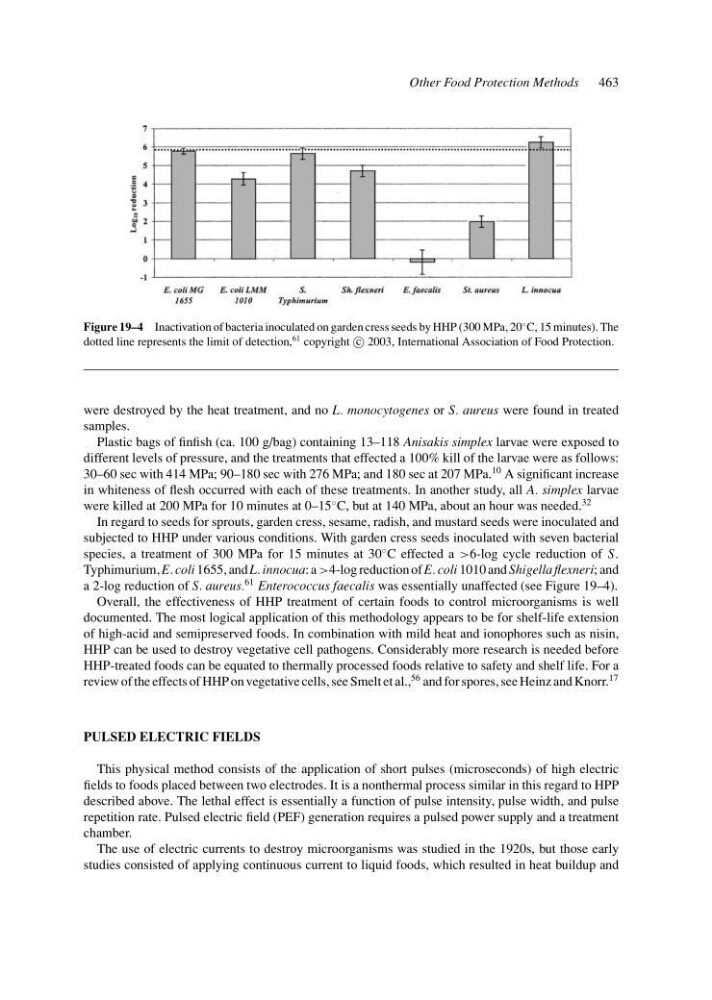
Figure 19–4 Inactivation of bacteria inoculated on garden cress seeds by HHP (300 MPa, 20
◦ C, 15 minutes). The
dotted line represents the limit of detection,
61 copyright c
2003, International Association of Food Protection.
were destroyed by the heat treatment, and no L. monocytogenes or S. aureus were found in treated
samples.
Plastic bags of finfish (ca. 100 g/bag) containing 13–118 Anisakis simplex larvae were exposed to
different levels of pressure, and the treatments that effected a 100% kill of the larvae were as follows:
30–60 sec with 414 MPa; 90–180 sec with 276 MPa; and 180 sec at 207 MPa.
10 A significant increase
in whiteness of flesh occurred with each of these treatments. In another study, all A. simplex larvae
were killed at 200 MPa for 10 minutes at 0–15
◦ C, but at 140 MPa, about an hour was needed.
32
In regard to seeds for sprouts, garden cress, sesame, radish, and mustard seeds were inoculated and
subjected to HHP under various conditions. With garden cress seeds inoculated with seven bacterial
species, a treatment of 300 MPa for 15 minutes at 30
◦ C effected a >6-log cycle reduction of S.
Typhimurium, E. coli 1655, and L. innocua: a >4-log reduction of E. coli 1010 and Shigella flexneri; and
a 2-log reduction of S. aureus.
61 Enterococcus faecalis was essentially unaffected (see Figure 19–4).
Overall, the effectiveness of HHP treatment of certain foods to control microorganisms is well
documented. The most logical application of this methodology appears to be for shelf-life extension
of high-acid and semipreserved foods. In combination with mild heat and ionophores such as nisin,
HHP can be used to destroy vegetative cell pathogens. Considerably more research is needed before
HHP-treated foods can be equated to thermally processed foods relative to safety and shelf life. For a
review of the effects of HHP on vegetative cells, see Smelt et al.,
56 and for spores, see Heinz and Knorr.
17
PULSED ELECTRIC FIELDS
This physical method consists of the application of short pulses (microseconds) of high electric
fields to foods placed between two electrodes. It is a nonthermal process similar in this regard to HPP
described above. The lethal effect is essentially a function of pulse intensity, pulse width, and pulse
repetition rate. Pulsed electric field (PEF) generation requires a pulsed power supply and a treatment
chamber.
The use of electric currents to destroy microorganisms was studied in the 1920s, but those early
studies consisted of applying continuous current to liquid foods, which resulted in heat buildup and
463
Figure 19–4 Inactivation of bacteria inoculated on garden cress seeds by HHP (300 MPa, 20
◦ C, 15 minutes). The
dotted line represents the limit of detection,
61 copyright c
2003, International Association of Food Protection.
were destroyed by the heat treatment, and no L. monocytogenes or S. aureus were found in treated
samples.
Plastic bags of finfish (ca. 100 g/bag) containing 13–118 Anisakis simplex larvae were exposed to
different levels of pressure, and the treatments that effected a 100% kill of the larvae were as follows:
30–60 sec with 414 MPa; 90–180 sec with 276 MPa; and 180 sec at 207 MPa.
10 A significant increase
in whiteness of flesh occurred with each of these treatments. In another study, all A. simplex larvae
were killed at 200 MPa for 10 minutes at 0–15
◦ C, but at 140 MPa, about an hour was needed.
32
In regard to seeds for sprouts, garden cress, sesame, radish, and mustard seeds were inoculated and
subjected to HHP under various conditions. With garden cress seeds inoculated with seven bacterial
species, a treatment of 300 MPa for 15 minutes at 30
◦ C effected a >6-log cycle reduction of S.
Typhimurium, E. coli 1655, and L. innocua: a >4-log reduction of E. coli 1010 and Shigella flexneri; and
a 2-log reduction of S. aureus.
61 Enterococcus faecalis was essentially unaffected (see Figure 19–4).
Overall, the effectiveness of HHP treatment of certain foods to control microorganisms is well
documented. The most logical application of this methodology appears to be for shelf-life extension
of high-acid and semipreserved foods. In combination with mild heat and ionophores such as nisin,
HHP can be used to destroy vegetative cell pathogens. Considerably more research is needed before
HHP-treated foods can be equated to thermally processed foods relative to safety and shelf life. For a
review of the effects of HHP on vegetative cells, see Smelt et al.,
56 and for spores, see Heinz and Knorr.
17
PULSED ELECTRIC FIELDS
This physical method consists of the application of short pulses (microseconds) of high electric
fields to foods placed between two electrodes. It is a nonthermal process similar in this regard to HPP
described above. The lethal effect is essentially a function of pulse intensity, pulse width, and pulse
repetition rate. Pulsed electric field (PEF) generation requires a pulsed power supply and a treatment
chamber.
The use of electric currents to destroy microorganisms was studied in the 1920s, but those early
studies consisted of applying continuous current to liquid foods, which resulted in heat buildup and