

462 Modern Food Microbiology
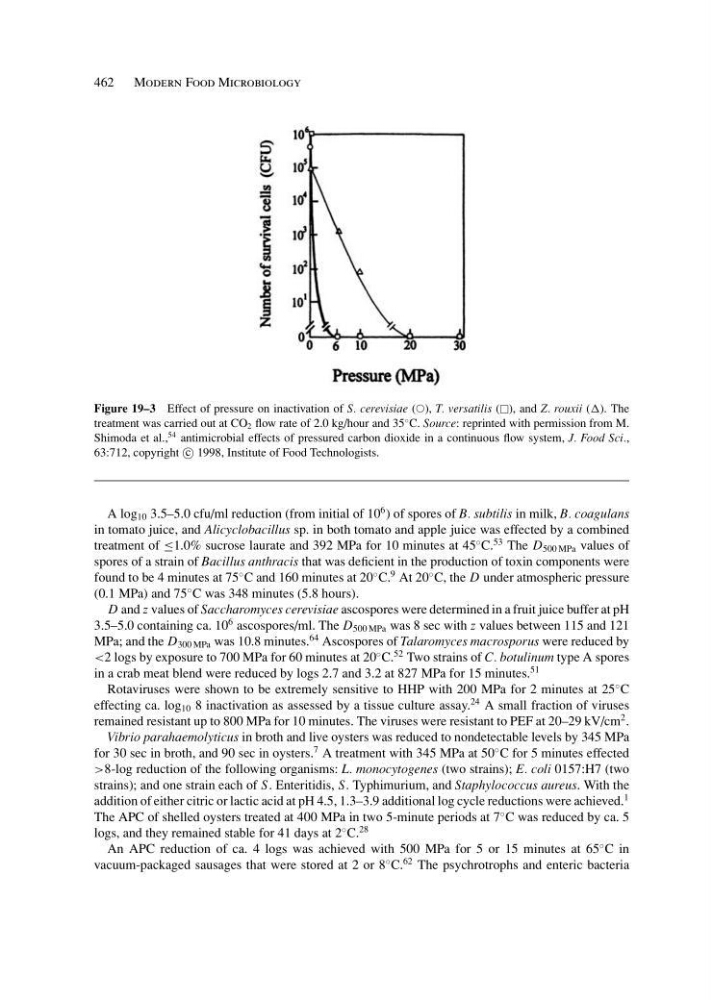
Figure 19–3 Effect of pressure on inactivation of S. cerevisiae (᭺), T. versatilis (ٗ), and Z. rouxii (). The
treatment was carried out at CO 2 flow rate of 2.0 kg/hour and 35
◦ C. Source: reprinted with permission from M.
Shimoda et al.,
54 antimicrobial effects of pressured carbon dioxide in a continuous flow system, J. Food Sci.,
63:712, copyright c
1998, Institute of Food Technologists.
A log 10 3.5–5.0 cfu/ml reduction (from initial of 10
6 ) of spores of B. subtilis in milk, B. coagulans
in tomato juice, and Alicyclobacillus sp. in both tomato and apple juice was effected by a combined
treatment of ≤1.0% sucrose laurate and 392 MPa for 10 minutes at 45
◦ C.
53 The D 500 MPa values of
spores of a strain of Bacillus anthracis that was deficient in the production of toxin components were
found to be 4 minutes at 75
◦ C and 160 minutes at 20
◦ C.
9 At 20
◦ C, the D under atmospheric pressure
(0.1 MPa) and 75
◦ C was 348 minutes (5.8 hours).
D and z values of Saccharomyces cerevisiae ascospores were determined in a fruit juice buffer at pH
3.5–5.0 containing ca. 10
6 ascospores/ml. The D 500 MPa was 8 sec with z values between 115 and 121
MPa; and the D 300 MPa was 10.8 minutes.
64 Ascospores of Talaromyces macrosporus were reduced by
<2 logs by exposure to 700 MPa for 60 minutes at 20
◦ C.
52 Two strains of C. botulinum type A spores
in a crab meat blend were reduced by logs 2.7 and 3.2 at 827 MPa for 15 minutes.
51
Rotaviruses were shown to be extremely sensitive to HHP with 200 MPa for 2 minutes at 25
◦ C
effecting ca. log 10 8 inactivation as assessed by a tissue culture assay.
24 A small fraction of viruses
remained resistant up to 800 MPa for 10 minutes. The viruses were resistant to PEF at 20–29 kV/cm
2 .
Vibrio parahaemolyticus in broth and live oysters was reduced to nondetectable levels by 345 MPa
for 30 sec in broth, and 90 sec in oysters.
7 A treatment with 345 MPa at 50
◦ C for 5 minutes effected
>8-log reduction of the following organisms: L. monocytogenes (two strains); E. coli 0157:H7 (two
strains); and one strain each of S. Enteritidis, S. Typhimurium, and Staphylococcus aureus. With the
addition of either citric or lactic acid at pH 4.5, 1.3–3.9 additional log cycle reductions were achieved.
1
The APC of shelled oysters treated at 400 MPa in two 5-minute periods at 7
◦ C was reduced by ca. 5
logs, and they remained stable for 41 days at 2
◦ C.
28
An APC reduction of ca. 4 logs was achieved with 500 MPa for 5 or 15 minutes at 65
◦ C in
vacuum-packaged sausages that were stored at 2 or 8
◦ C.
62 The psychrotrophs and enteric bacteria
Figure 19–3 Effect of pressure on inactivation of S. cerevisiae (᭺), T. versatilis (ٗ), and Z. rouxii (). The
treatment was carried out at CO 2 flow rate of 2.0 kg/hour and 35
◦ C. Source: reprinted with permission from M.
Shimoda et al.,
54 antimicrobial effects of pressured carbon dioxide in a continuous flow system, J. Food Sci.,
63:712, copyright c
1998, Institute of Food Technologists.
A log 10 3.5–5.0 cfu/ml reduction (from initial of 10
6 ) of spores of B. subtilis in milk, B. coagulans
in tomato juice, and Alicyclobacillus sp. in both tomato and apple juice was effected by a combined
treatment of ≤1.0% sucrose laurate and 392 MPa for 10 minutes at 45
◦ C.
53 The D 500 MPa values of
spores of a strain of Bacillus anthracis that was deficient in the production of toxin components were
found to be 4 minutes at 75
◦ C and 160 minutes at 20
◦ C.
9 At 20
◦ C, the D under atmospheric pressure
(0.1 MPa) and 75
◦ C was 348 minutes (5.8 hours).
D and z values of Saccharomyces cerevisiae ascospores were determined in a fruit juice buffer at pH
3.5–5.0 containing ca. 10
6 ascospores/ml. The D 500 MPa was 8 sec with z values between 115 and 121
MPa; and the D 300 MPa was 10.8 minutes.
64 Ascospores of Talaromyces macrosporus were reduced by
<2 logs by exposure to 700 MPa for 60 minutes at 20
◦ C.
52 Two strains of C. botulinum type A spores
in a crab meat blend were reduced by logs 2.7 and 3.2 at 827 MPa for 15 minutes.
51
Rotaviruses were shown to be extremely sensitive to HHP with 200 MPa for 2 minutes at 25
◦ C
effecting ca. log 10 8 inactivation as assessed by a tissue culture assay.
24 A small fraction of viruses
remained resistant up to 800 MPa for 10 minutes. The viruses were resistant to PEF at 20–29 kV/cm
2 .
Vibrio parahaemolyticus in broth and live oysters was reduced to nondetectable levels by 345 MPa
for 30 sec in broth, and 90 sec in oysters.
7 A treatment with 345 MPa at 50
◦ C for 5 minutes effected
>8-log reduction of the following organisms: L. monocytogenes (two strains); E. coli 0157:H7 (two
strains); and one strain each of S. Enteritidis, S. Typhimurium, and Staphylococcus aureus. With the
addition of either citric or lactic acid at pH 4.5, 1.3–3.9 additional log cycle reductions were achieved.
1
The APC of shelled oysters treated at 400 MPa in two 5-minute periods at 7
◦ C was reduced by ca. 5
logs, and they remained stable for 41 days at 2
◦ C.
28
An APC reduction of ca. 4 logs was achieved with 500 MPa for 5 or 15 minutes at 65
◦ C in
vacuum-packaged sausages that were stored at 2 or 8
◦ C.
62 The psychrotrophs and enteric bacteria