

424 Modern Food Microbiology
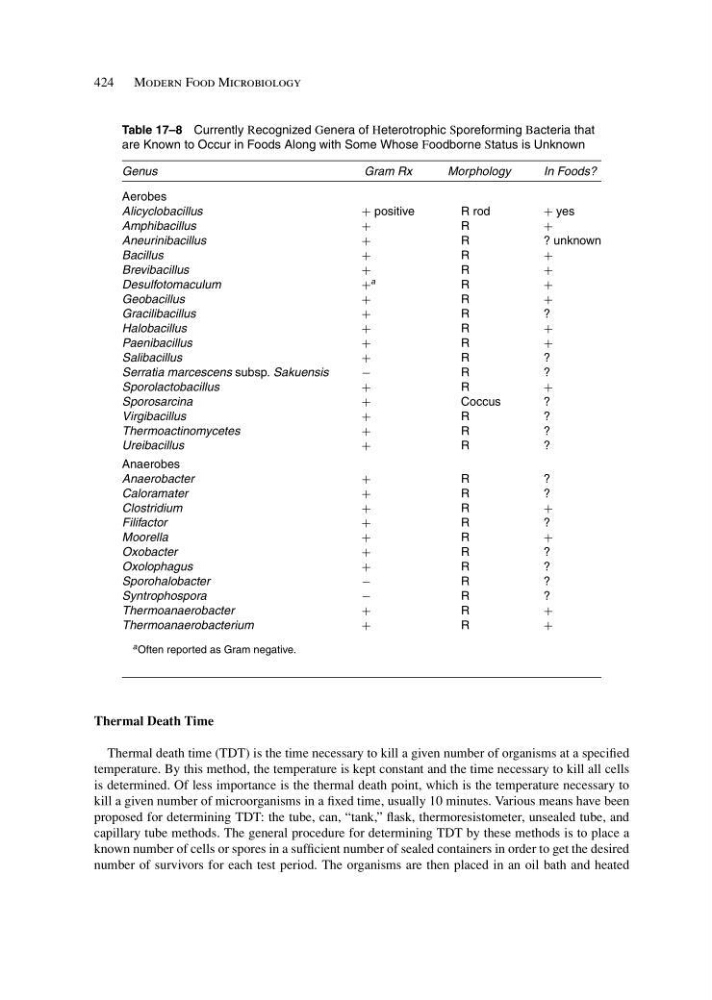
Table 17–8 Currently Recognized Genera of Heterotrophic Sporeforming Bacteria that
are Known to Occur in Foods Along with Some Whose Foodborne Status is Unknown
Genus
Gram Rx
Morphology
In Foods?
Aerobes
Alicyclobacillus
+ positive
R rod
+ yes
Amphibacillus
+
R
+
Aneurinibacillus
+
R
? unknown
Bacillus
+
R
+
Brevibacillus
+
R
+
Desulfotomaculum
+
a
R
+
Geobacillus
+
R
+
Gracilibacillus
+
R
?
Halobacillus
+
R
+
Paenibacillus
+
R
+
Salibacillus
+
R
?
Serratia marcescens subsp. Sakuensis
−
R
?
Sporolactobacillus
+
R
+
Sporosarcina
+
Coccus
?
Virgibacillus
+
R
?
Thermoactinomycetes
+
R
?
Ureibacillus
+
R
?
Anaerobes
Anaerobacter
+
R
?
Caloramater
+
R
?
Clostridium
+
R
+
Filifactor
+
R
?
Moorella
+
R
+
Oxobacter
+
R
?
Oxolophagus
+
R
?
Sporohalobacter
−
R
?
Syntrophospora
−
R
?
Thermoanaerobacter
+
R
+
Thermoanaerobacterium
+
R
+
a Often reported as Gram negative.
Thermal Death Time
Thermal death time (TDT) is the time necessary to kill a given number of organisms at a specified
temperature. By this method, the temperature is kept constant and the time necessary to kill all cells
is determined. Of less importance is the thermal death point, which is the temperature necessary to
kill a given number of microorganisms in a fixed time, usually 10 minutes. Various means have been
proposed for determining TDT: the tube, can, “tank,” flask, thermoresistometer, unsealed tube, and
capillary tube methods. The general procedure for determining TDT by these methods is to place a
known number of cells or spores in a sufficient number of sealed containers in order to get the desired
number of survivors for each test period. The organisms are then placed in an oil bath and heated
Table 17–8 Currently Recognized Genera of Heterotrophic Sporeforming Bacteria that
are Known to Occur in Foods Along with Some Whose Foodborne Status is Unknown
Genus
Gram Rx
Morphology
In Foods?
Aerobes
Alicyclobacillus
+ positive
R rod
+ yes
Amphibacillus
+
R
+
Aneurinibacillus
+
R
? unknown
Bacillus
+
R
+
Brevibacillus
+
R
+
Desulfotomaculum
+
a
R
+
Geobacillus
+
R
+
Gracilibacillus
+
R
?
Halobacillus
+
R
+
Paenibacillus
+
R
+
Salibacillus
+
R
?
Serratia marcescens subsp. Sakuensis
−
R
?
Sporolactobacillus
+
R
+
Sporosarcina
+
Coccus
?
Virgibacillus
+
R
?
Thermoactinomycetes
+
R
?
Ureibacillus
+
R
?
Anaerobes
Anaerobacter
+
R
?
Caloramater
+
R
?
Clostridium
+
R
+
Filifactor
+
R
?
Moorella
+
R
+
Oxobacter
+
R
?
Oxolophagus
+
R
?
Sporohalobacter
−
R
?
Syntrophospora
−
R
?
Thermoanaerobacter
+
R
+
Thermoanaerobacterium
+
R
+
a Often reported as Gram negative.
Thermal Death Time
Thermal death time (TDT) is the time necessary to kill a given number of organisms at a specified
temperature. By this method, the temperature is kept constant and the time necessary to kill all cells
is determined. Of less importance is the thermal death point, which is the temperature necessary to
kill a given number of microorganisms in a fixed time, usually 10 minutes. Various means have been
proposed for determining TDT: the tube, can, “tank,” flask, thermoresistometer, unsealed tube, and
capillary tube methods. The general procedure for determining TDT by these methods is to place a
known number of cells or spores in a sufficient number of sealed containers in order to get the desired
number of survivors for each test period. The organisms are then placed in an oil bath and heated