

Food Protection with High Temperatures
421
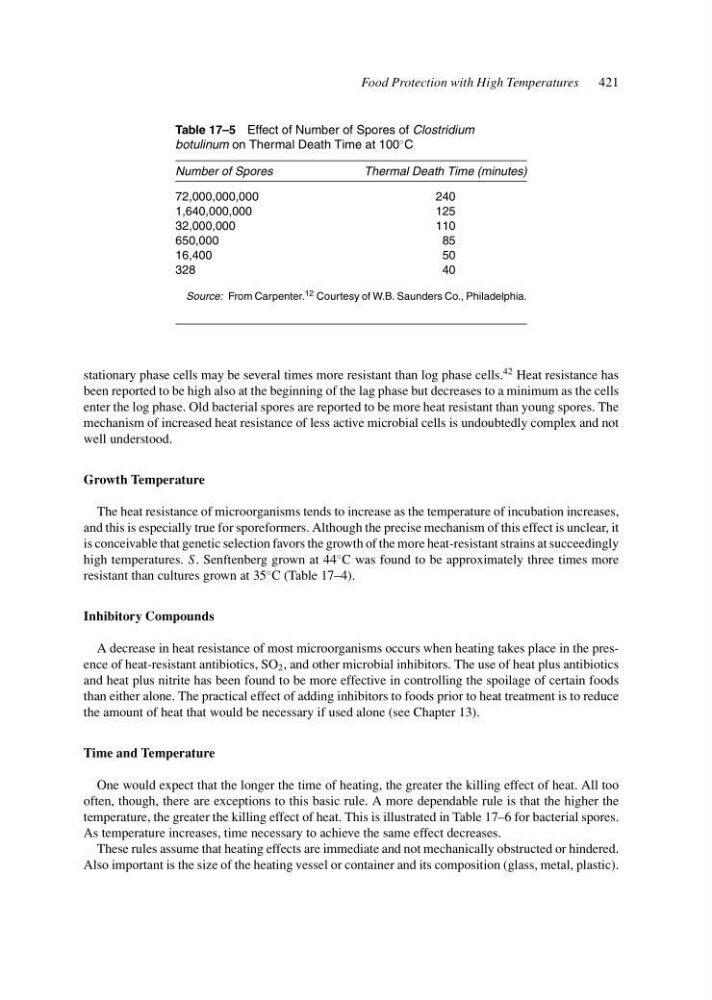
Table 17–5 Effect of Number of Spores of Clostridium
botulinum on Thermal Death Time at 100
◦ C
Number of Spores
Thermal Death Time (minutes)
72,000,000,000
240
1,640,000,000
125
32,000,000
110
650,000
85
16,400
50
328
40
Source: From Carpenter. 12 Courtesy of W.B. Saunders Co., Philadelphia.
stationary phase cells may be several times more resistant than log phase cells.
42 Heat resistance has
been reported to be high also at the beginning of the lag phase but decreases to a minimum as the cells
enter the log phase. Old bacterial spores are reported to be more heat resistant than young spores. The
mechanism of increased heat resistance of less active microbial cells is undoubtedly complex and not
well understood.
Growth Temperature
The heat resistance of microorganisms tends to increase as the temperature of incubation increases,
and this is especially true for sporeformers. Although the precise mechanism of this effect is unclear, it
is conceivable that genetic selection favors the growth of the more heat-resistant strains at succeedingly
high temperatures. S. Senftenberg grown at 44
◦ C was found to be approximately three times more
resistant than cultures grown at 35
◦ C (Table 17–4).
Inhibitory Compounds
A decrease in heat resistance of most microorganisms occurs when heating takes place in the presence of heat-resistant antibiotics, SO 2 , and other microbial inhibitors. The use of heat plus antibiotics
and heat plus nitrite has been found to be more effective in controlling the spoilage of certain foods
than either alone. The practical effect of adding inhibitors to foods prior to heat treatment is to reduce
the amount of heat that would be necessary if used alone (see Chapter 13).
Time and Temperature
One would expect that the longer the time of heating, the greater the killing effect of heat. All too
often, though, there are exceptions to this basic rule. A more dependable rule is that the higher the
temperature, the greater the killing effect of heat. This is illustrated in Table 17–6 for bacterial spores.
As temperature increases, time necessary to achieve the same effect decreases.
These rules assume that heating effects are immediate and not mechanically obstructed or hindered.
Also important is the size of the heating vessel or container and its composition (glass, metal, plastic).
421
Table 17–5 Effect of Number of Spores of Clostridium
botulinum on Thermal Death Time at 100
◦ C
Number of Spores
Thermal Death Time (minutes)
72,000,000,000
240
1,640,000,000
125
32,000,000
110
650,000
85
16,400
50
328
40
Source: From Carpenter. 12 Courtesy of W.B. Saunders Co., Philadelphia.
stationary phase cells may be several times more resistant than log phase cells.
42 Heat resistance has
been reported to be high also at the beginning of the lag phase but decreases to a minimum as the cells
enter the log phase. Old bacterial spores are reported to be more heat resistant than young spores. The
mechanism of increased heat resistance of less active microbial cells is undoubtedly complex and not
well understood.
Growth Temperature
The heat resistance of microorganisms tends to increase as the temperature of incubation increases,
and this is especially true for sporeformers. Although the precise mechanism of this effect is unclear, it
is conceivable that genetic selection favors the growth of the more heat-resistant strains at succeedingly
high temperatures. S. Senftenberg grown at 44
◦ C was found to be approximately three times more
resistant than cultures grown at 35
◦ C (Table 17–4).
Inhibitory Compounds
A decrease in heat resistance of most microorganisms occurs when heating takes place in the presence of heat-resistant antibiotics, SO 2 , and other microbial inhibitors. The use of heat plus antibiotics
and heat plus nitrite has been found to be more effective in controlling the spoilage of certain foods
than either alone. The practical effect of adding inhibitors to foods prior to heat treatment is to reduce
the amount of heat that would be necessary if used alone (see Chapter 13).
Time and Temperature
One would expect that the longer the time of heating, the greater the killing effect of heat. All too
often, though, there are exceptions to this basic rule. A more dependable rule is that the higher the
temperature, the greater the killing effect of heat. This is illustrated in Table 17–6 for bacterial spores.
As temperature increases, time necessary to achieve the same effect decreases.
These rules assume that heating effects are immediate and not mechanically obstructed or hindered.
Also important is the size of the heating vessel or container and its composition (glass, metal, plastic).