

420 Modern Food Microbiology
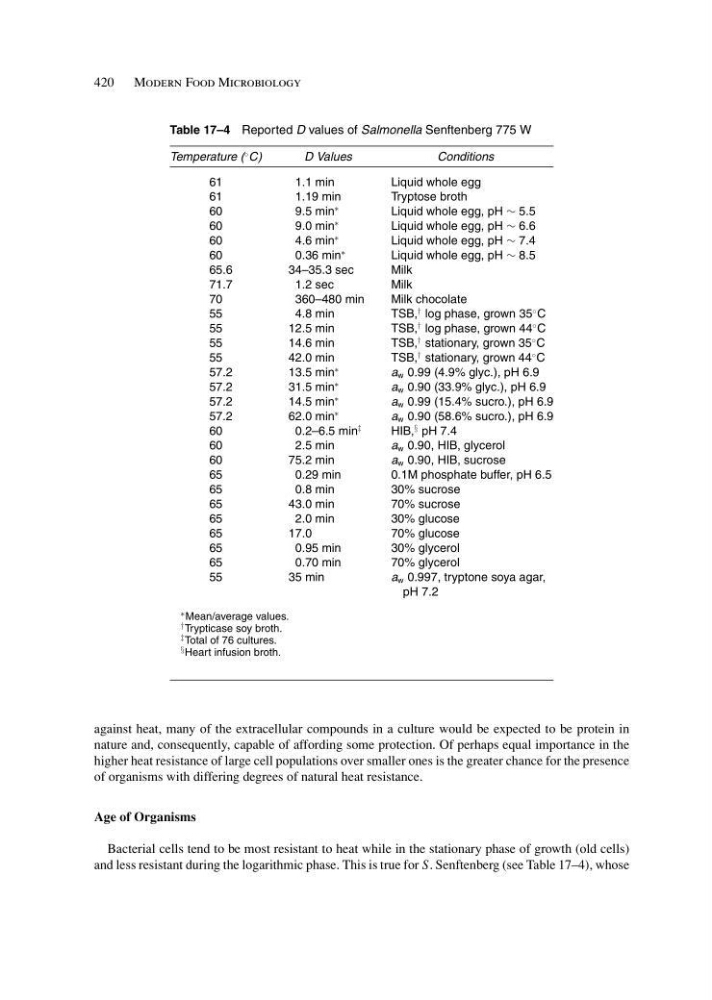
Table 17–4 Reported D values of Salmonella Senftenberg 775 W
Temperature (
◦ C)
D Values
Conditions
61
1.1 min
Liquid whole egg
61
1.19 min
Tryptose broth
60
9.5 min
∗
Liquid whole egg, pH ∼ 5.5
60
9.0 min
∗
Liquid whole egg, pH ∼ 6.6
60
4.6 min
∗
Liquid whole egg, pH ∼ 7.4
60
0.36 min
∗
Liquid whole egg, pH ∼ 8.5
65.6
34–35.3 sec
Milk
71.7
1.2 sec
Milk
70
360–480 min
Milk chocolate
55
4.8 min
TSB,
† log phase, grown 35
◦ C
55
12.5 min
TSB,
† log phase, grown 44
◦ C
55
14.6 min
TSB,
† stationary, grown 35
◦ C
55
42.0 min
TSB,
† stationary, grown 44
◦ C
57.2
13.5 min
∗
a w 0.99 (4.9% glyc.), pH 6.9
57.2
31.5 min
∗
a w 0.90 (33.9% glyc.), pH 6.9
57.2
14.5 min
∗
a w 0.99 (15.4% sucro.), pH 6.9
57.2
62.0 min
∗
a w 0.90 (58.6% sucro.), pH 6.9
60
0.2–6.5 min
‡
HIB,
§ pH 7.4
60
2.5 min
a w 0.90, HIB, glycerol
60
75.2 min
a w 0.90, HIB, sucrose
65
0.29 min
0.1M phosphate buffer, pH 6.5
65
0.8 min
30% sucrose
65
43.0 min
70% sucrose
65
2.0 min
30% glucose
65
17.0
70% glucose
65
0.95 min
30% glycerol
65
0.70 min
70% glycerol
55
35 min
a w 0.997, tryptone soya agar,
pH 7.2
∗ Mean/average values.
† Trypticase soy broth.
‡ Total of 76 cultures.
§ Heart infusion broth.
against heat, many of the extracellular compounds in a culture would be expected to be protein in
nature and, consequently, capable of affording some protection. Of perhaps equal importance in the
higher heat resistance of large cell populations over smaller ones is the greater chance for the presence
of organisms with differing degrees of natural heat resistance.
Age of Organisms
Bacterial cells tend to be most resistant to heat while in the stationary phase of growth (old cells)
and less resistant during the logarithmic phase. This is true for S. Senftenberg (see Table 17–4), whose
Table 17–4 Reported D values of Salmonella Senftenberg 775 W
Temperature (
◦ C)
D Values
Conditions
61
1.1 min
Liquid whole egg
61
1.19 min
Tryptose broth
60
9.5 min
∗
Liquid whole egg, pH ∼ 5.5
60
9.0 min
∗
Liquid whole egg, pH ∼ 6.6
60
4.6 min
∗
Liquid whole egg, pH ∼ 7.4
60
0.36 min
∗
Liquid whole egg, pH ∼ 8.5
65.6
34–35.3 sec
Milk
71.7
1.2 sec
Milk
70
360–480 min
Milk chocolate
55
4.8 min
TSB,
† log phase, grown 35
◦ C
55
12.5 min
TSB,
† log phase, grown 44
◦ C
55
14.6 min
TSB,
† stationary, grown 35
◦ C
55
42.0 min
TSB,
† stationary, grown 44
◦ C
57.2
13.5 min
∗
a w 0.99 (4.9% glyc.), pH 6.9
57.2
31.5 min
∗
a w 0.90 (33.9% glyc.), pH 6.9
57.2
14.5 min
∗
a w 0.99 (15.4% sucro.), pH 6.9
57.2
62.0 min
∗
a w 0.90 (58.6% sucro.), pH 6.9
60
0.2–6.5 min
‡
HIB,
§ pH 7.4
60
2.5 min
a w 0.90, HIB, glycerol
60
75.2 min
a w 0.90, HIB, sucrose
65
0.29 min
0.1M phosphate buffer, pH 6.5
65
0.8 min
30% sucrose
65
43.0 min
70% sucrose
65
2.0 min
30% glucose
65
17.0
70% glucose
65
0.95 min
30% glycerol
65
0.70 min
70% glycerol
55
35 min
a w 0.997, tryptone soya agar,
pH 7.2
∗ Mean/average values.
† Trypticase soy broth.
‡ Total of 76 cultures.
§ Heart infusion broth.
against heat, many of the extracellular compounds in a culture would be expected to be protein in
nature and, consequently, capable of affording some protection. Of perhaps equal importance in the
higher heat resistance of large cell populations over smaller ones is the greater chance for the presence
of organisms with differing degrees of natural heat resistance.
Age of Organisms
Bacterial cells tend to be most resistant to heat while in the stationary phase of growth (old cells)
and less resistant during the logarithmic phase. This is true for S. Senftenberg (see Table 17–4), whose