

Food Protection with High Temperatures
419
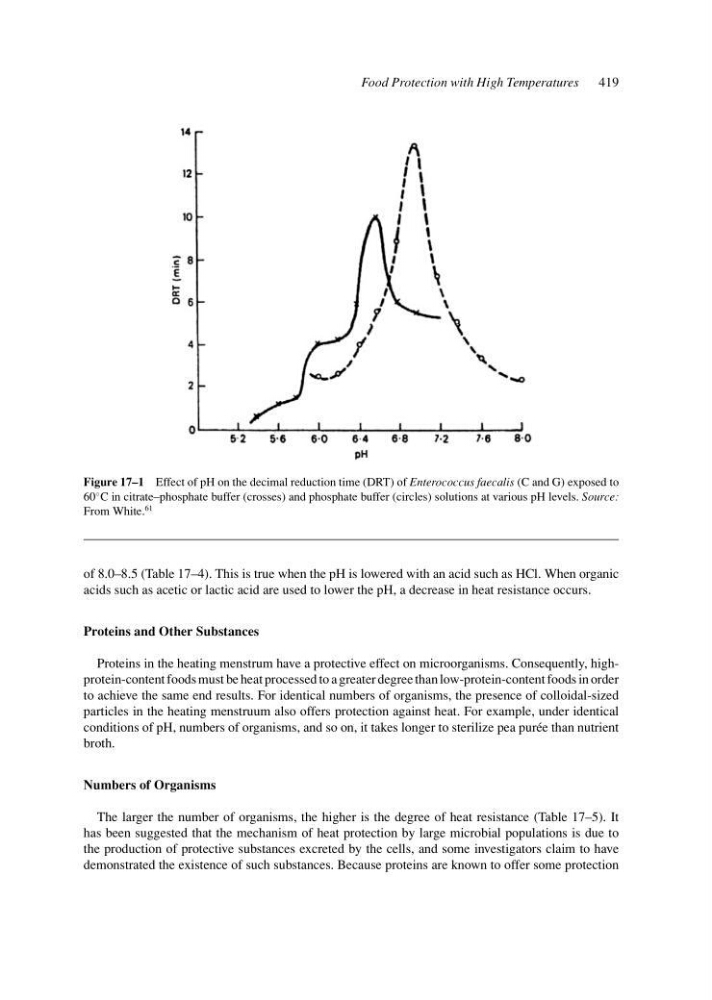
Figure 17–1 Effect of pH on the decimal reduction time (DRT) of Enterococcus faecalis (C and G) exposed to
60
◦ C in citrate–phosphate buffer (crosses) and phosphate buffer (circles) solutions at various pH levels. Source:
From White.
61
of 8.0–8.5 (Table 17–4). This is true when the pH is lowered with an acid such as HCl. When organic
acids such as acetic or lactic acid are used to lower the pH, a decrease in heat resistance occurs.
Proteins and Other Substances
Proteins in the heating menstrum have a protective effect on microorganisms. Consequently, highprotein-content foods must be heat processed to a greater degree than low-protein-content foods in order
to achieve the same end results. For identical numbers of organisms, the presence of colloidal-sized
particles in the heating menstruum also offers protection against heat. For example, under identical
conditions of pH, numbers of organisms, and so on, it takes longer to sterilize pea pur´ ee than nutrient
broth.
Numbers of Organisms
The larger the number of organisms, the higher is the degree of heat resistance (Table 17–5). It
has been suggested that the mechanism of heat protection by large microbial populations is due to
the production of protective substances excreted by the cells, and some investigators claim to have
demonstrated the existence of such substances. Because proteins are known to offer some protection
419
Figure 17–1 Effect of pH on the decimal reduction time (DRT) of Enterococcus faecalis (C and G) exposed to
60
◦ C in citrate–phosphate buffer (crosses) and phosphate buffer (circles) solutions at various pH levels. Source:
From White.
61
of 8.0–8.5 (Table 17–4). This is true when the pH is lowered with an acid such as HCl. When organic
acids such as acetic or lactic acid are used to lower the pH, a decrease in heat resistance occurs.
Proteins and Other Substances
Proteins in the heating menstrum have a protective effect on microorganisms. Consequently, highprotein-content foods must be heat processed to a greater degree than low-protein-content foods in order
to achieve the same end results. For identical numbers of organisms, the presence of colloidal-sized
particles in the heating menstruum also offers protection against heat. For example, under identical
conditions of pH, numbers of organisms, and so on, it takes longer to sterilize pea pur´ ee than nutrient
broth.
Numbers of Organisms
The larger the number of organisms, the higher is the degree of heat resistance (Table 17–5). It
has been suggested that the mechanism of heat protection by large microbial populations is due to
the production of protective substances excreted by the cells, and some investigators claim to have
demonstrated the existence of such substances. Because proteins are known to offer some protection