

Radiation Protection of Foods, and Nature of Microbial Radiation Resistance
379
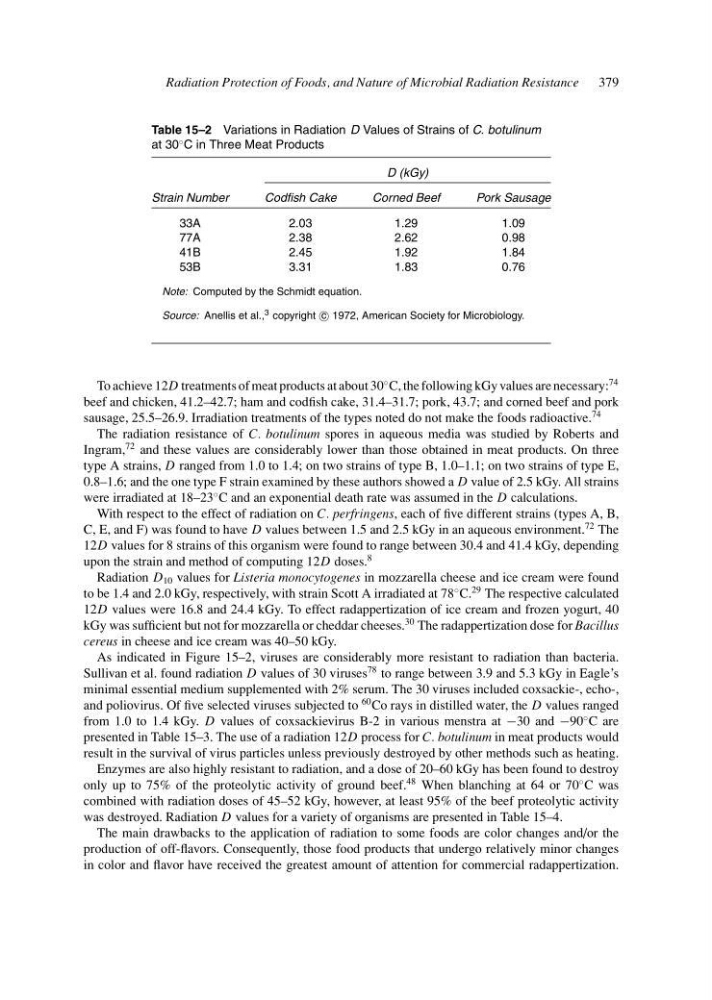
Table 15–2 Variations in Radiation D Values of Strains of C. botulinum
at 30
◦ C in Three Meat Products
D (kGy)
Strain Number
Codfish Cake
Corned Beef
Pork Sausage
33A
2.03
1.29
1.09
77A
2.38
2.62
0.98
41B
2.45
1.92
1.84
53B
3.31
1.83
0.76
Note: Computed by the Schmidt equation.
Source: Anellis et al., 3 copyright c
1972, American Society for Microbiology.
To achieve 12D treatments of meat products at about 30
◦ C, the following kGy values are necessary:
74
beef and chicken, 41.2–42.7; ham and codfish cake, 31.4–31.7; pork, 43.7; and corned beef and pork
sausage, 25.5–26.9. Irradiation treatments of the types noted do not make the foods radioactive.
74
The radiation resistance of C. botulinum spores in aqueous media was studied by Roberts and
Ingram,
72 and these values are considerably lower than those obtained in meat products. On three
type A strains, D ranged from 1.0 to 1.4; on two strains of type B, 1.0–1.1; on two strains of type E,
0.8–1.6; and the one type F strain examined by these authors showed a D value of 2.5 kGy. All strains
were irradiated at 18–23
◦ C and an exponential death rate was assumed in the D calculations.
With respect to the effect of radiation on C. perfringens, each of five different strains (types A, B,
C, E, and F) was found to have D values between 1.5 and 2.5 kGy in an aqueous environment.
72 The
12D values for 8 strains of this organism were found to range between 30.4 and 41.4 kGy, depending
upon the strain and method of computing 12D doses.
8
Radiation D 10 values for Listeria monocytogenes in mozzarella cheese and ice cream were found
to be 1.4 and 2.0 kGy, respectively, with strain Scott A irradiated at 78
◦ C.
29 The respective calculated
12D values were 16.8 and 24.4 kGy. To effect radappertization of ice cream and frozen yogurt, 40
kGy was sufficient but not for mozzarella or cheddar cheeses.
30 The radappertization dose for Bacillus
cereus in cheese and ice cream was 40–50 kGy.
As indicated in Figure 15–2, viruses are considerably more resistant to radiation than bacteria.
Sullivan et al. found radiation D values of 30 viruses
78 to range between 3.9 and 5.3 kGy in Eagle’s
minimal essential medium supplemented with 2% serum. The 30 viruses included coxsackie-, echo-,
and poliovirus. Of five selected viruses subjected to
60 Co rays in distilled water, the D values ranged
from 1.0 to 1.4 kGy. D values of coxsackievirus B-2 in various menstra at −30 and −90
◦ C are
presented in Table 15–3. The use of a radiation 12D process for C. botulinum in meat products would
result in the survival of virus particles unless previously destroyed by other methods such as heating.
Enzymes are also highly resistant to radiation, and a dose of 20–60 kGy has been found to destroy
only up to 75% of the proteolytic activity of ground beef.
48 When blanching at 64 or 70
◦ C was
combined with radiation doses of 45–52 kGy, however, at least 95% of the beef proteolytic activity
was destroyed. Radiation D values for a variety of organisms are presented in Table 15–4.
The main drawbacks to the application of radiation to some foods are color changes and/or the
production of off-flavors. Consequently, those food products that undergo relatively minor changes
in color and flavor have received the greatest amount of attention for commercial radappertization.
379
Table 15–2 Variations in Radiation D Values of Strains of C. botulinum
at 30
◦ C in Three Meat Products
D (kGy)
Strain Number
Codfish Cake
Corned Beef
Pork Sausage
33A
2.03
1.29
1.09
77A
2.38
2.62
0.98
41B
2.45
1.92
1.84
53B
3.31
1.83
0.76
Note: Computed by the Schmidt equation.
Source: Anellis et al., 3 copyright c
1972, American Society for Microbiology.
To achieve 12D treatments of meat products at about 30
◦ C, the following kGy values are necessary:
74
beef and chicken, 41.2–42.7; ham and codfish cake, 31.4–31.7; pork, 43.7; and corned beef and pork
sausage, 25.5–26.9. Irradiation treatments of the types noted do not make the foods radioactive.
74
The radiation resistance of C. botulinum spores in aqueous media was studied by Roberts and
Ingram,
72 and these values are considerably lower than those obtained in meat products. On three
type A strains, D ranged from 1.0 to 1.4; on two strains of type B, 1.0–1.1; on two strains of type E,
0.8–1.6; and the one type F strain examined by these authors showed a D value of 2.5 kGy. All strains
were irradiated at 18–23
◦ C and an exponential death rate was assumed in the D calculations.
With respect to the effect of radiation on C. perfringens, each of five different strains (types A, B,
C, E, and F) was found to have D values between 1.5 and 2.5 kGy in an aqueous environment.
72 The
12D values for 8 strains of this organism were found to range between 30.4 and 41.4 kGy, depending
upon the strain and method of computing 12D doses.
8
Radiation D 10 values for Listeria monocytogenes in mozzarella cheese and ice cream were found
to be 1.4 and 2.0 kGy, respectively, with strain Scott A irradiated at 78
◦ C.
29 The respective calculated
12D values were 16.8 and 24.4 kGy. To effect radappertization of ice cream and frozen yogurt, 40
kGy was sufficient but not for mozzarella or cheddar cheeses.
30 The radappertization dose for Bacillus
cereus in cheese and ice cream was 40–50 kGy.
As indicated in Figure 15–2, viruses are considerably more resistant to radiation than bacteria.
Sullivan et al. found radiation D values of 30 viruses
78 to range between 3.9 and 5.3 kGy in Eagle’s
minimal essential medium supplemented with 2% serum. The 30 viruses included coxsackie-, echo-,
and poliovirus. Of five selected viruses subjected to
60 Co rays in distilled water, the D values ranged
from 1.0 to 1.4 kGy. D values of coxsackievirus B-2 in various menstra at −30 and −90
◦ C are
presented in Table 15–3. The use of a radiation 12D process for C. botulinum in meat products would
result in the survival of virus particles unless previously destroyed by other methods such as heating.
Enzymes are also highly resistant to radiation, and a dose of 20–60 kGy has been found to destroy
only up to 75% of the proteolytic activity of ground beef.
48 When blanching at 64 or 70
◦ C was
combined with radiation doses of 45–52 kGy, however, at least 95% of the beef proteolytic activity
was destroyed. Radiation D values for a variety of organisms are presented in Table 15–4.
The main drawbacks to the application of radiation to some foods are color changes and/or the
production of off-flavors. Consequently, those food products that undergo relatively minor changes
in color and flavor have received the greatest amount of attention for commercial radappertization.