

380 Modern Food Microbiology
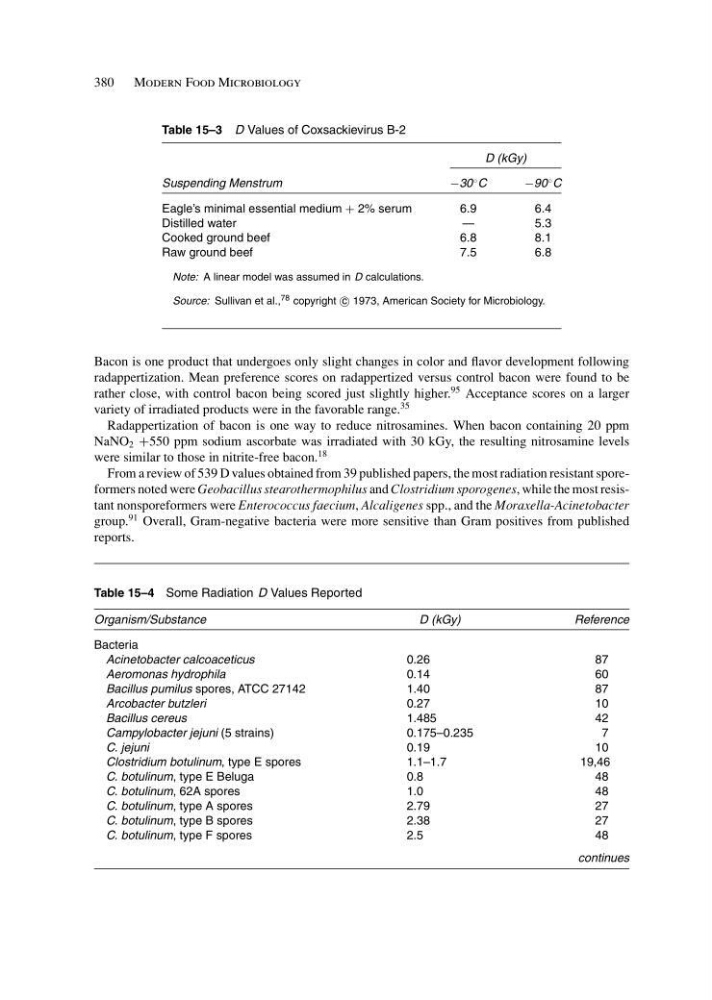
Table 15–3 D Values of Coxsackievirus B-2
D (kGy)
Suspending Menstrum
−30
◦ C
−90
◦ C
Eagle’s minimal essential medium + 2% serum
6.9
6.4
Distilled water
—
5.3
Cooked ground beef
6.8
8.1
Raw ground beef
7.5
6.8
Note: A linear model was assumed in D calculations.
Source: Sullivan et al., 78 copyright c
1973, American Society for Microbiology.
Bacon is one product that undergoes only slight changes in color and flavor development following
radappertization. Mean preference scores on radappertized versus control bacon were found to be
rather close, with control bacon being scored just slightly higher.
95 Acceptance scores on a larger
variety of irradiated products were in the favorable range.
35
Radappertization of bacon is one way to reduce nitrosamines. When bacon containing 20 ppm
NaNO 2 +550 ppm sodium ascorbate was irradiated with 30 kGy, the resulting nitrosamine levels
were similar to those in nitrite-free bacon.
18
From a review of 539 D values obtained from 39 published papers, the most radiation resistant sporeformers noted were Geobacillus stearothermophilus and Clostridium sporogenes, while the most resistant nonsporeformers were Enterococcus faecium, Alcaligenes spp., and the Moraxella-Acinetobacter
group.
91 Overall, Gram-negative bacteria were more sensitive than Gram positives from published
reports.
Table 15–4 Some Radiation D Values Reported
Organism/Substance
D (kGy)
Reference
Bacteria
Acinetobacter calcoaceticus
0.26
87
Aeromonas hydrophila
0.14
60
Bacillus pumilus spores, ATCC 27142
1.40
87
Arcobacter butzleri
0.27
10
Bacillus cereus
1.485
42
Campylobacter jejuni (5 strains)
0.175–0.235
7
C. jejuni
0.19
10
Clostridium botulinum, type E spores
1.1–1.7
19,46
C. botulinum, type E Beluga
0.8
48
C. botulinum, 62A spores
1.0
48
C. botulinum, type A spores
2.79
27
C. botulinum, type B spores
2.38
27
C. botulinum, type F spores
2.5
48
continues
Table 15–3 D Values of Coxsackievirus B-2
D (kGy)
Suspending Menstrum
−30
◦ C
−90
◦ C
Eagle’s minimal essential medium + 2% serum
6.9
6.4
Distilled water
—
5.3
Cooked ground beef
6.8
8.1
Raw ground beef
7.5
6.8
Note: A linear model was assumed in D calculations.
Source: Sullivan et al., 78 copyright c
1973, American Society for Microbiology.
Bacon is one product that undergoes only slight changes in color and flavor development following
radappertization. Mean preference scores on radappertized versus control bacon were found to be
rather close, with control bacon being scored just slightly higher.
95 Acceptance scores on a larger
variety of irradiated products were in the favorable range.
35
Radappertization of bacon is one way to reduce nitrosamines. When bacon containing 20 ppm
NaNO 2 +550 ppm sodium ascorbate was irradiated with 30 kGy, the resulting nitrosamine levels
were similar to those in nitrite-free bacon.
18
From a review of 539 D values obtained from 39 published papers, the most radiation resistant sporeformers noted were Geobacillus stearothermophilus and Clostridium sporogenes, while the most resistant nonsporeformers were Enterococcus faecium, Alcaligenes spp., and the Moraxella-Acinetobacter
group.
91 Overall, Gram-negative bacteria were more sensitive than Gram positives from published
reports.
Table 15–4 Some Radiation D Values Reported
Organism/Substance
D (kGy)
Reference
Bacteria
Acinetobacter calcoaceticus
0.26
87
Aeromonas hydrophila
0.14
60
Bacillus pumilus spores, ATCC 27142
1.40
87
Arcobacter butzleri
0.27
10
Bacillus cereus
1.485
42
Campylobacter jejuni (5 strains)
0.175–0.235
7
C. jejuni
0.19
10
Clostridium botulinum, type E spores
1.1–1.7
19,46
C. botulinum, type E Beluga
0.8
48
C. botulinum, 62A spores
1.0
48
C. botulinum, type A spores
2.79
27
C. botulinum, type B spores
2.38
27
C. botulinum, type F spores
2.5
48
continues