

316 Modern Food Microbiology
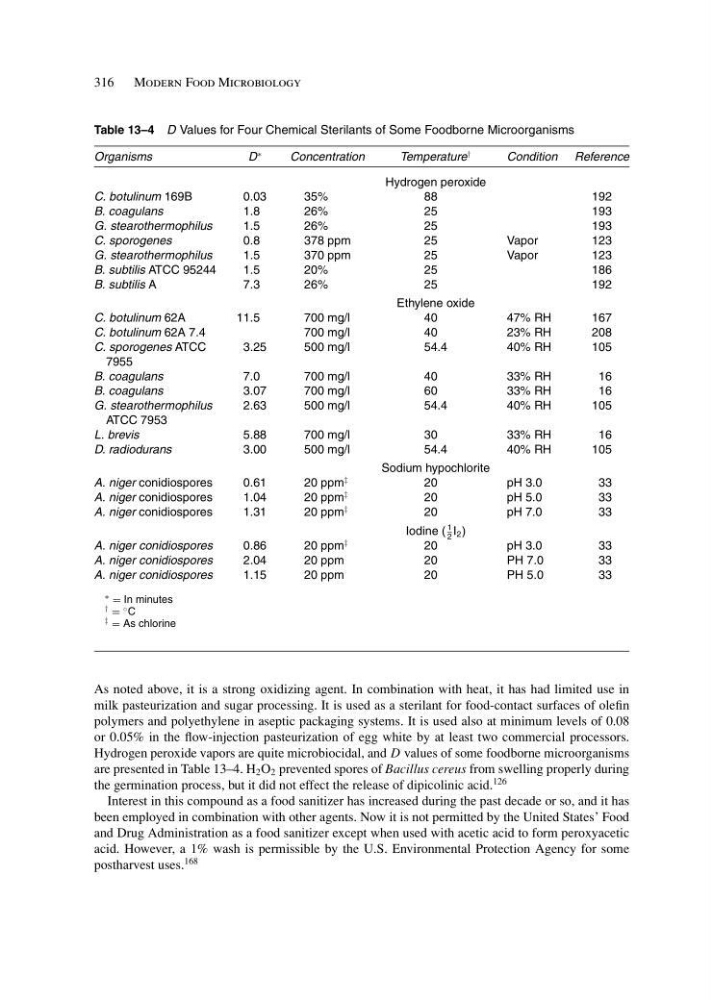
Table 13–4 D Values for Four Chemical Sterilants of Some Foodborne Microorganisms
Organisms
D
∗
Concentration
Temperature
†
Condition Reference
Hydrogen peroxide
C. botulinum 169B
0.03
35%
88
192
B. coagulans
1.8
26%
25
193
G. stearothermophilus
1.5
26%
25
193
C. sporogenes
0.8
378 ppm
25
Vapor
123
G. stearothermophilus
1.5
370 ppm
25
Vapor
123
B. subtilis ATCC 95244
1.5
20%
25
186
B. subtilis A
7.3
26%
25
192
Ethylene oxide
C. botulinum 62A
11.5
700 mg/l
40
47% RH
167
C. botulinum 62A 7.4
700 mg/l
40
23% RH
208
C. sporogenes ATCC
7955
3.25
500 mg/l
54.4
40% RH
105
B. coagulans
7.0
700 mg/l
40
33% RH
16
B. coagulans
3.07
700 mg/l
60
33% RH
16
G. stearothermophilus
ATCC 7953
2.63
500 mg/l
54.4
40% RH
105
L. brevis
5.88
700 mg/l
30
33% RH
16
D. radiodurans
3.00
500 mg/l
54.4
40% RH
105
Sodium hypochlorite
A. niger conidiospores
0.61
20 ppm
‡
20
pH 3.0
33
A. niger conidiospores
1.04
20 ppm
‡
20
pH 5.0
33
A. niger conidiospores
1.31
20 ppm
‡
20
pH 7.0
33
Iodine (
1
2
I 2 )
A. niger conidiospores
0.86
20 ppm
‡
20
pH 3.0
33
A. niger conidiospores
2.04
20 ppm
20
PH 7.0
33
A. niger conidiospores
1.15
20 ppm
20
PH 5.0
33
∗ = In minutes
† = ◦ C
‡ = As chlorine
As noted above, it is a strong oxidizing agent. In combination with heat, it has had limited use in
milk pasteurization and sugar processing. It is used as a sterilant for food-contact surfaces of olefin
polymers and polyethylene in aseptic packaging systems. It is used also at minimum levels of 0.08
or 0.05% in the flow-injection pasteurization of egg white by at least two commercial processors.
Hydrogen peroxide vapors are quite microbiocidal, and D values of some foodborne microorganisms
are presented in Table 13–4. H 2 O 2 prevented spores of Bacillus cereus from swelling properly during
the germination process, but it did not effect the release of dipicolinic acid.
126
Interest in this compound as a food sanitizer has increased during the past decade or so, and it has
been employed in combination with other agents. Now it is not permitted by the United States’ Food
and Drug Administration as a food sanitizer except when used with acetic acid to form peroxyacetic
acid. However, a 1% wash is permissible by the U.S. Environmental Protection Agency for some
postharvest uses.
168
Table 13–4 D Values for Four Chemical Sterilants of Some Foodborne Microorganisms
Organisms
D
∗
Concentration
Temperature
†
Condition Reference
Hydrogen peroxide
C. botulinum 169B
0.03
35%
88
192
B. coagulans
1.8
26%
25
193
G. stearothermophilus
1.5
26%
25
193
C. sporogenes
0.8
378 ppm
25
Vapor
123
G. stearothermophilus
1.5
370 ppm
25
Vapor
123
B. subtilis ATCC 95244
1.5
20%
25
186
B. subtilis A
7.3
26%
25
192
Ethylene oxide
C. botulinum 62A
11.5
700 mg/l
40
47% RH
167
C. botulinum 62A 7.4
700 mg/l
40
23% RH
208
C. sporogenes ATCC
7955
3.25
500 mg/l
54.4
40% RH
105
B. coagulans
7.0
700 mg/l
40
33% RH
16
B. coagulans
3.07
700 mg/l
60
33% RH
16
G. stearothermophilus
ATCC 7953
2.63
500 mg/l
54.4
40% RH
105
L. brevis
5.88
700 mg/l
30
33% RH
16
D. radiodurans
3.00
500 mg/l
54.4
40% RH
105
Sodium hypochlorite
A. niger conidiospores
0.61
20 ppm
‡
20
pH 3.0
33
A. niger conidiospores
1.04
20 ppm
‡
20
pH 5.0
33
A. niger conidiospores
1.31
20 ppm
‡
20
pH 7.0
33
Iodine (
1
2
I 2 )
A. niger conidiospores
0.86
20 ppm
‡
20
pH 3.0
33
A. niger conidiospores
2.04
20 ppm
20
PH 7.0
33
A. niger conidiospores
1.15
20 ppm
20
PH 5.0
33
∗ = In minutes
† = ◦ C
‡ = As chlorine
As noted above, it is a strong oxidizing agent. In combination with heat, it has had limited use in
milk pasteurization and sugar processing. It is used as a sterilant for food-contact surfaces of olefin
polymers and polyethylene in aseptic packaging systems. It is used also at minimum levels of 0.08
or 0.05% in the flow-injection pasteurization of egg white by at least two commercial processors.
Hydrogen peroxide vapors are quite microbiocidal, and D values of some foodborne microorganisms
are presented in Table 13–4. H 2 O 2 prevented spores of Bacillus cereus from swelling properly during
the germination process, but it did not effect the release of dipicolinic acid.
126
Interest in this compound as a food sanitizer has increased during the past decade or so, and it has
been employed in combination with other agents. Now it is not permitted by the United States’ Food
and Drug Administration as a food sanitizer except when used with acetic acid to form peroxyacetic
acid. However, a 1% wash is permissible by the U.S. Environmental Protection Agency for some
postharvest uses.
168