

Milk, Fermentation, and Fermented and Nonfermented Dairy Products 163
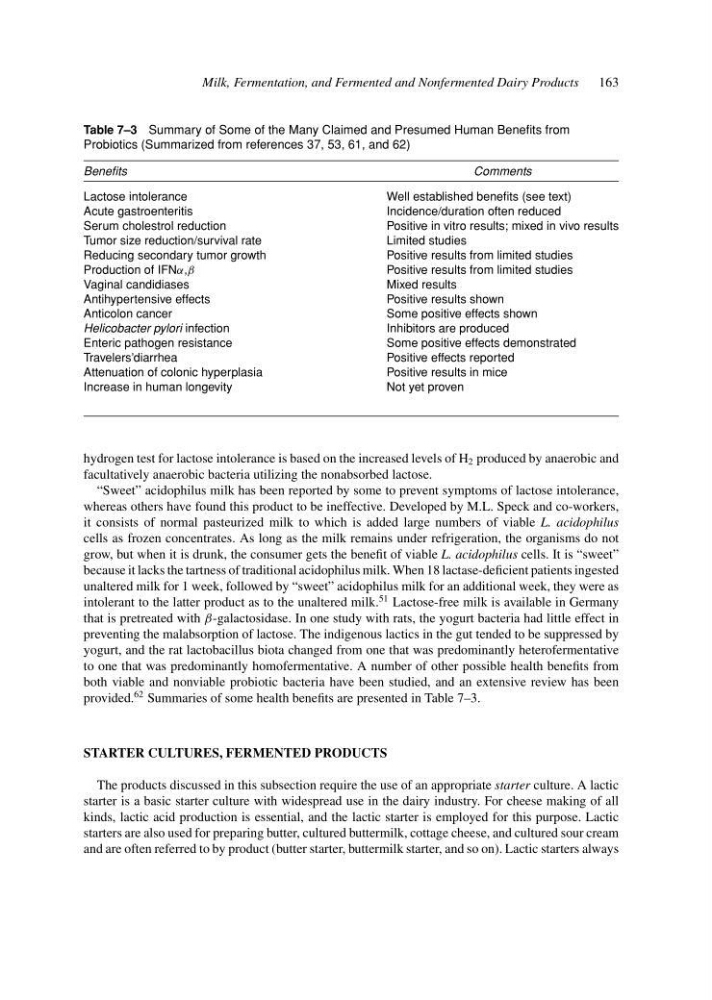
Table 7–3 Summary of Some of the Many Claimed and Presumed Human Benefits from
Probiotics (Summarized from references 37, 53, 61, and 62)
Benefits
Comments
Lactose intolerance
Well established benefits (see text)
Acute gastroenteritis
Incidence/duration often reduced
Serum cholestrol reduction
Positive in vitro results; mixed in vivo results
Tumor size reduction/survival rate
Limited studies
Reducing secondary tumor growth
Positive results from limited studies
Production of IFNα,β
Positive results from limited studies
Vaginal candidiases
Mixed results
Antihypertensive effects
Positive results shown
Anticolon cancer
Some positive effects shown
Helicobacter pylori infection
Inhibitors are produced
Enteric pathogen resistance
Some positive effects demonstrated
Travelers’diarrhea
Positive effects reported
Attenuation of colonic hyperplasia
Positive results in mice
Increase in human longevity
Not yet proven
hydrogen test for lactose intolerance is based on the increased levels of H 2 produced by anaerobic and
facultatively anaerobic bacteria utilizing the nonabsorbed lactose.
“Sweet” acidophilus milk has been reported by some to prevent symptoms of lactose intolerance,
whereas others have found this product to be ineffective. Developed by M.L. Speck and co-workers,
it consists of normal pasteurized milk to which is added large numbers of viable L. acidophilus
cells as frozen concentrates. As long as the milk remains under refrigeration, the organisms do not
grow, but when it is drunk, the consumer gets the benefit of viable L. acidophilus cells. It is “sweet”
because it lacks the tartness of traditional acidophilus milk. When 18 lactase-deficient patients ingested
unaltered milk for 1 week, followed by “sweet” acidophilus milk for an additional week, they were as
intolerant to the latter product as to the unaltered milk.
51 Lactose-free milk is available in Germany
that is pretreated with β-galactosidase. In one study with rats, the yogurt bacteria had little effect in
preventing the malabsorption of lactose. The indigenous lactics in the gut tended to be suppressed by
yogurt, and the rat lactobacillus biota changed from one that was predominantly heterofermentative
to one that was predominantly homofermentative. A number of other possible health benefits from
both viable and nonviable probiotic bacteria have been studied, and an extensive review has been
provided.
62 Summaries of some health benefits are presented in Table 7–3.
STARTER CULTURES, FERMENTED PRODUCTS
The products discussed in this subsection require the use of an appropriate starter culture. A lactic
starter is a basic starter culture with widespread use in the dairy industry. For cheese making of all
kinds, lactic acid production is essential, and the lactic starter is employed for this purpose. Lactic
starters are also used for preparing butter, cultured buttermilk, cottage cheese, and cultured sour cream
and are often referred to by product (butter starter, buttermilk starter, and so on). Lactic starters always
Table 7–3 Summary of Some of the Many Claimed and Presumed Human Benefits from
Probiotics (Summarized from references 37, 53, 61, and 62)
Benefits
Comments
Lactose intolerance
Well established benefits (see text)
Acute gastroenteritis
Incidence/duration often reduced
Serum cholestrol reduction
Positive in vitro results; mixed in vivo results
Tumor size reduction/survival rate
Limited studies
Reducing secondary tumor growth
Positive results from limited studies
Production of IFNα,β
Positive results from limited studies
Vaginal candidiases
Mixed results
Antihypertensive effects
Positive results shown
Anticolon cancer
Some positive effects shown
Helicobacter pylori infection
Inhibitors are produced
Enteric pathogen resistance
Some positive effects demonstrated
Travelers’diarrhea
Positive effects reported
Attenuation of colonic hyperplasia
Positive results in mice
Increase in human longevity
Not yet proven
hydrogen test for lactose intolerance is based on the increased levels of H 2 produced by anaerobic and
facultatively anaerobic bacteria utilizing the nonabsorbed lactose.
“Sweet” acidophilus milk has been reported by some to prevent symptoms of lactose intolerance,
whereas others have found this product to be ineffective. Developed by M.L. Speck and co-workers,
it consists of normal pasteurized milk to which is added large numbers of viable L. acidophilus
cells as frozen concentrates. As long as the milk remains under refrigeration, the organisms do not
grow, but when it is drunk, the consumer gets the benefit of viable L. acidophilus cells. It is “sweet”
because it lacks the tartness of traditional acidophilus milk. When 18 lactase-deficient patients ingested
unaltered milk for 1 week, followed by “sweet” acidophilus milk for an additional week, they were as
intolerant to the latter product as to the unaltered milk.
51 Lactose-free milk is available in Germany
that is pretreated with β-galactosidase. In one study with rats, the yogurt bacteria had little effect in
preventing the malabsorption of lactose. The indigenous lactics in the gut tended to be suppressed by
yogurt, and the rat lactobacillus biota changed from one that was predominantly heterofermentative
to one that was predominantly homofermentative. A number of other possible health benefits from
both viable and nonviable probiotic bacteria have been studied, and an extensive review has been
provided.
62 Summaries of some health benefits are presented in Table 7–3.
STARTER CULTURES, FERMENTED PRODUCTS
The products discussed in this subsection require the use of an appropriate starter culture. A lactic
starter is a basic starter culture with widespread use in the dairy industry. For cheese making of all
kinds, lactic acid production is essential, and the lactic starter is employed for this purpose. Lactic
starters are also used for preparing butter, cultured buttermilk, cottage cheese, and cultured sour cream
and are often referred to by product (butter starter, buttermilk starter, and so on). Lactic starters always