

164 Modern Food Microbiology
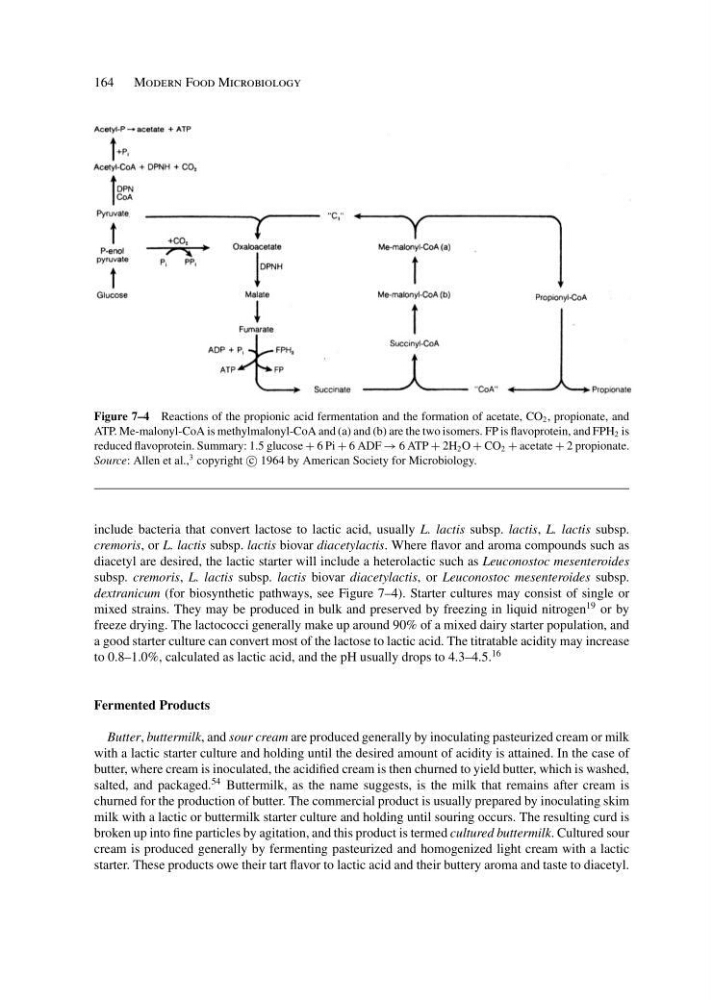
Figure 7–4 Reactions of the propionic acid fermentation and the formation of acetate, CO 2 , propionate, and
ATP. Me-malonyl-CoA is methylmalonyl-CoA and (a) and (b) are the two isomers. FP is flavoprotein, and FPH 2 is
reduced flavoprotein. Summary: 1.5 glucose + 6 Pi + 6 ADF → 6 ATP + 2H 2 O + CO 2 + acetate + 2 propionate.
Source: Allen et al.,
3 copyright c
1964 by American Society for Microbiology.
include bacteria that convert lactose to lactic acid, usually L. lactis subsp. lactis, L. lactis subsp.
cremoris, or L. lactis subsp. lactis biovar diacetylactis. Where flavor and aroma compounds such as
diacetyl are desired, the lactic starter will include a heterolactic such as Leuconostoc mesenteroides
subsp. cremoris, L. lactis subsp. lactis biovar diacetylactis, or Leuconostoc mesenteroides subsp.
dextranicum (for biosynthetic pathways, see Figure 7–4). Starter cultures may consist of single or
mixed strains. They may be produced in bulk and preserved by freezing in liquid nitrogen
19 or by
freeze drying. The lactococci generally make up around 90% of a mixed dairy starter population, and
a good starter culture can convert most of the lactose to lactic acid. The titratable acidity may increase
to 0.8–1.0%, calculated as lactic acid, and the pH usually drops to 4.3–4.5.
16
Fermented Products
Butter, buttermilk, and sour cream are produced generally by inoculating pasteurized cream or milk
with a lactic starter culture and holding until the desired amount of acidity is attained. In the case of
butter, where cream is inoculated, the acidified cream is then churned to yield butter, which is washed,
salted, and packaged.
54 Buttermilk, as the name suggests, is the milk that remains after cream is
churned for the production of butter. The commercial product is usually prepared by inoculating skim
milk with a lactic or buttermilk starter culture and holding until souring occurs. The resulting curd is
broken up into fine particles by agitation, and this product is termed cultured buttermilk. Cultured sour
cream is produced generally by fermenting pasteurized and homogenized light cream with a lactic
starter. These products owe their tart flavor to lactic acid and their buttery aroma and taste to diacetyl.
Figure 7–4 Reactions of the propionic acid fermentation and the formation of acetate, CO 2 , propionate, and
ATP. Me-malonyl-CoA is methylmalonyl-CoA and (a) and (b) are the two isomers. FP is flavoprotein, and FPH 2 is
reduced flavoprotein. Summary: 1.5 glucose + 6 Pi + 6 ADF → 6 ATP + 2H 2 O + CO 2 + acetate + 2 propionate.
Source: Allen et al.,
3 copyright c
1964 by American Society for Microbiology.
include bacteria that convert lactose to lactic acid, usually L. lactis subsp. lactis, L. lactis subsp.
cremoris, or L. lactis subsp. lactis biovar diacetylactis. Where flavor and aroma compounds such as
diacetyl are desired, the lactic starter will include a heterolactic such as Leuconostoc mesenteroides
subsp. cremoris, L. lactis subsp. lactis biovar diacetylactis, or Leuconostoc mesenteroides subsp.
dextranicum (for biosynthetic pathways, see Figure 7–4). Starter cultures may consist of single or
mixed strains. They may be produced in bulk and preserved by freezing in liquid nitrogen
19 or by
freeze drying. The lactococci generally make up around 90% of a mixed dairy starter population, and
a good starter culture can convert most of the lactose to lactic acid. The titratable acidity may increase
to 0.8–1.0%, calculated as lactic acid, and the pH usually drops to 4.3–4.5.
16
Fermented Products
Butter, buttermilk, and sour cream are produced generally by inoculating pasteurized cream or milk
with a lactic starter culture and holding until the desired amount of acidity is attained. In the case of
butter, where cream is inoculated, the acidified cream is then churned to yield butter, which is washed,
salted, and packaged.
54 Buttermilk, as the name suggests, is the milk that remains after cream is
churned for the production of butter. The commercial product is usually prepared by inoculating skim
milk with a lactic or buttermilk starter culture and holding until souring occurs. The resulting curd is
broken up into fine particles by agitation, and this product is termed cultured buttermilk. Cultured sour
cream is produced generally by fermenting pasteurized and homogenized light cream with a lactic
starter. These products owe their tart flavor to lactic acid and their buttery aroma and taste to diacetyl.