

Application of Sustainable and Low-Cost Sludge-Based Adsorbents …
79
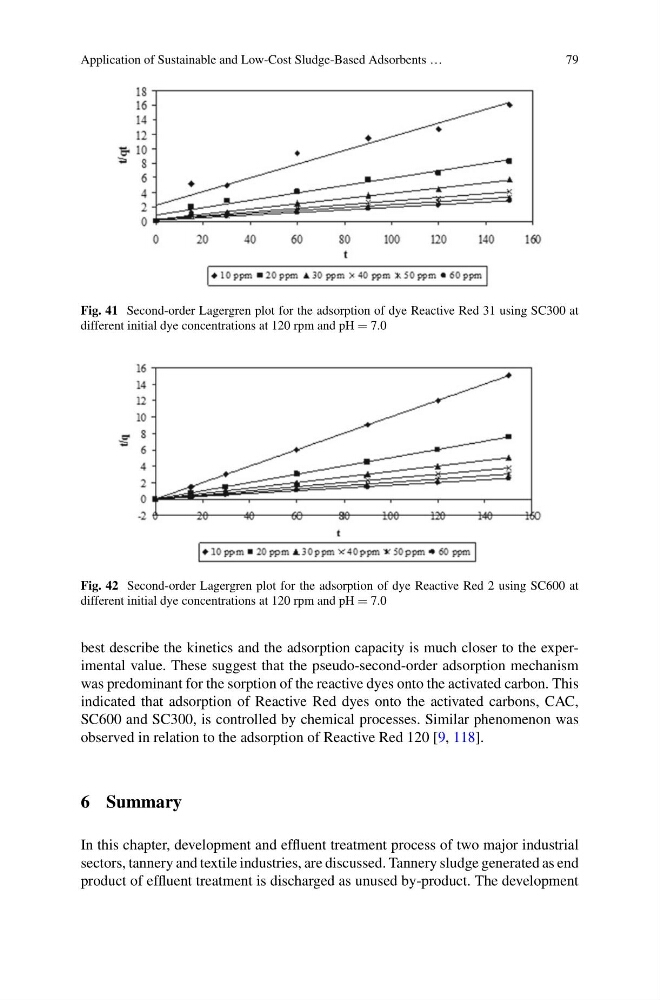
Fig. 41 Second-order Lagergren plot for the adsorption of dye Reactive Red 31 using SC300 at
different initial dye concentrations at 120 rpm and pH = 7.0
Fig. 42 Second-order Lagergren plot for the adsorption of dye Reactive Red 2 using SC600 at
different initial dye concentrations at 120 rpm and pH = 7.0
best describe the kinetics and the adsorption capacity is much closer to the experimental value. These suggest that the pseudo-second-order adsorption mechanism
was predominant for the sorption of the reactive dyes onto the activated carbon. This
indicated that adsorption of Reactive Red dyes onto the activated carbons, CAC,
SC600 and SC300, is controlled by chemical processes. Similar phenomenon was
observed in relation to the adsorption of Reactive Red 120 [9, 118].
6 Summary
In this chapter, development and effluent treatment process of two major industrial
sectors, tannery and textile industries, are discussed. Tannery sludge generated as end
product of effluent treatment is discharged as unused by-product. The development
79
Fig. 41 Second-order Lagergren plot for the adsorption of dye Reactive Red 31 using SC300 at
different initial dye concentrations at 120 rpm and pH = 7.0
Fig. 42 Second-order Lagergren plot for the adsorption of dye Reactive Red 2 using SC600 at
different initial dye concentrations at 120 rpm and pH = 7.0
best describe the kinetics and the adsorption capacity is much closer to the experimental value. These suggest that the pseudo-second-order adsorption mechanism
was predominant for the sorption of the reactive dyes onto the activated carbon. This
indicated that adsorption of Reactive Red dyes onto the activated carbons, CAC,
SC600 and SC300, is controlled by chemical processes. Similar phenomenon was
observed in relation to the adsorption of Reactive Red 120 [9, 118].
6 Summary
In this chapter, development and effluent treatment process of two major industrial
sectors, tannery and textile industries, are discussed. Tannery sludge generated as end
product of effluent treatment is discharged as unused by-product. The development