

70
A. Geethakarthi
0
0.2
0.4
0.6
0.8
1
1.2
0
5
10
15
20
25
30
35
Ce, mg/L
Ce/qe, g/L
20oC
30oC
40oC
50oC
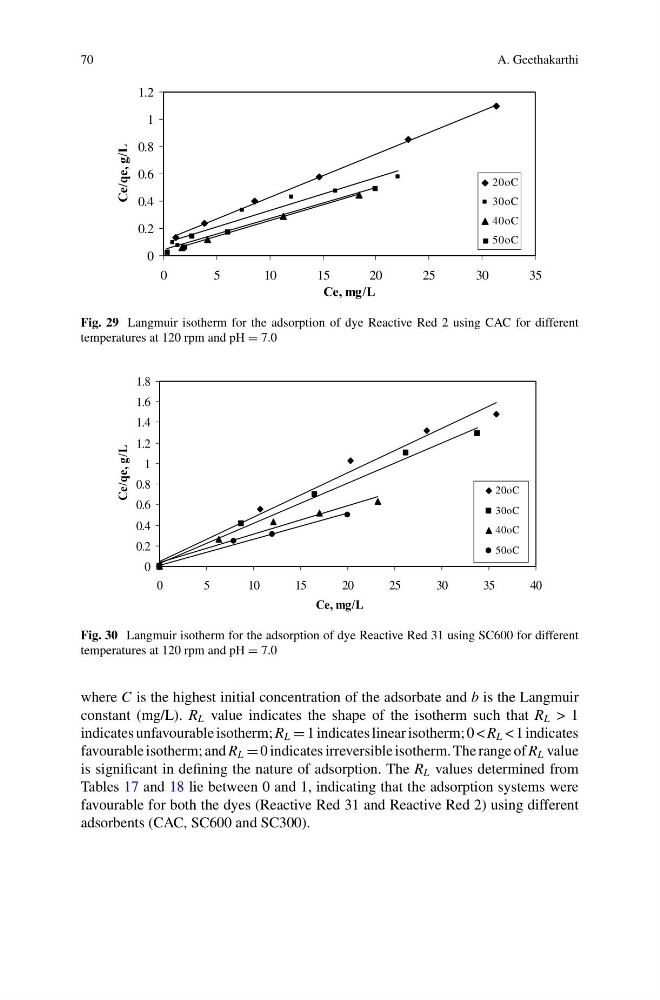
Fig. 29 Langmuir isotherm for the adsorption of dye Reactive Red 2 using CAC for different
temperatures at 120 rpm and pH = 7.0
0
0.2
0.4
0.6
0.8
1
1.2
1.4
1.6
1.8
0
5
10
15
20
25
30
35
40
Ce, mg/L
Ce/qe, g/L
20oC
30oC
40oC
50oC
Fig. 30 Langmuir isotherm for the adsorption of dye Reactive Red 31 using SC600 for different
temperatures at 120 rpm and pH = 7.0
where C is the highest initial concentration of the adsorbate and b is the Langmuir
constant (mg/L). R L value indicates the shape of the isotherm such that R L > 1
indicates unfavourable isotherm; R L = 1 indicates linear isotherm; 0 < R L < 1 indicates
favourable isotherm; and R L = 0 indicates irreversible isotherm. The range of R L value
is significant in defining the nature of adsorption. The R L values determined from
Tables 17 and 18 lie between 0 and 1, indicating that the adsorption systems were
favourable for both the dyes (Reactive Red 31 and Reactive Red 2) using different
adsorbents (CAC, SC600 and SC300).
A. Geethakarthi
0
0.2
0.4
0.6
0.8
1
1.2
0
5
10
15
20
25
30
35
Ce, mg/L
Ce/qe, g/L
20oC
30oC
40oC
50oC
Fig. 29 Langmuir isotherm for the adsorption of dye Reactive Red 2 using CAC for different
temperatures at 120 rpm and pH = 7.0
0
0.2
0.4
0.6
0.8
1
1.2
1.4
1.6
1.8
0
5
10
15
20
25
30
35
40
Ce, mg/L
Ce/qe, g/L
20oC
30oC
40oC
50oC
Fig. 30 Langmuir isotherm for the adsorption of dye Reactive Red 31 using SC600 for different
temperatures at 120 rpm and pH = 7.0
where C is the highest initial concentration of the adsorbate and b is the Langmuir
constant (mg/L). R L value indicates the shape of the isotherm such that R L > 1
indicates unfavourable isotherm; R L = 1 indicates linear isotherm; 0 < R L < 1 indicates
favourable isotherm; and R L = 0 indicates irreversible isotherm. The range of R L value
is significant in defining the nature of adsorption. The R L values determined from
Tables 17 and 18 lie between 0 and 1, indicating that the adsorption systems were
favourable for both the dyes (Reactive Red 31 and Reactive Red 2) using different
adsorbents (CAC, SC600 and SC300).