

Application of Sustainable and Low-Cost Sludge-Based Adsorbents …
71
0
0.05
0.1
0.15
0.2
0.25
0
1
2
3
4
5
6
7
8
9
10 11 12
Ce, mg/L
Ce/qe, g/L
20oC
30oC
40oC
50oC
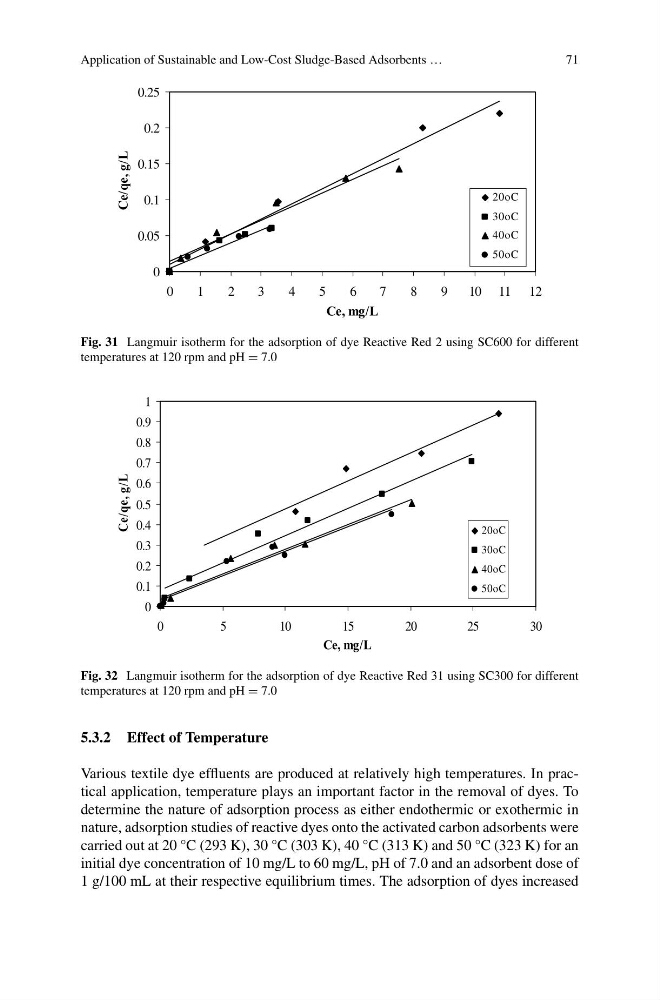
Fig. 31 Langmuir isotherm for the adsorption of dye Reactive Red 2 using SC600 for different
temperatures at 120 rpm and pH = 7.0
0
0.1
0.2
0.3
0.4
0.5
0.6
0.7
0.8
0.9
1
0
5
10
15
20
25
30
Ce, mg/L
Ce/qe, g/L
20oC
30oC
40oC
50oC
Fig. 32 Langmuir isotherm for the adsorption of dye Reactive Red 31 using SC300 for different
temperatures at 120 rpm and pH = 7.0
5.3.2 Effect of Temperature
Various textile dye effluents are produced at relatively high temperatures. In practical application, temperature plays an important factor in the removal of dyes. To
determine the nature of adsorption process as either endothermic or exothermic in
nature, adsorption studies of reactive dyes onto the activated carbon adsorbents were
carried out at 20 °C (293 K), 30 °C (303 K), 40 °C (313 K) and 50 °C (323 K) for an
initial dye concentration of 10 mg/L to 60 mg/L, pH of 7.0 and an adsorbent dose of
1 g/100 mL at their respective equilibrium times. The adsorption of dyes increased
71
0
0.05
0.1
0.15
0.2
0.25
0
1
2
3
4
5
6
7
8
9
10 11 12
Ce, mg/L
Ce/qe, g/L
20oC
30oC
40oC
50oC
Fig. 31 Langmuir isotherm for the adsorption of dye Reactive Red 2 using SC600 for different
temperatures at 120 rpm and pH = 7.0
0
0.1
0.2
0.3
0.4
0.5
0.6
0.7
0.8
0.9
1
0
5
10
15
20
25
30
Ce, mg/L
Ce/qe, g/L
20oC
30oC
40oC
50oC
Fig. 32 Langmuir isotherm for the adsorption of dye Reactive Red 31 using SC300 for different
temperatures at 120 rpm and pH = 7.0
5.3.2 Effect of Temperature
Various textile dye effluents are produced at relatively high temperatures. In practical application, temperature plays an important factor in the removal of dyes. To
determine the nature of adsorption process as either endothermic or exothermic in
nature, adsorption studies of reactive dyes onto the activated carbon adsorbents were
carried out at 20 °C (293 K), 30 °C (303 K), 40 °C (313 K) and 50 °C (323 K) for an
initial dye concentration of 10 mg/L to 60 mg/L, pH of 7.0 and an adsorbent dose of
1 g/100 mL at their respective equilibrium times. The adsorption of dyes increased