

Application of Sustainable and Low-Cost Sludge-Based Adsorbents …
33
Biological oxygen demand
from sizes, enzymes, starch and
waxes
NaOH,
surfactants,
soaps, fat,
pectin, oils,
sizes and waxes
Hydrogen peroxide, sodium
silicate, organic stabilizer and
alkaline conditions
Colour, metals, urea,
formaldehyde and solvents
Metals, salt,
surfactants, colour
and alkaline/acidic
Softeners, solvents,
resins and waxes.
pH = <10.8-11.2
pH = <10.5
Equalisation and
neutralization basin
Collection point
To treatment
unit
Sizing
Scouring
Bleaching
Mercerizing
Dyeing
Printing
Finishing
Effluent
De-Sizing
pH = 6.0-6.5
Wastewater flow
Process flow
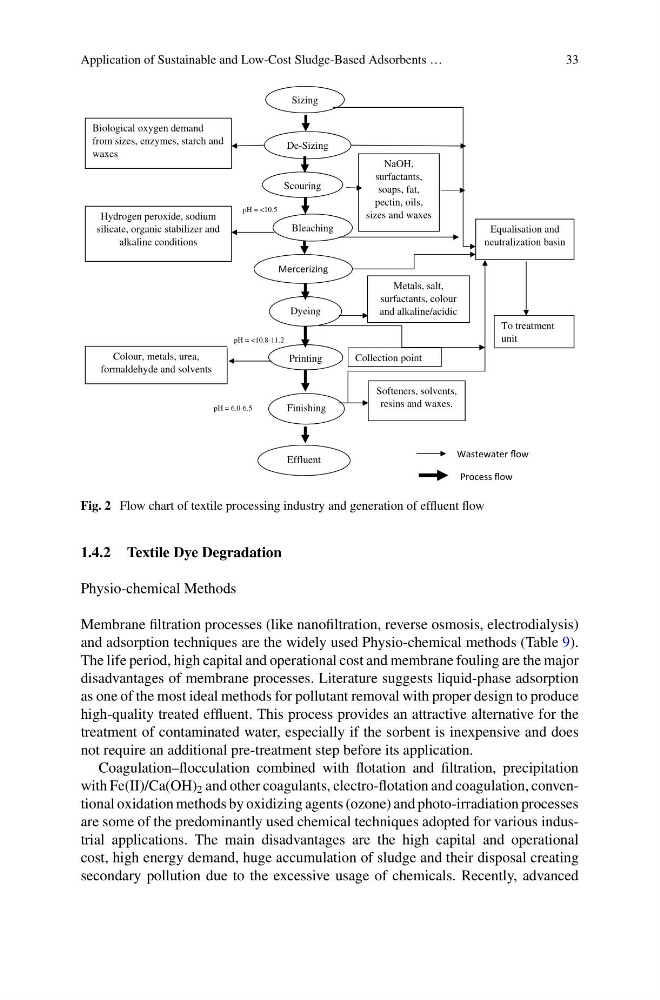
Fig. 2 Flow chart of textile processing industry and generation of effluent flow
1.4.2 Textile Dye Degradation
Physio-chemical Methods
Membrane filtration processes (like nanofiltration, reverse osmosis, electrodialysis)
and adsorption techniques are the widely used Physio-chemical methods (Table 9).
The life period, high capital and operational cost and membrane fouling are the major
disadvantages of membrane processes. Literature suggests liquid-phase adsorption
as one of the most ideal methods for pollutant removal with proper design to produce
high-quality treated effluent. This process provides an attractive alternative for the
treatment of contaminated water, especially if the sorbent is inexpensive and does
not require an additional pre-treatment step before its application.
Coagulation–flocculation combined with flotation and filtration, precipitation
with Fe(II)/Ca(OH) 2 and other coagulants, electro-flotation and coagulation, conventional oxidation methods by oxidizing agents (ozone) and photo-irradiation processes
are some of the predominantly used chemical techniques adopted for various industrial applications. The main disadvantages are the high capital and operational
cost, high energy demand, huge accumulation of sludge and their disposal creating
secondary pollution due to the excessive usage of chemicals. Recently, advanced
33
Biological oxygen demand
from sizes, enzymes, starch and
waxes
NaOH,
surfactants,
soaps, fat,
pectin, oils,
sizes and waxes
Hydrogen peroxide, sodium
silicate, organic stabilizer and
alkaline conditions
Colour, metals, urea,
formaldehyde and solvents
Metals, salt,
surfactants, colour
and alkaline/acidic
Softeners, solvents,
resins and waxes.
pH = <10.8-11.2
pH = <10.5
Equalisation and
neutralization basin
Collection point
To treatment
unit
Sizing
Scouring
Bleaching
Mercerizing
Dyeing
Printing
Finishing
Effluent
De-Sizing
pH = 6.0-6.5
Wastewater flow
Process flow
Fig. 2 Flow chart of textile processing industry and generation of effluent flow
1.4.2 Textile Dye Degradation
Physio-chemical Methods
Membrane filtration processes (like nanofiltration, reverse osmosis, electrodialysis)
and adsorption techniques are the widely used Physio-chemical methods (Table 9).
The life period, high capital and operational cost and membrane fouling are the major
disadvantages of membrane processes. Literature suggests liquid-phase adsorption
as one of the most ideal methods for pollutant removal with proper design to produce
high-quality treated effluent. This process provides an attractive alternative for the
treatment of contaminated water, especially if the sorbent is inexpensive and does
not require an additional pre-treatment step before its application.
Coagulation–flocculation combined with flotation and filtration, precipitation
with Fe(II)/Ca(OH) 2 and other coagulants, electro-flotation and coagulation, conventional oxidation methods by oxidizing agents (ozone) and photo-irradiation processes
are some of the predominantly used chemical techniques adopted for various industrial applications. The main disadvantages are the high capital and operational
cost, high energy demand, huge accumulation of sludge and their disposal creating
secondary pollution due to the excessive usage of chemicals. Recently, advanced