

20
C. Gutiérrez-Bouzán et al.
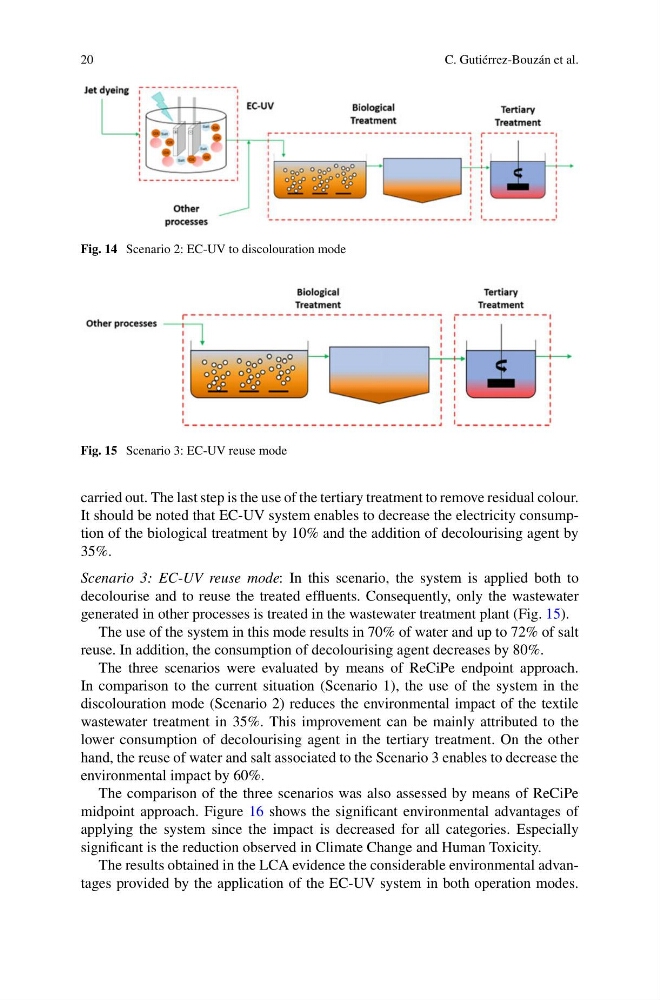
Fig. 14 Scenario 2: EC-UV to discolouration mode
Fig. 15 Scenario 3: EC-UV reuse mode
carried out. The last step is the use of the tertiary treatment to remove residual colour.
It should be noted that EC-UV system enables to decrease the electricity consumption of the biological treatment by 10% and the addition of decolourising agent by
35%.
Scenario 3: EC-UV reuse mode: In this scenario, the system is applied both to
decolourise and to reuse the treated effluents. Consequently, only the wastewater
generated in other processes is treated in the wastewater treatment plant (Fig. 15).
The use of the system in this mode results in 70% of water and up to 72% of salt
reuse. In addition, the consumption of decolourising agent decreases by 80%.
The three scenarios were evaluated by means of ReCiPe endpoint approach.
In comparison to the current situation (Scenario 1), the use of the system in the
discolouration mode (Scenario 2) reduces the environmental impact of the textile
wastewater treatment in 35%. This improvement can be mainly attributed to the
lower consumption of decolourising agent in the tertiary treatment. On the other
hand, the reuse of water and salt associated to the Scenario 3 enables to decrease the
environmental impact by 60%.
The comparison of the three scenarios was also assessed by means of ReCiPe
midpoint approach. Figure 16 shows the significant environmental advantages of
applying the system since the impact is decreased for all categories. Especially
significant is the reduction observed in Climate Change and Human Toxicity.
The results obtained in the LCA evidence the considerable environmental advantages provided by the application of the EC-UV system in both operation modes.
C. Gutiérrez-Bouzán et al.
Fig. 14 Scenario 2: EC-UV to discolouration mode
Fig. 15 Scenario 3: EC-UV reuse mode
carried out. The last step is the use of the tertiary treatment to remove residual colour.
It should be noted that EC-UV system enables to decrease the electricity consumption of the biological treatment by 10% and the addition of decolourising agent by
35%.
Scenario 3: EC-UV reuse mode: In this scenario, the system is applied both to
decolourise and to reuse the treated effluents. Consequently, only the wastewater
generated in other processes is treated in the wastewater treatment plant (Fig. 15).
The use of the system in this mode results in 70% of water and up to 72% of salt
reuse. In addition, the consumption of decolourising agent decreases by 80%.
The three scenarios were evaluated by means of ReCiPe endpoint approach.
In comparison to the current situation (Scenario 1), the use of the system in the
discolouration mode (Scenario 2) reduces the environmental impact of the textile
wastewater treatment in 35%. This improvement can be mainly attributed to the
lower consumption of decolourising agent in the tertiary treatment. On the other
hand, the reuse of water and salt associated to the Scenario 3 enables to decrease the
environmental impact by 60%.
The comparison of the three scenarios was also assessed by means of ReCiPe
midpoint approach. Figure 16 shows the significant environmental advantages of
applying the system since the impact is decreased for all categories. Especially
significant is the reduction observed in Climate Change and Human Toxicity.
The results obtained in the LCA evidence the considerable environmental advantages provided by the application of the EC-UV system in both operation modes.