

to char (Robinson et al. 2015; Demirbas and Arin 2002). These values will be used to
calculate activation energy of pyrolysis of biomass at 300
C.
12.3.2 Pyrolysis of Teak Sawdust at 400
C
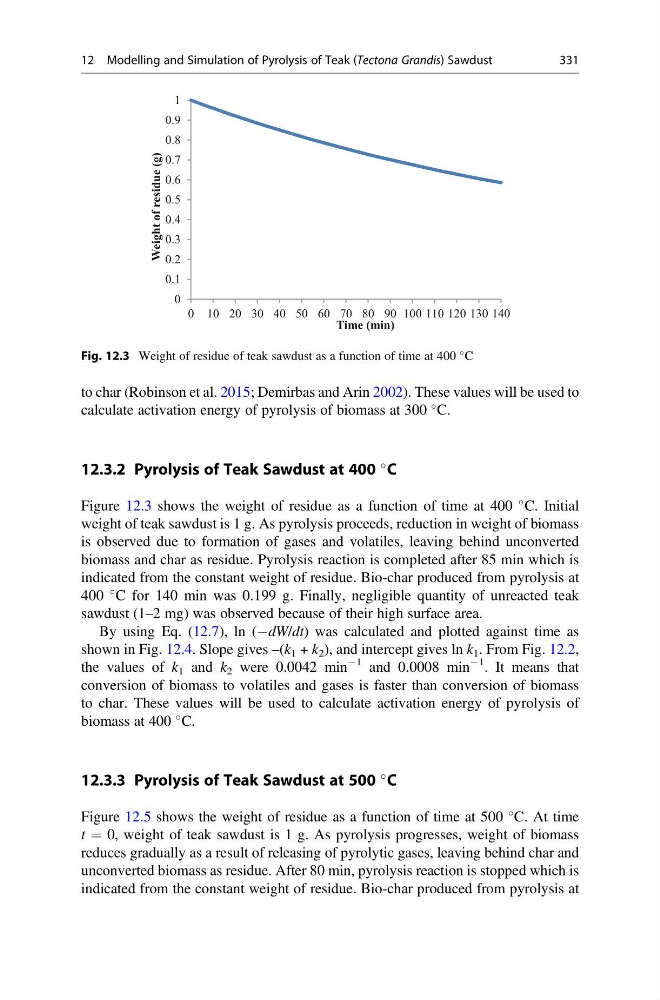
Figure 12.3 shows the weight of residue as a function of time at 400
C. Initial
weight of teak sawdust is 1 g. As pyrolysis proceeds, reduction in weight of biomass
is observed due to formation of gases and volatiles, leaving behind unconverted
biomass and char as residue. Pyrolysis reaction is completed after 85 min which is
indicated from the constant weight of residue. Bio-char produced from pyrolysis at
400
C for 140 min was 0.199 g. Finally, negligible quantity of unreacted teak
sawdust (1–2 mg) was observed because of their high surface area.
By using Eq. (12.7), ln (ÀdW/dt) was calculated and plotted against time as
shown in Fig. 12.4. Slope gives –(k 1 + k 2 ), and intercept gives ln k 1 . From Fig. 12.2,
the values of k 1 and k 2 were 0.0042 min
À1 and 0.0008 min
À1 . It means that
conversion of biomass to volatiles and gases is faster than conversion of biomass
to char. These values will be used to calculate activation energy of pyrolysis of
biomass at 400
C.
12.3.3 Pyrolysis of Teak Sawdust at 500
C
Figure 12.5 shows the weight of residue as a function of time at 500
C. At time
t ¼ 0, weight of teak sawdust is 1 g. As pyrolysis progresses, weight of biomass
reduces gradually as a result of releasing of pyrolytic gases, leaving behind char and
unconverted biomass as residue. After 80 min, pyrolysis reaction is stopped which is
indicated from the constant weight of residue. Bio-char produced from pyrolysis at
0
0.1
0.2
0.3
0.4
0.5
0.6
0.7
0.8
0.9
1
0 10 20 30 40 50 60 70 80 90 100 110 120 130 140
)
g
(
e
u
d
i
s
e
r
f
o
t
h
g
i
e
W
Time (min)
Fig. 12.3 Weight of residue of teak sawdust as a function of time at 400
C
12 Modelling and Simulation of Pyrolysis of Teak (Tectona Grandis) Sawdust
331
calculate activation energy of pyrolysis of biomass at 300
C.
12.3.2 Pyrolysis of Teak Sawdust at 400
C
Figure 12.3 shows the weight of residue as a function of time at 400
C. Initial
weight of teak sawdust is 1 g. As pyrolysis proceeds, reduction in weight of biomass
is observed due to formation of gases and volatiles, leaving behind unconverted
biomass and char as residue. Pyrolysis reaction is completed after 85 min which is
indicated from the constant weight of residue. Bio-char produced from pyrolysis at
400
C for 140 min was 0.199 g. Finally, negligible quantity of unreacted teak
sawdust (1–2 mg) was observed because of their high surface area.
By using Eq. (12.7), ln (ÀdW/dt) was calculated and plotted against time as
shown in Fig. 12.4. Slope gives –(k 1 + k 2 ), and intercept gives ln k 1 . From Fig. 12.2,
the values of k 1 and k 2 were 0.0042 min
À1 and 0.0008 min
À1 . It means that
conversion of biomass to volatiles and gases is faster than conversion of biomass
to char. These values will be used to calculate activation energy of pyrolysis of
biomass at 400
C.
12.3.3 Pyrolysis of Teak Sawdust at 500
C
Figure 12.5 shows the weight of residue as a function of time at 500
C. At time
t ¼ 0, weight of teak sawdust is 1 g. As pyrolysis progresses, weight of biomass
reduces gradually as a result of releasing of pyrolytic gases, leaving behind char and
unconverted biomass as residue. After 80 min, pyrolysis reaction is stopped which is
indicated from the constant weight of residue. Bio-char produced from pyrolysis at
0
0.1
0.2
0.3
0.4
0.5
0.6
0.7
0.8
0.9
1
0 10 20 30 40 50 60 70 80 90 100 110 120 130 140
)
g
(
e
u
d
i
s
e
r
f
o
t
h
g
i
e
W
Time (min)
Fig. 12.3 Weight of residue of teak sawdust as a function of time at 400
C
12 Modelling and Simulation of Pyrolysis of Teak (Tectona Grandis) Sawdust
331