

8.1.1 First-Generation Biofuel (F
st GB)
The production of biofuel relies on food crops which depends on the farmland and
thus promotes the conversion of forest areas into agricultural land and competes in
the “food vs. fuel” controversy (Maity et al. 2014).
8.1.2 Second-Generation Biofuel (S
nd GB)
In order to overcome the above limitation, S
nd GB was developed based entirely on
nonedible sources (e.g., lignocellulosic sources and non-food have been considered
under S
nd GB). However, it also requires larger surface area for the cultivation, the
expense associated with the equipment is very high, and the biofuel generated cannot
replace the fossil fuel completely (Mathimani et al. 2018).
8.1.3 Third-Generation Biofuel (T
rd
GB)
Thus, to overcome the limitations, the concept of microalgae gained interest among
the researchers. They are photosynthetically more competent, effective fixers of
carbon dioxide and miniature biochemical factories (Demirbas 2011). In comparison
to the F
st GB and S
nd GB, the cost associated with the processing is low, and it can
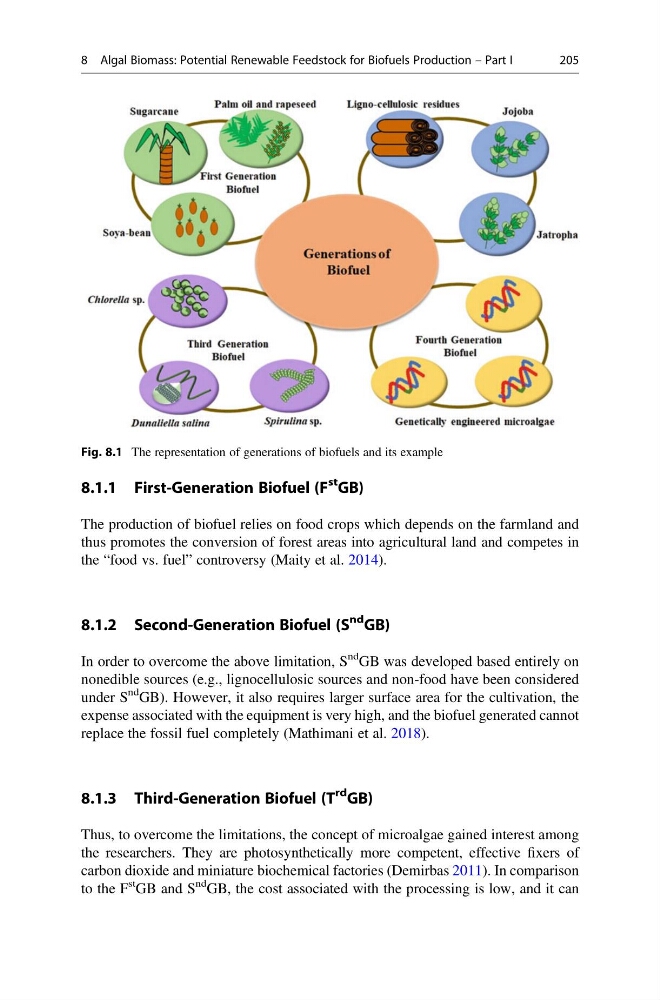
Fig. 8.1 The representation of generations of biofuels and its example
8 Algal Biomass: Potential Renewable Feedstock for Biofuels Production – Part I
205
st GB)
The production of biofuel relies on food crops which depends on the farmland and
thus promotes the conversion of forest areas into agricultural land and competes in
the “food vs. fuel” controversy (Maity et al. 2014).
8.1.2 Second-Generation Biofuel (S
nd GB)
In order to overcome the above limitation, S
nd GB was developed based entirely on
nonedible sources (e.g., lignocellulosic sources and non-food have been considered
under S
nd GB). However, it also requires larger surface area for the cultivation, the
expense associated with the equipment is very high, and the biofuel generated cannot
replace the fossil fuel completely (Mathimani et al. 2018).
8.1.3 Third-Generation Biofuel (T
rd
GB)
Thus, to overcome the limitations, the concept of microalgae gained interest among
the researchers. They are photosynthetically more competent, effective fixers of
carbon dioxide and miniature biochemical factories (Demirbas 2011). In comparison
to the F
st GB and S
nd GB, the cost associated with the processing is low, and it can
Fig. 8.1 The representation of generations of biofuels and its example
8 Algal Biomass: Potential Renewable Feedstock for Biofuels Production – Part I
205