

saccharolyticus, Thermotoga maritima, C. thermocellum, Anaerocellum
thermophilum, E. coli, C. kluyveri, and Ruminococcus albus (Blumer et al. 2008;
Wirth et al. 2012) are also involved. The most common cellulose fermenter in nature
is Clostridium. The other cellulose-degrading bacteria involved in fermentation
process are Aminobacterium, Psychrobacter, Anaerococcus, Bacteroides,
Acetivibrio, Butyrivibrio, Halocella, Spirochaeta, Caldicellulosiruptor, and
Cellulomonas (Burrell et al. 2004; Li et al. 2013).
3.8.2 Acetogens
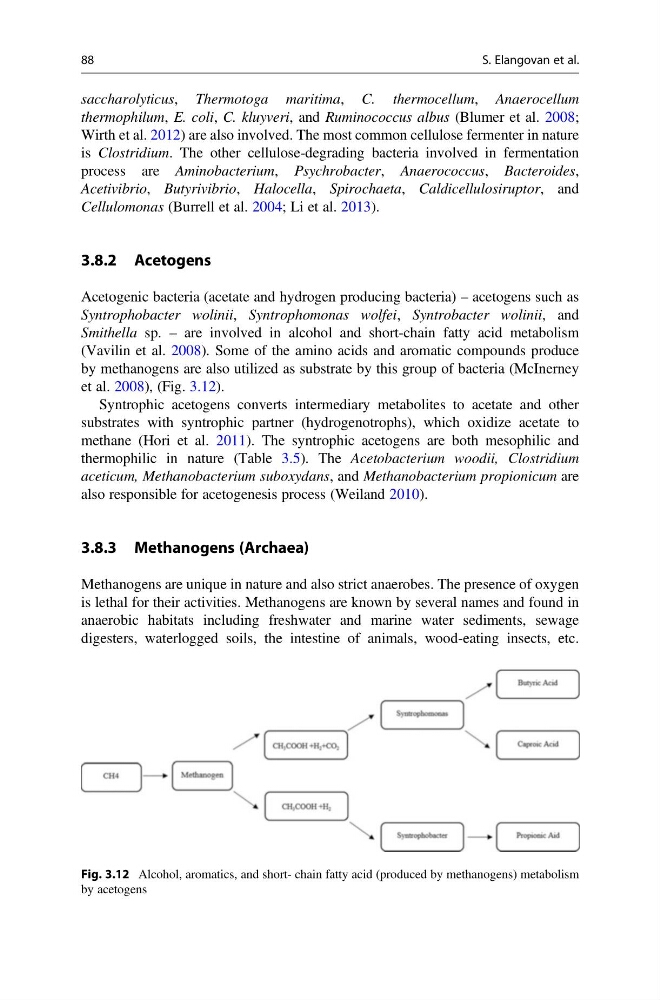
Acetogenic bacteria (acetate and hydrogen producing bacteria) – acetogens such as
Syntrophobacter wolinii, Syntrophomonas wolfei, Syntrobacter wolinii, and
Smithella sp. – are involved in alcohol and short-chain fatty acid metabolism
(Vavilin et al. 2008). Some of the amino acids and aromatic compounds produce
by methanogens are also utilized as substrate by this group of bacteria (McInerney
et al. 2008), (Fig. 3.12).
Syntrophic acetogens converts intermediary metabolites to acetate and other
substrates with syntrophic partner (hydrogenotrophs), which oxidize acetate to
methane (Hori et al. 2011). The syntrophic acetogens are both mesophilic and
thermophilic in nature (Table 3.5). The Acetobacterium woodii, Clostridium
aceticum, Methanobacterium suboxydans, and Methanobacterium propionicum are
also responsible for acetogenesis process (Weiland 2010).
3.8.3 Methanogens (Archaea)
Methanogens are unique in nature and also strict anaerobes. The presence of oxygen
is lethal for their activities. Methanogens are known by several names and found in
anaerobic habitats including freshwater and marine water sediments, sewage
digesters, waterlogged soils, the intestine of animals, wood-eating insects, etc.
Fig. 3.12 Alcohol, aromatics, and short- chain fatty acid (produced by methanogens) metabolism
by acetogens
88
S. Elangovan et al.
thermophilum, E. coli, C. kluyveri, and Ruminococcus albus (Blumer et al. 2008;
Wirth et al. 2012) are also involved. The most common cellulose fermenter in nature
is Clostridium. The other cellulose-degrading bacteria involved in fermentation
process are Aminobacterium, Psychrobacter, Anaerococcus, Bacteroides,
Acetivibrio, Butyrivibrio, Halocella, Spirochaeta, Caldicellulosiruptor, and
Cellulomonas (Burrell et al. 2004; Li et al. 2013).
3.8.2 Acetogens
Acetogenic bacteria (acetate and hydrogen producing bacteria) – acetogens such as
Syntrophobacter wolinii, Syntrophomonas wolfei, Syntrobacter wolinii, and
Smithella sp. – are involved in alcohol and short-chain fatty acid metabolism
(Vavilin et al. 2008). Some of the amino acids and aromatic compounds produce
by methanogens are also utilized as substrate by this group of bacteria (McInerney
et al. 2008), (Fig. 3.12).
Syntrophic acetogens converts intermediary metabolites to acetate and other
substrates with syntrophic partner (hydrogenotrophs), which oxidize acetate to
methane (Hori et al. 2011). The syntrophic acetogens are both mesophilic and
thermophilic in nature (Table 3.5). The Acetobacterium woodii, Clostridium
aceticum, Methanobacterium suboxydans, and Methanobacterium propionicum are
also responsible for acetogenesis process (Weiland 2010).
3.8.3 Methanogens (Archaea)
Methanogens are unique in nature and also strict anaerobes. The presence of oxygen
is lethal for their activities. Methanogens are known by several names and found in
anaerobic habitats including freshwater and marine water sediments, sewage
digesters, waterlogged soils, the intestine of animals, wood-eating insects, etc.
Fig. 3.12 Alcohol, aromatics, and short- chain fatty acid (produced by methanogens) metabolism
by acetogens
88
S. Elangovan et al.