

774
E. F. R. Q. Melo et al.
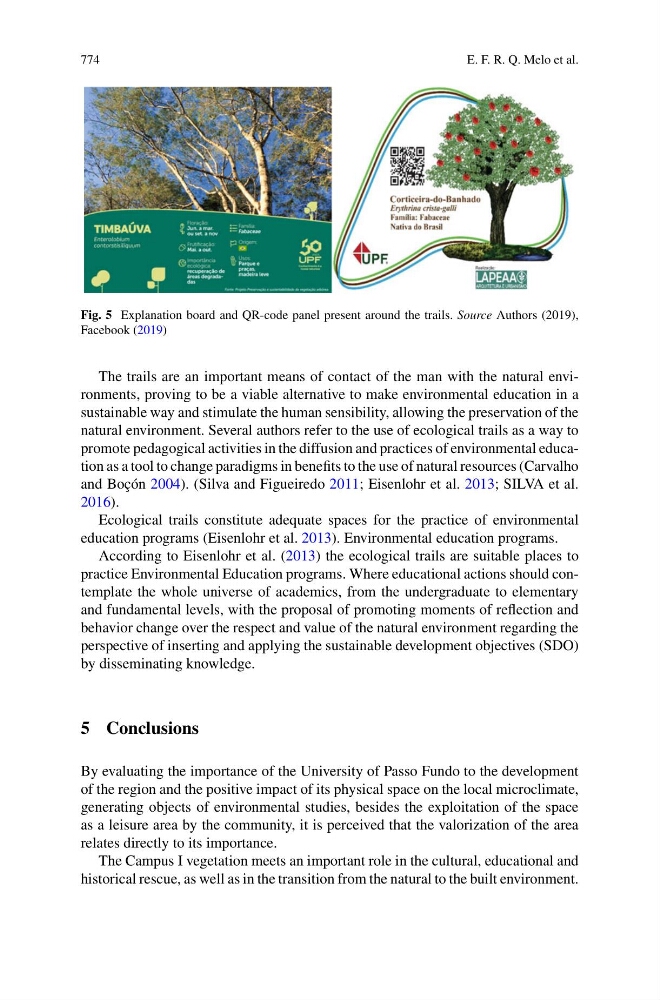
Fig. 5 Explanation board and QR-code panel present around the trails. Source Authors (2019),
Facebook (2019)
The trails are an important means of contact of the man with the natural environments, proving to be a viable alternative to make environmental education in a
sustainable way and stimulate the human sensibility, allowing the preservation of the
natural environment. Several authors refer to the use of ecological trails as a way to
promote pedagogical activities in the diffusion and practices of environmental education as a tool to change paradigms in benefits to the use of natural resources (Carvalho
and Boçón 2004). (Silva and Figueiredo 2011; Eisenlohr et al. 2013; SILVA et al.
2016).
Ecological trails constitute adequate spaces for the practice of environmental
education programs (Eisenlohr et al. 2013). Environmental education programs.
According to Eisenlohr et al. (2013) the ecological trails are suitable places to
practice Environmental Education programs. Where educational actions should contemplate the whole universe of academics, from the undergraduate to elementary
and fundamental levels, with the proposal of promoting moments of reflection and
behavior change over the respect and value of the natural environment regarding the
perspective of inserting and applying the sustainable development objectives (SDO)
by disseminating knowledge.
5 Conclusions
By evaluating the importance of the University of Passo Fundo to the development
of the region and the positive impact of its physical space on the local microclimate,
generating objects of environmental studies, besides the exploitation of the space
as a leisure area by the community, it is perceived that the valorization of the area
relates directly to its importance.
The Campus I vegetation meets an important role in the cultural, educational and
historical rescue, as well as in the transition from the natural to the built environment.
E. F. R. Q. Melo et al.
Fig. 5 Explanation board and QR-code panel present around the trails. Source Authors (2019),
Facebook (2019)
The trails are an important means of contact of the man with the natural environments, proving to be a viable alternative to make environmental education in a
sustainable way and stimulate the human sensibility, allowing the preservation of the
natural environment. Several authors refer to the use of ecological trails as a way to
promote pedagogical activities in the diffusion and practices of environmental education as a tool to change paradigms in benefits to the use of natural resources (Carvalho
and Boçón 2004). (Silva and Figueiredo 2011; Eisenlohr et al. 2013; SILVA et al.
2016).
Ecological trails constitute adequate spaces for the practice of environmental
education programs (Eisenlohr et al. 2013). Environmental education programs.
According to Eisenlohr et al. (2013) the ecological trails are suitable places to
practice Environmental Education programs. Where educational actions should contemplate the whole universe of academics, from the undergraduate to elementary
and fundamental levels, with the proposal of promoting moments of reflection and
behavior change over the respect and value of the natural environment regarding the
perspective of inserting and applying the sustainable development objectives (SDO)
by disseminating knowledge.
5 Conclusions
By evaluating the importance of the University of Passo Fundo to the development
of the region and the positive impact of its physical space on the local microclimate,
generating objects of environmental studies, besides the exploitation of the space
as a leisure area by the community, it is perceived that the valorization of the area
relates directly to its importance.
The Campus I vegetation meets an important role in the cultural, educational and
historical rescue, as well as in the transition from the natural to the built environment.